Developmental Therapy for Children at Foster CDC
Developmental
therapy is a holistic approach that addresses the emotional, social, physical,
and cognitive needs of children. It's designed to help children with
developmental delays or disabilities reach their full potential. Developmental
therapy can encompass various methods, including occupational therapy, speech
therapy, and physical therapy, all tailored to meet the specific needs of a
child.
What is Developmental Therapy?
Developmental therapy focuses on enhancing
the overall development of children who may be facing challenges in various
areas. These areas include:
Cognitive development:
Improving problem-solving skills, memory, and learning abilities.
Motor skills:
Enhancing fine motor skills (grasping and manipulating objects with hands) and
gross motor skills (head control, sitting balance, standing on one or both
legs, rising, falling, bending, stretching) for better coordination and
physical functioning.
Speech and language:
Developing communication skills, both verbal and non-verbal communication.
Social and emotional skills:
Helping children interact effectively with others and manage their emotions.
Who can benefit from developmental therapy?
Children who may benefit from
developmental therapy include those with:
- Autism Spectrum Disorder (ASD)
- Down Syndrome
- Cerebral Palsy
- Developmental Delays
- Sensory Processing Disorders
- Attention Deficit Hyperactivity Disorder (ADHD)
- Learning Disabilities
Types of Developmental Therapy
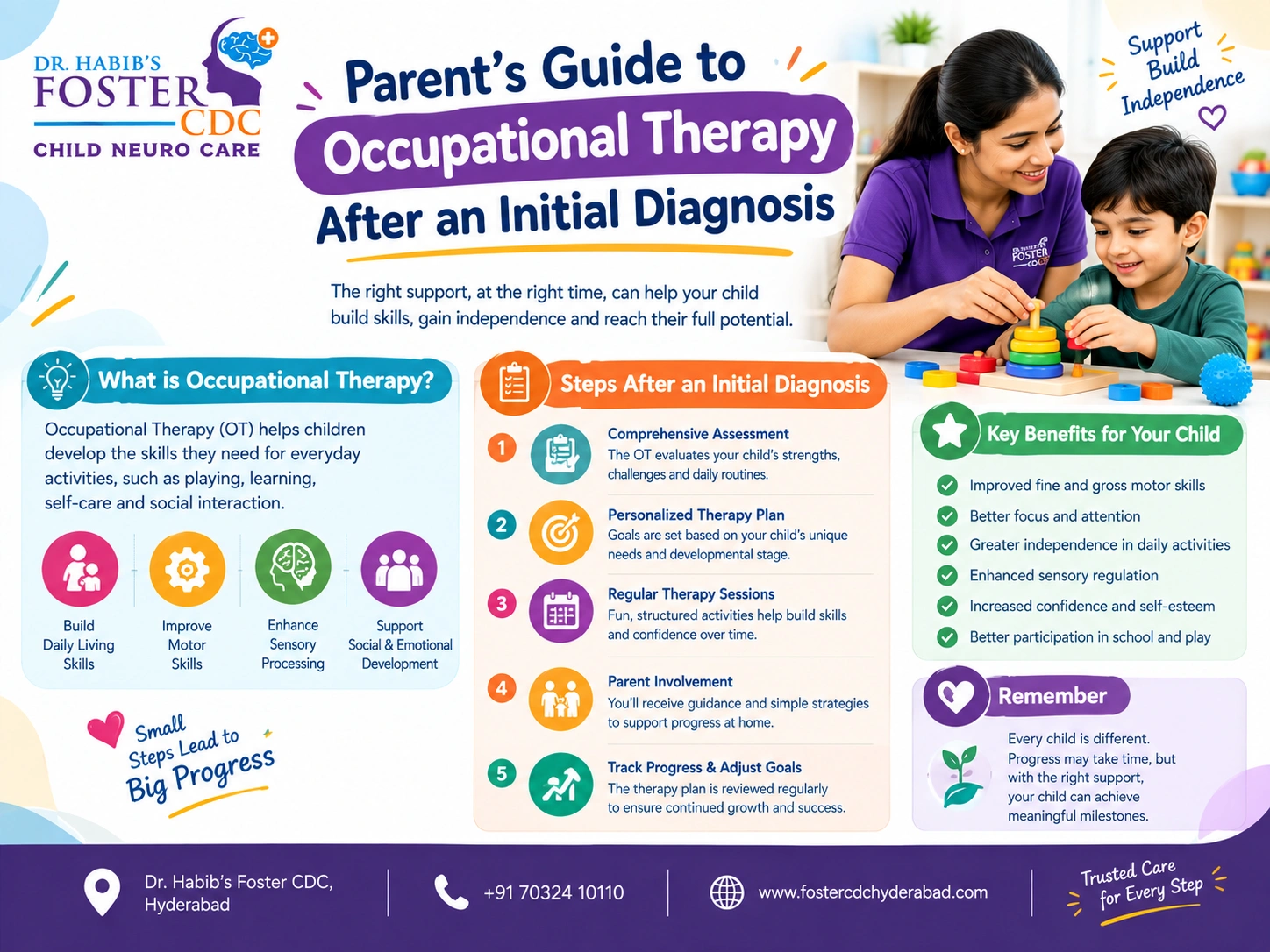
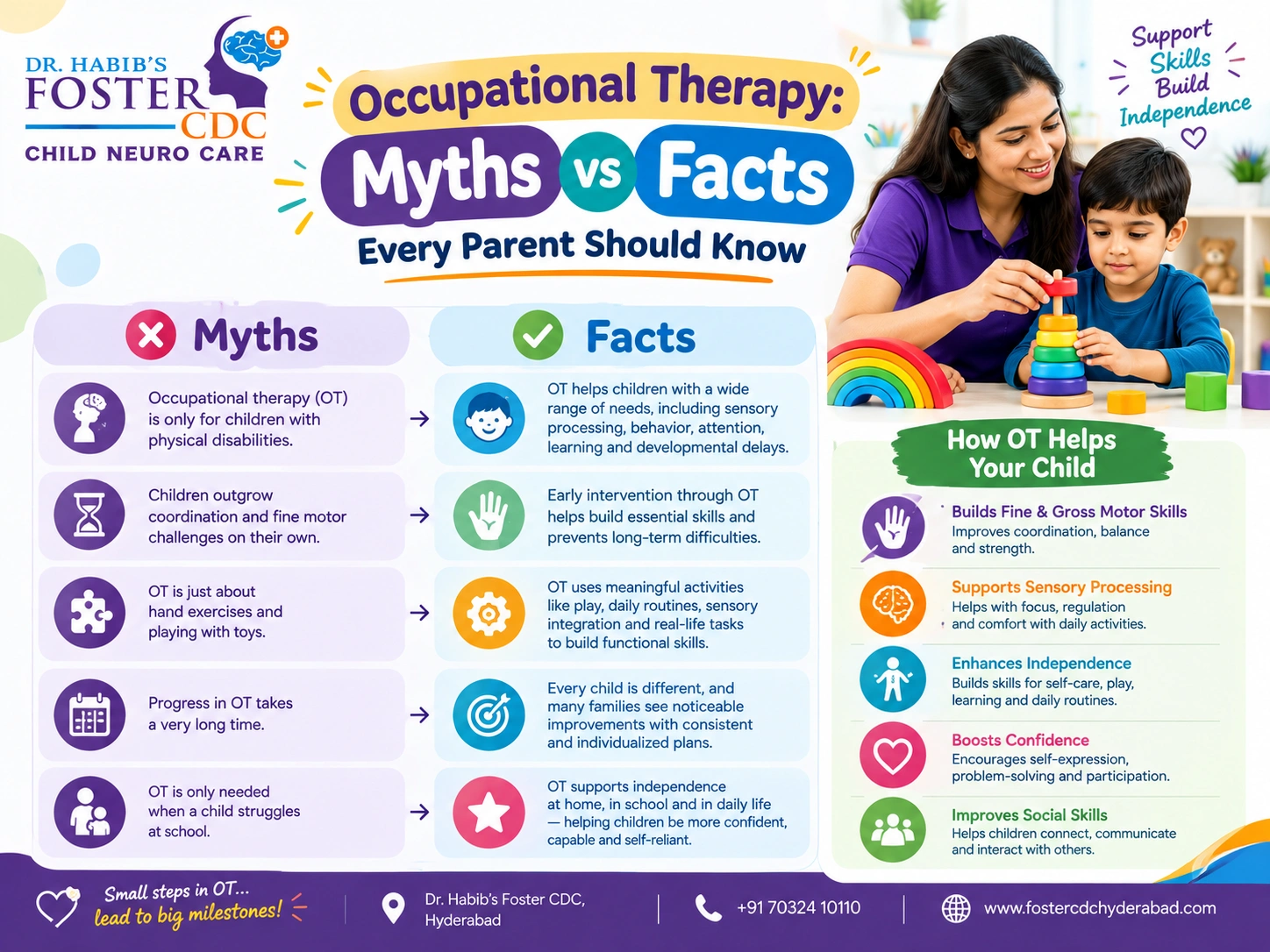
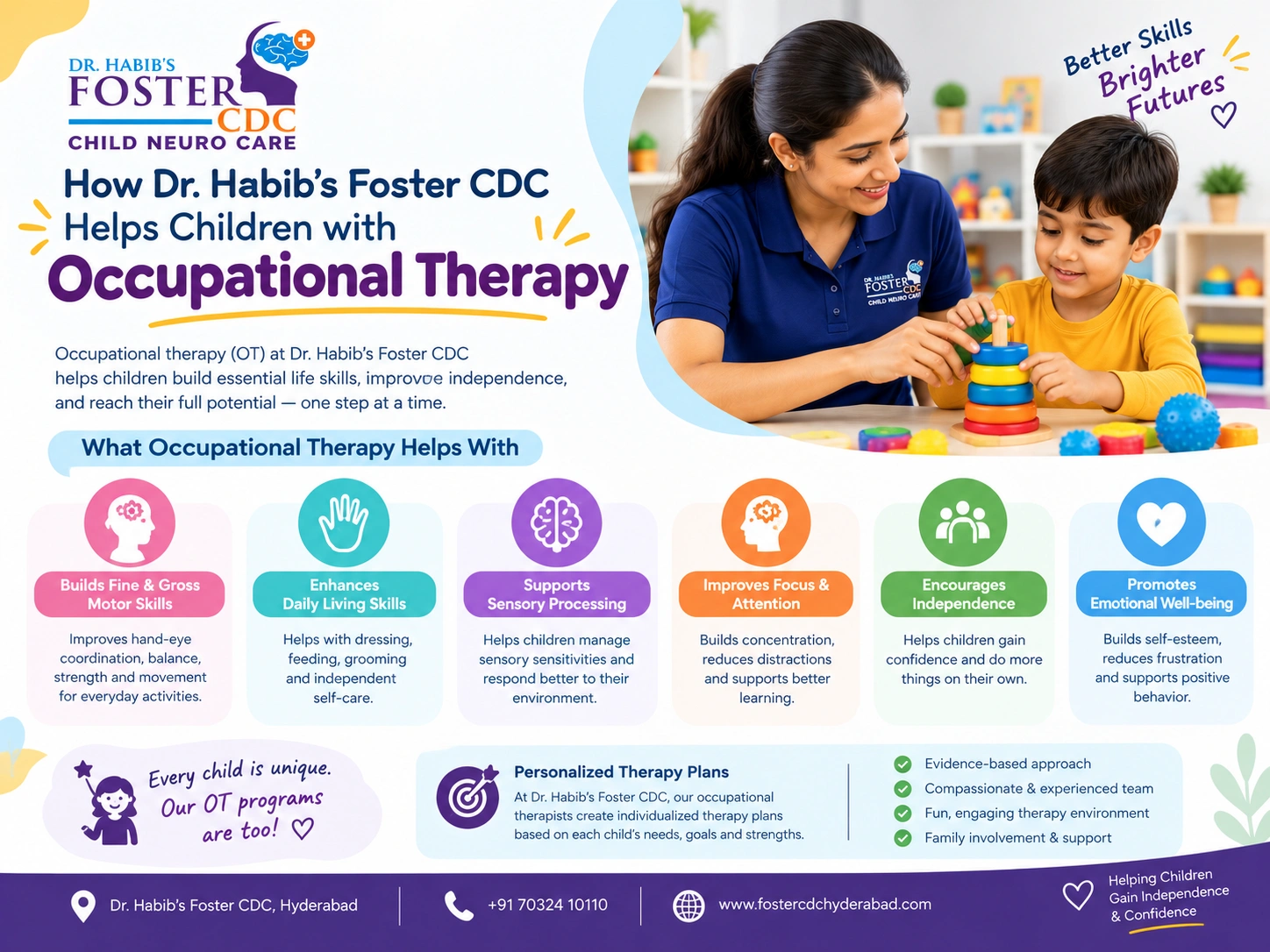
Occupational Therapy (OT):
Focuses on improving daily living skills, sensory processing, and fine motor
skills. OT helps children perform tasks like dressing, eating, and writing.
Speech Therapy:
Aims to improve communication skills, including articulation, comprehension,
and social language use. It also addresses feeding and swallowing difficulties.
Physical Therapy (PT):
Works on enhancing gross motor skills, strength, balance, and coordination. PT
is essential for children with physical impairments or those recovering from
injuries.
Behavioral Therapy:
Utilizes techniques like Applied Behavior Analysis (ABA) to modify challenging
behaviors and improve social interactions.
Play Therapy:
Uses play as a medium to help children express themselves, resolve conflicts,
and develop social skills.
How Does Developmental Therapy Work?
Developmental therapy typically begins
with a comprehensive assessment conducted by a multidisciplinary team of
therapists. This assessment identifies the child's strengths and areas of need,
leading to the creation of an individualized treatment plan. The therapy
sessions may be conducted in various settings, including clinics, schools, or
at home, depending on the child's needs and the goals of the therapy.
Benefits of Developmental Therapy
Individualized Attention:
Each child receives a tailored plan that addresses their unique challenges and
goals.
Holistic Approach:
It focuses on the overall development of the child, ensuring that all areas of
growth are addressed.
Improved Quality of Life:
By enhancing their skills and abilities, children can achieve greater
independence and better social interactions.
Family Involvement:
Parents and caregivers are often involved in the therapy process, which can
help reinforce learning and provide support at home.
Frequently Asked Questions (FAQs)
Q: What age should my child start developmental therapy?
A: Developmental therapy can be beneficial
at any age, but early intervention is often the most effective. Starting
therapy as soon as developmental delays or issues are identified can help
maximize the child's progress.
Q: How do I know if my child needs developmental therapy?
A: If you notice that your child is not
meeting developmental milestones, has difficulty with everyday tasks, or
exhibits behaviors that interfere with learning or social interactions, it may
be helpful to seek an evaluation from a developmental therapist at Dr. Habib’s
Foster CDC.
Q: How long does my child need to undergo developmental therapy?
A: The duration of therapy varies
depending on the child's needs and progress. Some children may require therapy
for a few months, while others may benefit from ongoing support over several
years.
Q: How can I support my child's progress at home?
A: Collaborating with your child's therapist
to understand the goals and techniques used in therapy can help you reinforce
these practices at home. Consistency and positive reinforcement are key to
supporting your child's development at home.
Bottom Line
Developmental therapy plays a crucial role in helping children with developmental delays and disabilities reach their full potential. By addressing their unique needs and providing targeted interventions, this therapy can significantly enhance their quality of life and ability to interact with the world around them. If you suspect your child may benefit from developmental therapy, seeking a professional evaluation from experts at Dr. Habib’s Foster CDC is the first step toward unlocking their potential.Other Blogs



Services
- Behavioural Therapy
- Speech Therapy
- Special Education
- Parent Training
- Psychotherapy & Counselling
- Yoga Therapy
- Postural & Mobility Therapy
- Early Intervention Services
- Cognitive Behavioural Therapy
- Occupational Therapy
- Group Teaching
- Teachers' Training
- Certified Courses
- Developmental Therapy
- Autism Therapy