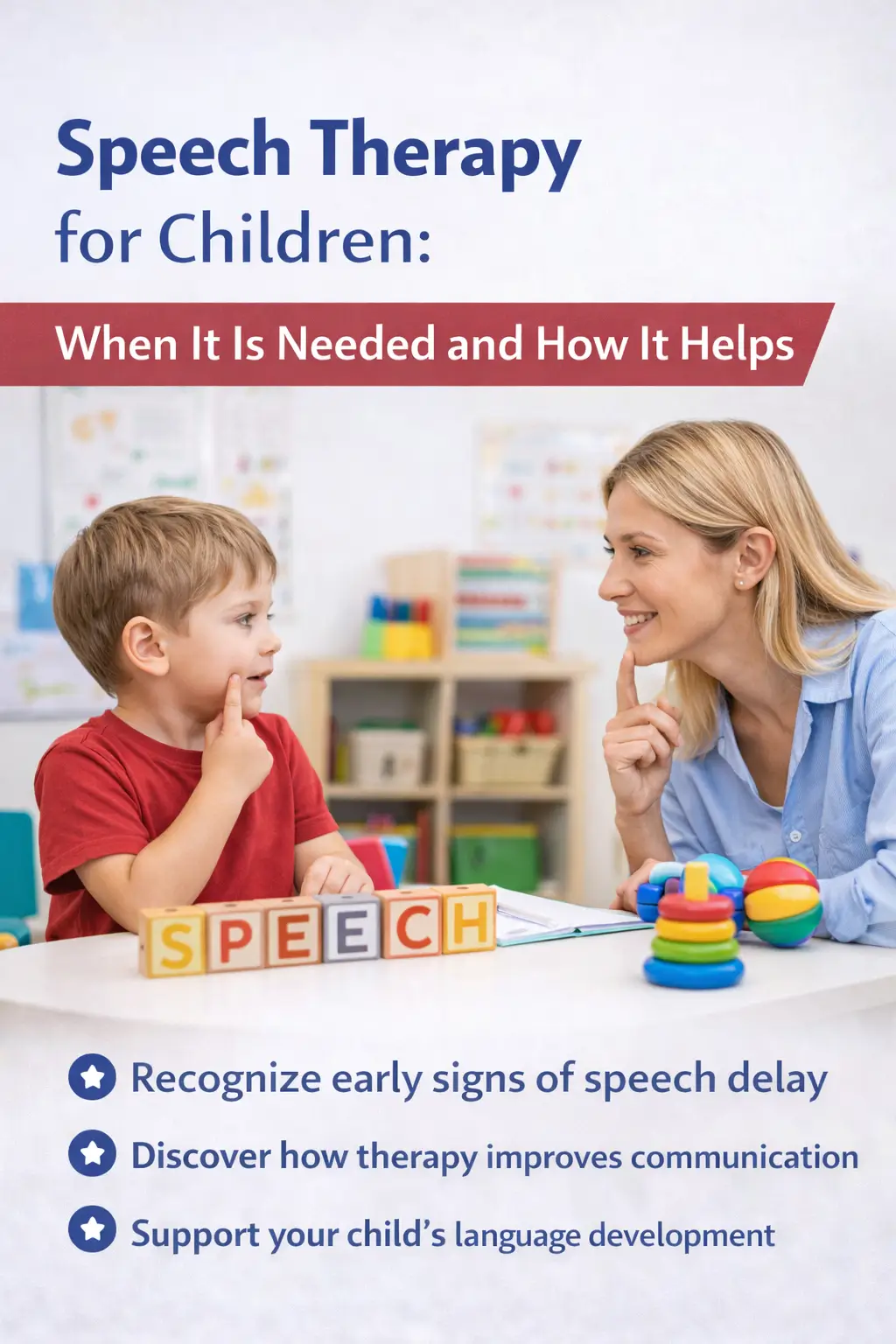
Speech Therapy for Children: When It Is Needed and How It Helps
Speech therapy for children plays a vital role in improving communication, language development, and social confidence. Many parents notice that their child is not speaking clearly, has limited vocabulary, or struggles to express thoughts. However, they often wonder whether the delay is temporary or if professional help is required.
In this detailed guide, we will explain when speech therapy for children is needed, early warning signs to watch for, and how speech-language intervention helps children develop strong communication skills.
What Is Speech Therapy for Children?
Speech therapy for children is a specialized treatment provided by a certified speech-language pathologist (SLP). It focuses on improving:
-
Speech clarity
-
Language development
-
Listening skills
-
Social communication
-
Feeding and swallowing issues (in some cases)
Speech and language skills are essential for learning, emotional development, and building relationships. Therefore, early speech intervention can significantly improve a child’s academic and social success.
When Is Speech Therapy for Children Needed?
Not all speech delays require therapy. However, persistent communication challenges may indicate the need for professional evaluation.
1. Delayed Speech Milestones
You may consider speech therapy for children if:
-
No babbling by 12 months
-
No single words by 16–18 months
-
Limited vocabulary by age 2
-
Difficulty forming simple sentences by age 3
Early speech delay treatment is most effective when started before age five.
2. Unclear Speech or Pronunciation Problems
If your child:
-
Is difficult to understand after age 3
-
Frequently mispronounces sounds
-
Leaves out consonants
-
Struggles with specific speech sounds
Speech sound therapy can help improve articulation and clarity.
3. Language Comprehension Difficulties
Some children speak but struggle to:
-
Follow simple instructions
-
Understand questions
-
Express ideas clearly
-
Use age-appropriate grammar
In such cases, speech therapy for children supports receptive and expressive language development.
4. Stuttering or Fluency Disorders
Frequent repetition of sounds, prolonging words, or visible frustration while speaking may indicate a fluency disorder. Early intervention reduces long-term speech anxiety.
5. Social Communication Challenges
Children with developmental conditions such as autism spectrum disorder may benefit from speech therapy for children to improve:
-
Eye contact
-
Conversational turn-taking
-
Understanding emotions
-
Non-verbal communication
Causes of Speech and Language Delay
Speech and language delay may occur due to:
-
Hearing problems
-
Developmental disorders
-
Premature birth
-
Oral-motor weakness
-
Neurological conditions
-
Environmental factors
A proper speech evaluation helps identify the underlying cause.
How Speech Therapy for Children Helps
Speech therapy for children uses structured, evidence-based techniques to strengthen communication skills. Therapy sessions are interactive, engaging, and age-appropriate.
1. Improves Speech Clarity
Speech-language pathologists use articulation exercises to help children pronounce sounds correctly. Over time, clarity improves significantly.
2. Enhances Vocabulary and Sentence Formation
Language stimulation techniques expand vocabulary, grammar usage, and sentence-building skills.
3. Builds Listening and Comprehension Skills
Therapists use story-based activities, picture cards, and play therapy to improve understanding.
4. Boosts Confidence and Social Skills
Clear communication reduces frustration and improves classroom participation and peer relationships.
5. Supports Academic Success
Strong communication skills improve reading, writing, and learning abilities. Therefore, early speech therapy for children can prevent future academic challenges.
What Happens During a Speech Therapy Session?
A typical speech therapy session includes:
-
Play-based learning
-
Sound repetition activities
-
Language-building games
-
Parent guidance and home practice strategies
Therapy is personalized based on the child’s age, developmental level, and specific communication needs.
How Long Does Speech Therapy Take?
The duration of speech therapy for children depends on:
-
Severity of speech delay
-
Consistency of sessions
-
Parental involvement
-
Underlying medical conditions
Some children show improvement within months, while others may require long-term therapy.
Benefits of Early Speech Intervention
Starting speech therapy for children early offers multiple advantages:
-
Faster progress
-
Reduced frustration
-
Improved behavior
-
Stronger school readiness
-
Better long-term communication outcomes
The earlier intervention begins, the better the brain adapts to learning new communication skills.
When Should Parents Seek Professional Help?
Consult a speech-language pathologist if:
-
Your child avoids speaking
-
Speech is unclear beyond expected age
-
Teachers raise concerns
-
Your child becomes frustrated while communicating
Trust your instincts. Early evaluation does not harm; it only provides clarity and guidance.
Frequently Asked Questions (FAQs)
1. At what age should speech therapy for children start?
Speech therapy can begin as early as 18 months if delays are identified. Early intervention leads to better outcomes.
2. Can speech therapy help late talkers?
Yes, speech therapy helps late talkers develop vocabulary, pronunciation, and communication confidence.
3. How often should a child attend speech therapy sessions?
Most children attend 1–2 sessions per week, depending on the severity of their speech delay.
4. Is speech delay always a sign of autism?
No. Speech delay may occur independently. However, developmental screening helps rule out underlying conditions.
5. Can parents support speech therapy at home?
Yes. Consistent home practice, reading aloud, and interactive conversations support faster improvement.
Final Thoughts
Speech therapy for children is not just about correcting pronunciation. It builds confidence, enhances learning, and strengthens social interaction. If you notice communication delays, do not wait. Early speech therapy support can transform your child’s developmental journey and open doors to academic and social success.
Other Blogs

Services
- Behavioural Therapy
- Speech Therapy
- Special Education
- Parent Training
- Psychotherapy & Counselling
- Yoga Therapy
- Postural & Mobility Therapy
- Early Intervention Services
- Cognitive Behavioural Therapy
- Occupational Therapy
- Group Teaching
- Teachers' Training
- Certified Courses
- Developmental Therapy
- Autism Therapy