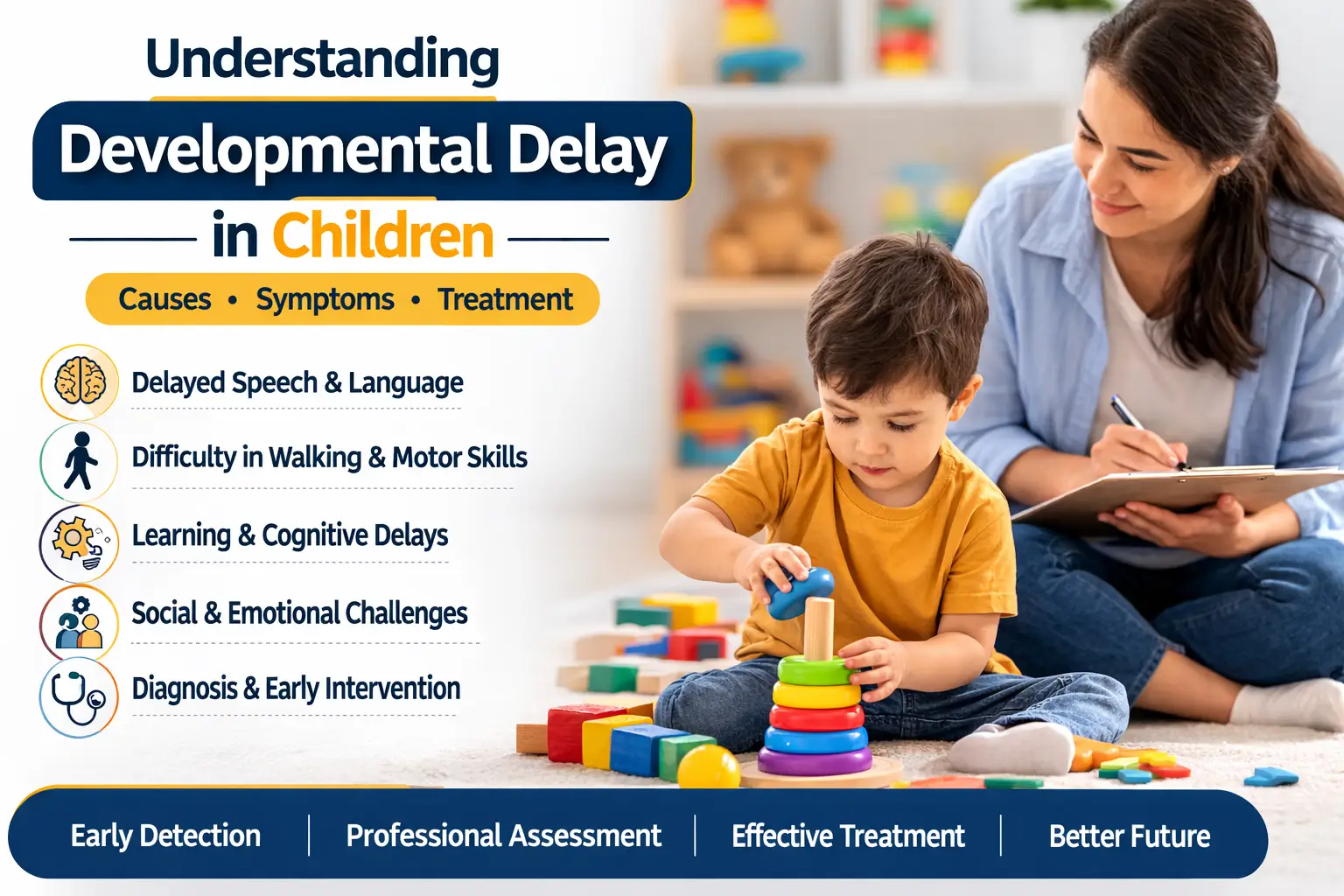
Understanding Developmental Delay in Children: Causes, Symptoms & Treatment
Childhood development is a gradual process where children learn to talk, move, think, and interact with others. However, some children may reach these milestones later than expected. This condition is known as developmental delay in children.
Parents often worry when their child is not speaking, walking, or learning at the same pace as other children. While every child develops at their own speed, persistent delays in important milestones may require early evaluation and intervention.
In this guide, we will explain what developmental delay is, its causes, symptoms, diagnosis, and treatment options, along with when parents should seek professional help.
What is Developmental Delay in Children?
Developmental delay refers to a condition in which a child takes longer than expected to reach certain developmental milestones such as speaking, walking, learning, or social interaction.
Doctors usually evaluate development in five major areas:
-
Speech and language development
-
Motor skills development
-
Cognitive development
-
Social and emotional development
-
Adaptive or daily living skills
If a child shows delays in one or more of these areas compared to typical age milestones, it may indicate developmental delay.
Early identification is important because early intervention therapies can significantly improve a child’s development and future learning abilities.
Types of Developmental Delays in Children
Developmental delays can affect different aspects of a child’s growth.
1. Speech and Language Delay
Children with speech delay may:
-
Speak fewer words than expected for their age
-
Have difficulty forming sentences
-
Struggle to understand instructions
-
Show delayed communication skills
This is one of the most common developmental delays in toddlers.
2. Motor Skill Delay
Motor delays affect physical movement and coordination.
Examples include:
-
Difficulty sitting, crawling, or walking
-
Poor balance or coordination
-
Weak muscle strength
-
Difficulty holding objects
Motor delays may affect fine motor skills (holding pencils, buttoning clothes) or gross motor skills (running, jumping).
3. Cognitive Development Delay
Cognitive delays impact thinking, problem-solving, and learning abilities.
Children may:
-
Take longer to learn basic concepts
-
Have difficulty understanding instructions
-
Show slower learning compared to peers
4. Social and Emotional Delay
Children with social delays may:
-
Avoid eye contact
-
Have difficulty interacting with others
-
Struggle to understand emotions
-
Prefer playing alone
In some cases, social delays may be associated with autism spectrum disorder (ASD).
5. Adaptive Skill Delay
Adaptive skills involve everyday activities like:
-
Eating independently
-
Dressing themselves
-
Using the toilet
-
Following daily routines
Delays in these skills can affect independence and daily functioning.
Common Causes of Developmental Delay in Children
Developmental delays can occur due to many different factors.
Genetic Conditions
Some genetic disorders can affect brain development, including:
-
Down syndrome
-
Fragile X syndrome
-
Other chromosomal abnormalities
Premature Birth
Babies born before 37 weeks of pregnancy may experience delays in development because their organs and brain are still developing.
Brain Injury or Neurological Conditions
Conditions affecting the brain can cause developmental delays, such as:
-
Cerebral palsy
-
Brain infections
-
Head injuries
Hearing or Vision Problems
If a child cannot hear or see properly, it may affect speech, communication, and learning abilities.
Nutritional Deficiencies
Poor nutrition, especially lack of iron, iodine, or essential vitamins, can impact brain development in early childhood.
Environmental Factors
Children raised in environments with limited stimulation, social interaction, or emotional support may experience developmental delays.
Symptoms of Developmental Delay in Children
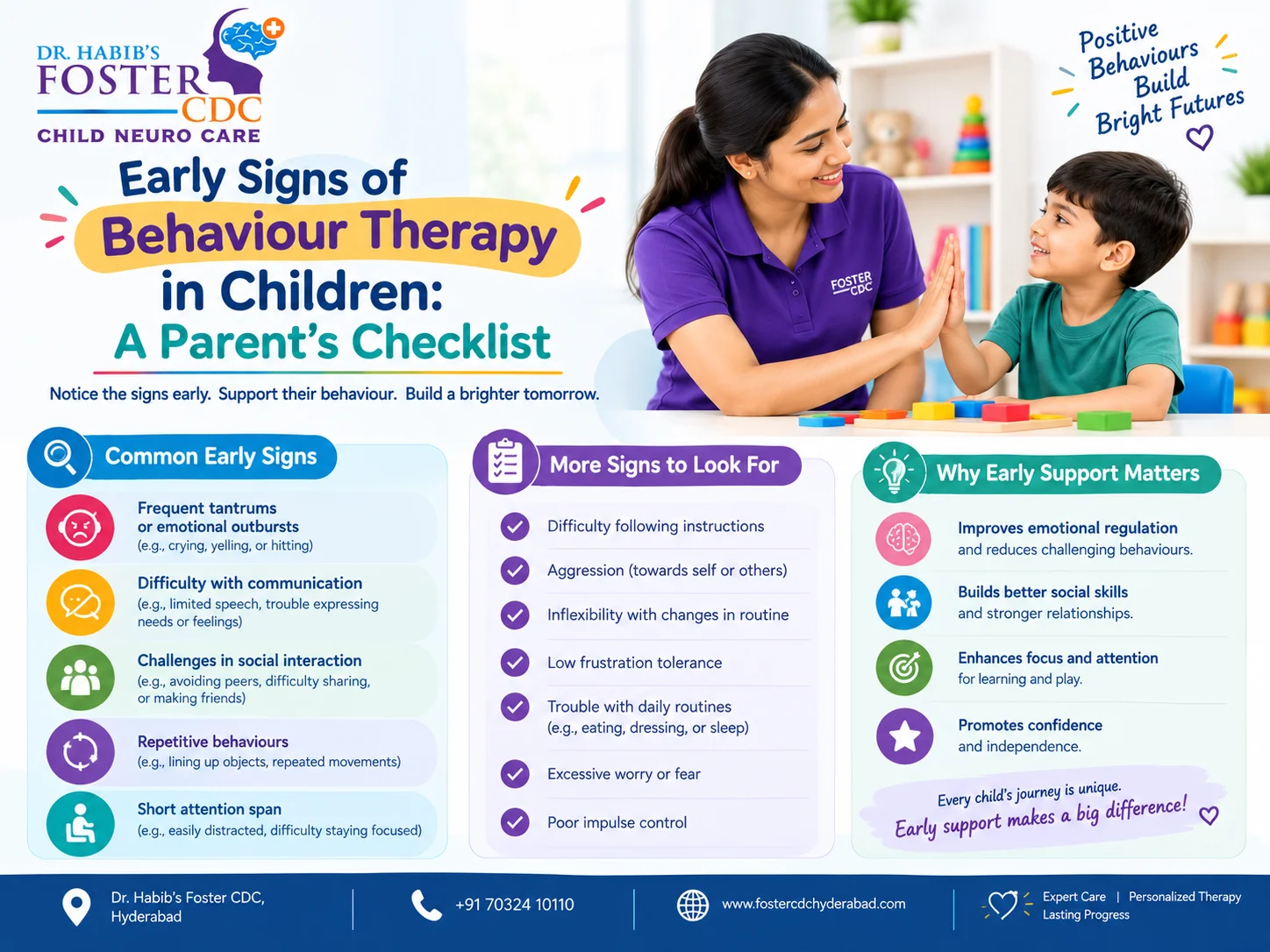
Parents should watch for signs that may indicate developmental delay.
Signs in Infants (0–12 Months)
-
Does not smile by 3 months
-
Cannot hold head steady by 4 months
-
Does not sit by 8 months
-
Limited response to sounds or voices
Signs in Toddlers (1–3 Years)
-
Not walking by 18 months
-
Limited vocabulary by age 2
-
Difficulty understanding simple instructions
-
Poor eye contact
Signs in Preschool Children
-
Difficulty speaking clearly
-
Trouble interacting with other children
-
Problems with attention and learning
-
Difficulty performing simple tasks
If these symptoms persist, it is important to consult a pediatric specialist for evaluation.
How Developmental Delay is Diagnosed
Doctors evaluate developmental delays through several steps:
Developmental Screening
Pediatricians check milestones during routine health visits.
Medical History Review
Doctors assess pregnancy history, birth complications, and family medical history.
Developmental Assessments
Specialists evaluate areas like speech, motor skills, and cognitive abilities.
Hearing and Vision Tests
These tests help identify sensory problems affecting development.
Psychological and Neurological Evaluation
In some cases, further testing may be recommended to understand underlying conditions.
Treatment Options for Developmental Delay
Treatment depends on the type and severity of the delay, but early therapy plays a key role.
Speech Therapy
Helps children improve:
-
Language skills
-
Communication abilities
-
Pronunciation and vocabulary
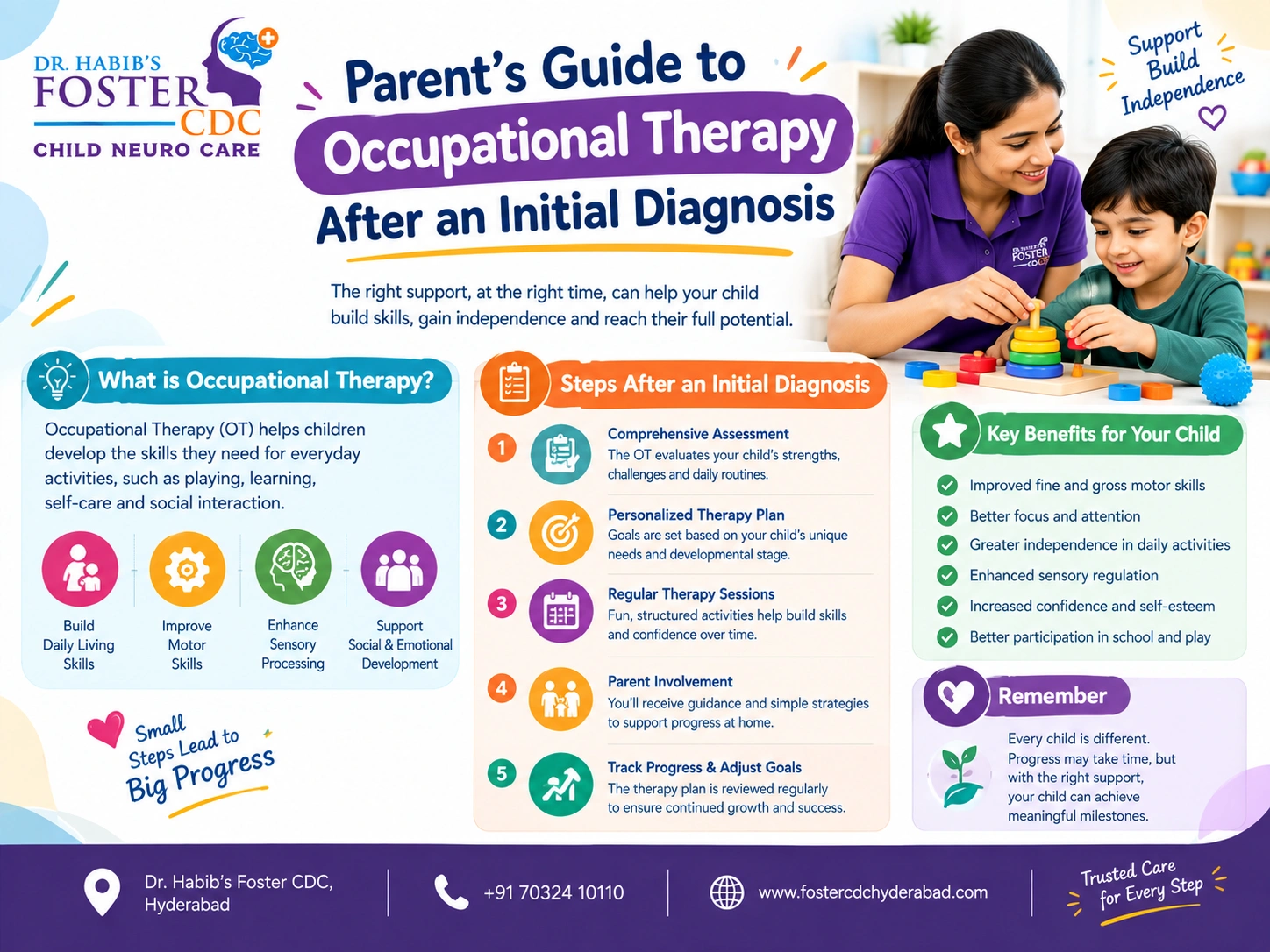
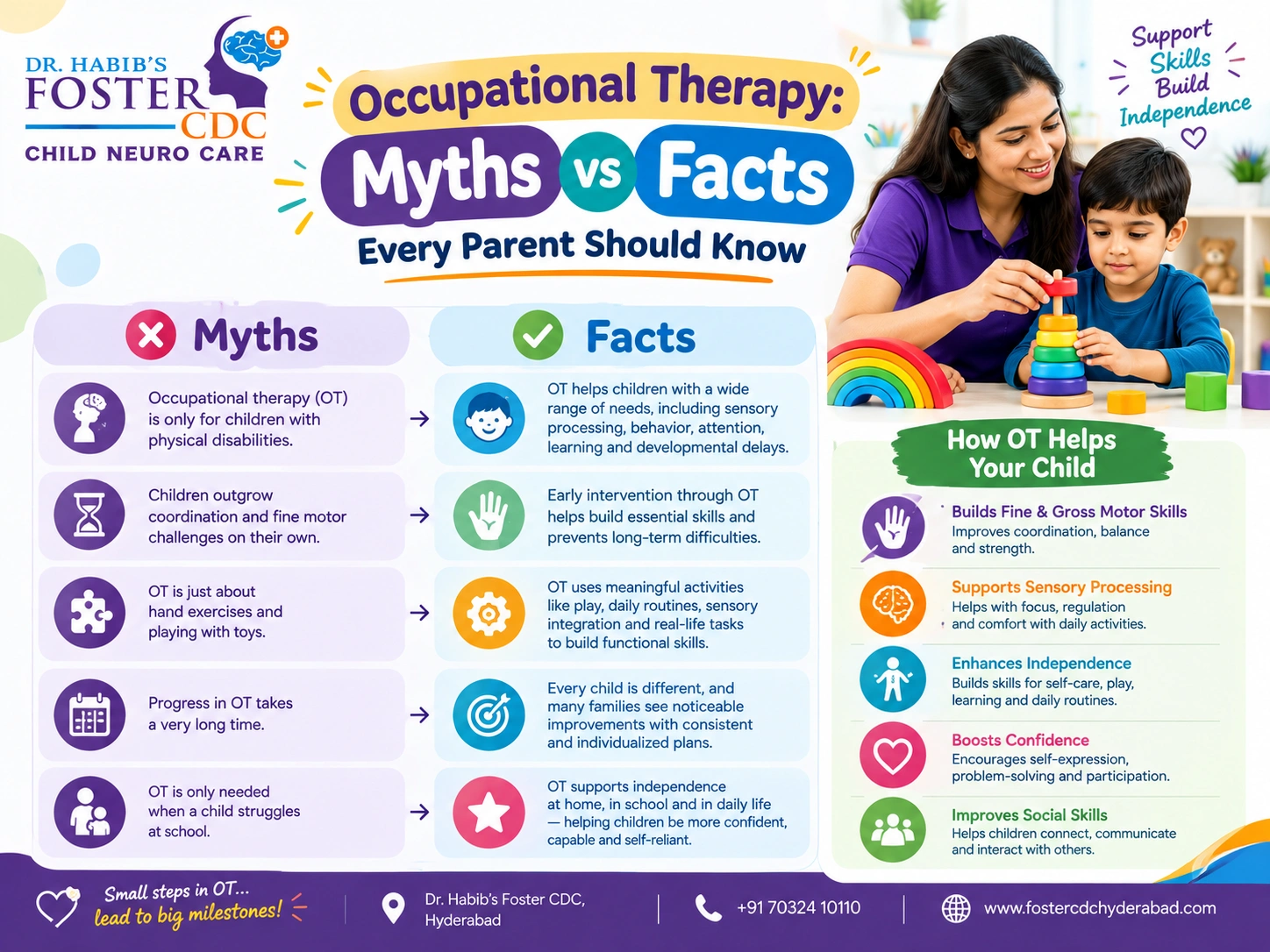
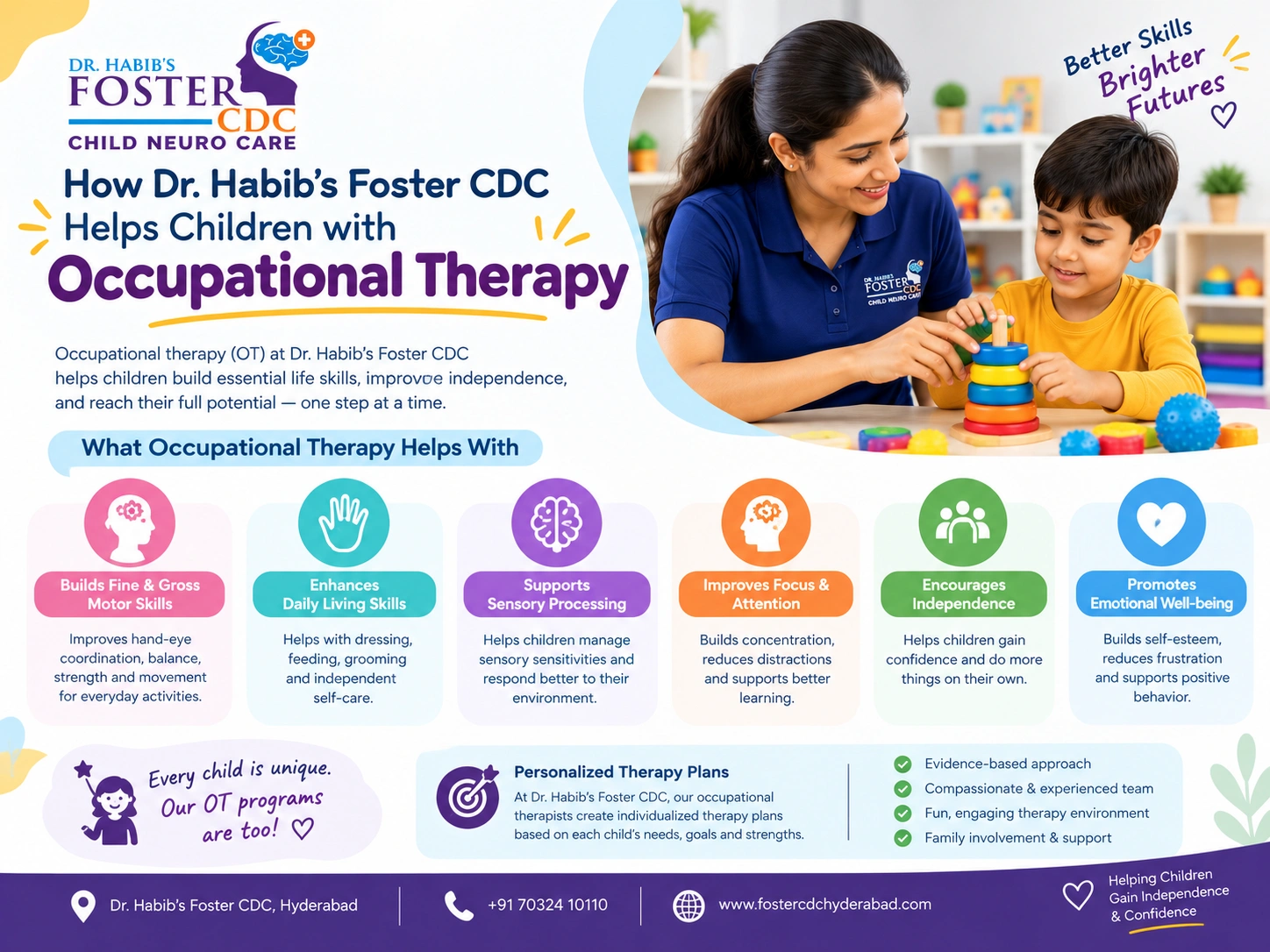
Occupational Therapy
Focuses on improving daily life skills, including:
-
Hand coordination
-
Self-care tasks
-
Sensory processing
Physical Therapy
Supports children with motor skill delays by improving strength, balance, and coordination.
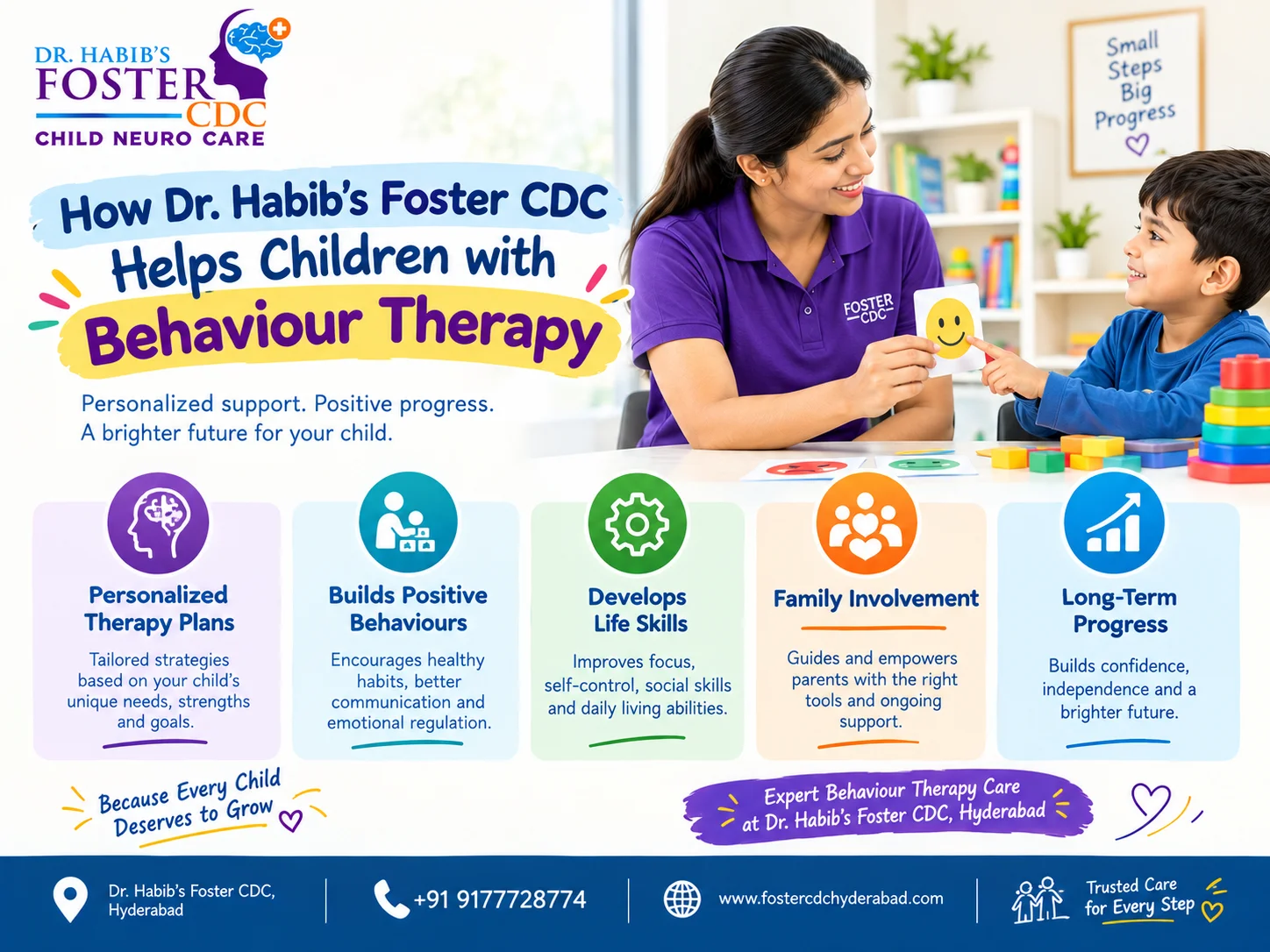
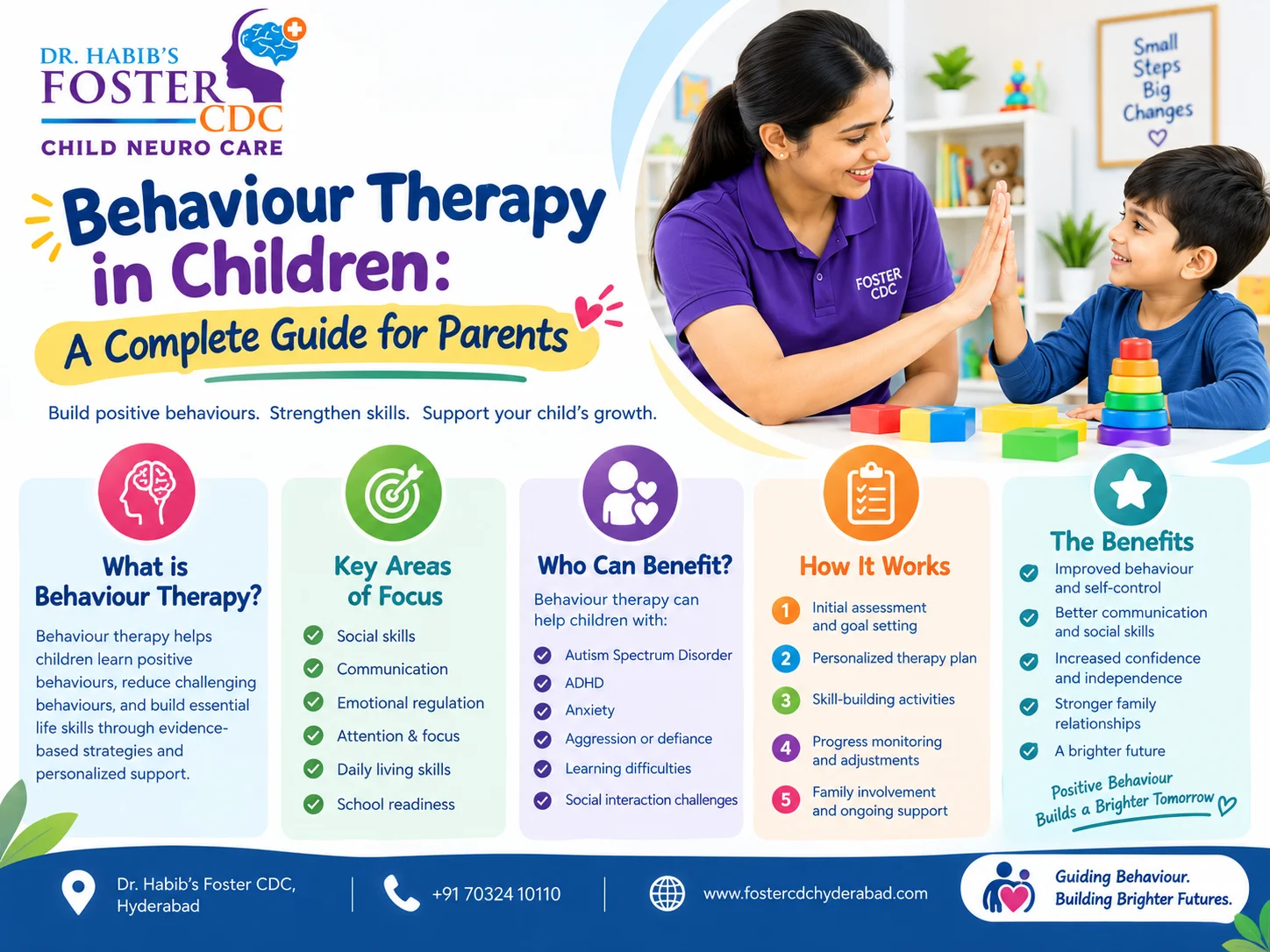
Behavioral Therapy
This therapy helps improve social interaction, emotional regulation, and behavior management.
Special Education Programs
Children with developmental delays may benefit from individualized learning plans and specialized educational support.
Importance of Early Intervention
Research shows that early intervention therapies can significantly improve developmental outcomes.
Benefits include:
-
Better communication skills
-
Improved learning ability
-
Enhanced social interaction
-
Increased independence
The earlier the therapy begins, the greater the chances of improvement in developmental skills.
When Should Parents Seek Professional Help?
Parents should consult a specialist if:
-
Their child misses multiple developmental milestones
-
Speech development is significantly delayed
-
The child has difficulty walking or moving
-
Social interaction is limited
-
Learning difficulties persist
Early diagnosis allows children to receive timely therapies and specialized care.
Tips for Supporting Children with Developmental Delay
Parents can also help their child’s development at home.
Helpful strategies include:
-
Talking and reading to your child regularly
-
Encouraging play and social interaction
-
Providing stimulating toys and activities
-
Maintaining healthy nutrition
-
Following therapy recommendations consistently
A supportive environment can greatly enhance developmental progress.
Frequently Asked Questions (FAQs)
What is the most common developmental delay in children?
Speech and language delay is the most common developmental delay in early childhood.
Can developmental delay be cured?
Some developmental delays improve with early therapy, medical treatment, and supportive care, while others may require long-term management.
At what age should developmental delays be evaluated?
Developmental screenings usually begin during infancy and early childhood, especially between 0–3 years, when early intervention is most effective.
Can a child outgrow developmental delay?
Some children catch up naturally, but many benefit from professional therapies and early intervention programs.
Which doctor should parents consult for developmental delay?
Parents should consult a pediatric neurologist, developmental pediatrician, or child specialist for proper evaluation and treatment.
Conclusion
Developmental delay in children can affect speech, movement, learning, and social interaction, but early recognition and proper treatment can make a significant difference.
Parents should closely observe their child’s developmental milestones and seek professional guidance if delays are suspected. With early intervention, therapy, and supportive care, many children can improve their abilities and achieve better developmental outcomes.
Other Blogs

Services
- Behavioural Therapy
- Speech Therapy
- Special Education
- Parent Training
- Psychotherapy & Counselling
- Yoga Therapy
- Postural & Mobility Therapy
- Early Intervention Services
- Cognitive Behavioural Therapy
- Occupational Therapy
- Group Teaching
- Teachers' Training
- Certified Courses
- Developmental Therapy
- Autism Therapy