Therapies for Movement Disorders in Children at FOSTER CDC
Movement disorders in children are a
diverse group of conditions that affect the ability to control muscles and
movement. These disorders can lead to difficulties with coordination, balance,
and fine motor skills, impacting a child's day-to-day life.
Movement disorders can range from
relatively common disorders like cerebral palsy to rarer conditions such as
dystonia, tremors, or ataxia. Regardless of the cause, early and comprehensive
intervention is key to improving outcomes for children living with these
challenges.
Fortunately, several therapies for
movement disorders have been developed to help children manage their symptoms
and improve their quality of life. The following are some of the most effective
treatments and interventions for pediatric movement disorders.
Understanding Movement Disorders in Children
Movement disorders are neurological
conditions that cause abnormal voluntary or involuntary movements. These may
include tremors, rigidity, difficulty walking, and uncontrolled spasms. Common
types of pediatric movement disorders include:
- Cerebral
Palsy (CP): A group of disorders that
affect muscle tone, movement, and posture.
- Dystonia:
A condition that causes involuntary muscle contractions, leading to
abnormal postures and twisting movements.
- Ataxia:
A disorder that affects balance and coordination.
- Tourette
Syndrome: A condition characterized by
repetitive movements and vocalizations, known as tics.
- Parkinsonism:
Though rare in children, this can present with tremors, slow movement, and
muscle stiffness.
Each disorder has its unique symptoms, but
the goals of therapy remain consistent: to improve mobility, enhance
independence, and increase the child’s overall quality of life.
Key Therapies for Movement Disorders in Children
There are several therapeutic approaches
for managing movement disorders in children. These therapies often need to be
tailored to the individual needs of the child and may involve a
multidisciplinary team, including neurologists, physical therapists, occupational
therapists, and sometimes even surgeons. Below are some of the most common
therapeutic options:
1. Physical Therapy (PT)
Physical therapy is a cornerstone in
treating movement disorders, aiming to enhance a child’s strength, flexibility,
balance, mobility, and coordination. PT can involve exercises, stretches, and
the use of assistive devices to help the child gain better control over their
movements.
For children with cerebral palsy or other
neuromuscular conditions, PT helps in developing better motor skills and
preventing secondary complications such as joint contractures or bone
deformities.
Therapists often use techniques such as:
- Stretching
and Strengthening Exercises: These
exercises improve flexibility and increase muscle strength, enabling
better movement and function.
- Functional
Training: This focuses on practicing
everyday activities such as walking, standing, or using the hands,
ensuring that gains made in therapy are transferred to daily life.
- Postural Training: Postural control is crucial for children with movement disorders, and PT may help them maintain better alignment to reduce pain and improve function.
Benefits:
- Improves
muscle tone and strength.
- Increases
flexibility and range of motion.
- Promotes
better posture and walking ability.
Physical therapy is particularly effective
for conditions like cerebral palsy, where improving motor control can help
children with walking, standing, or sitting independently.
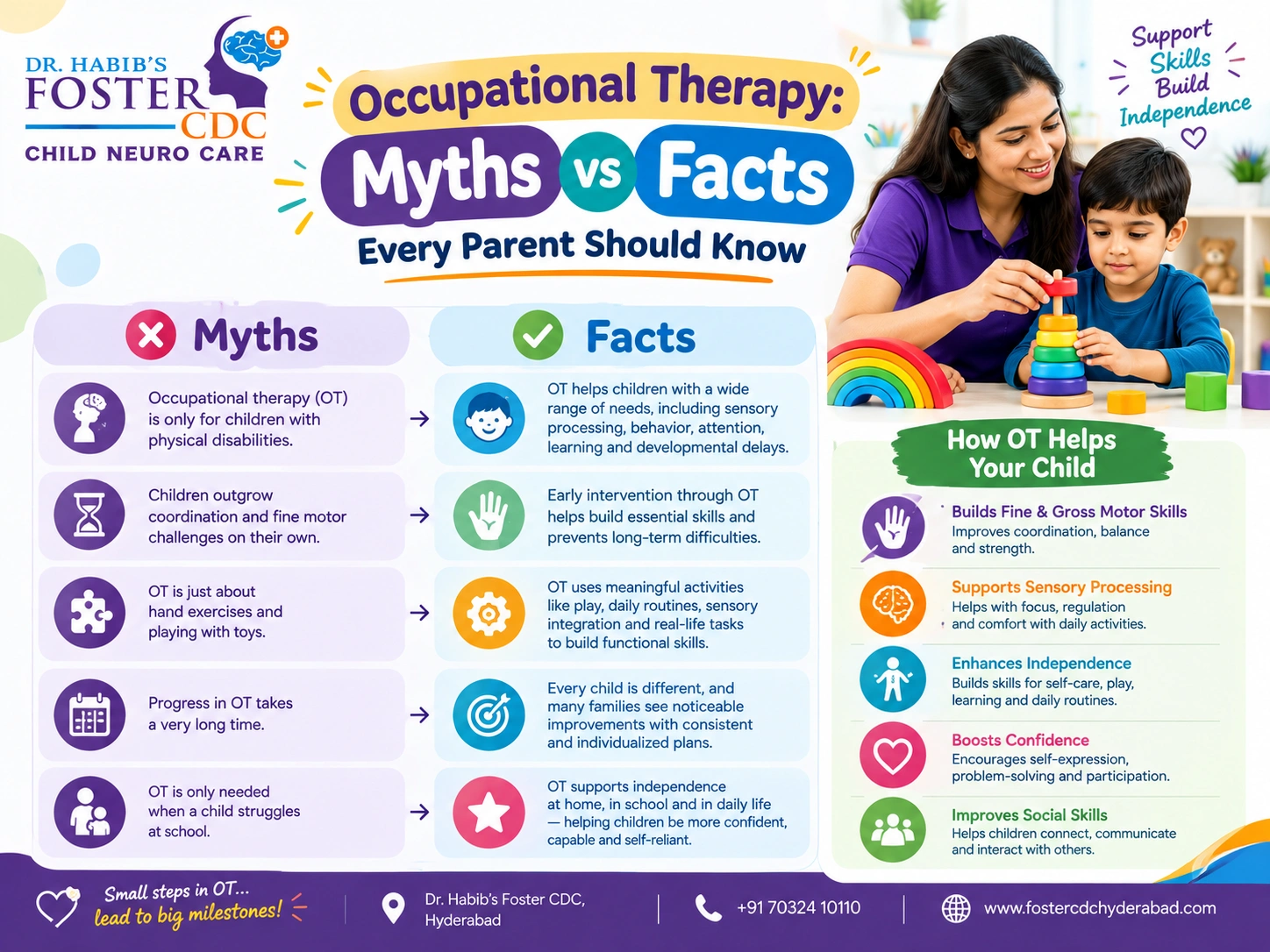
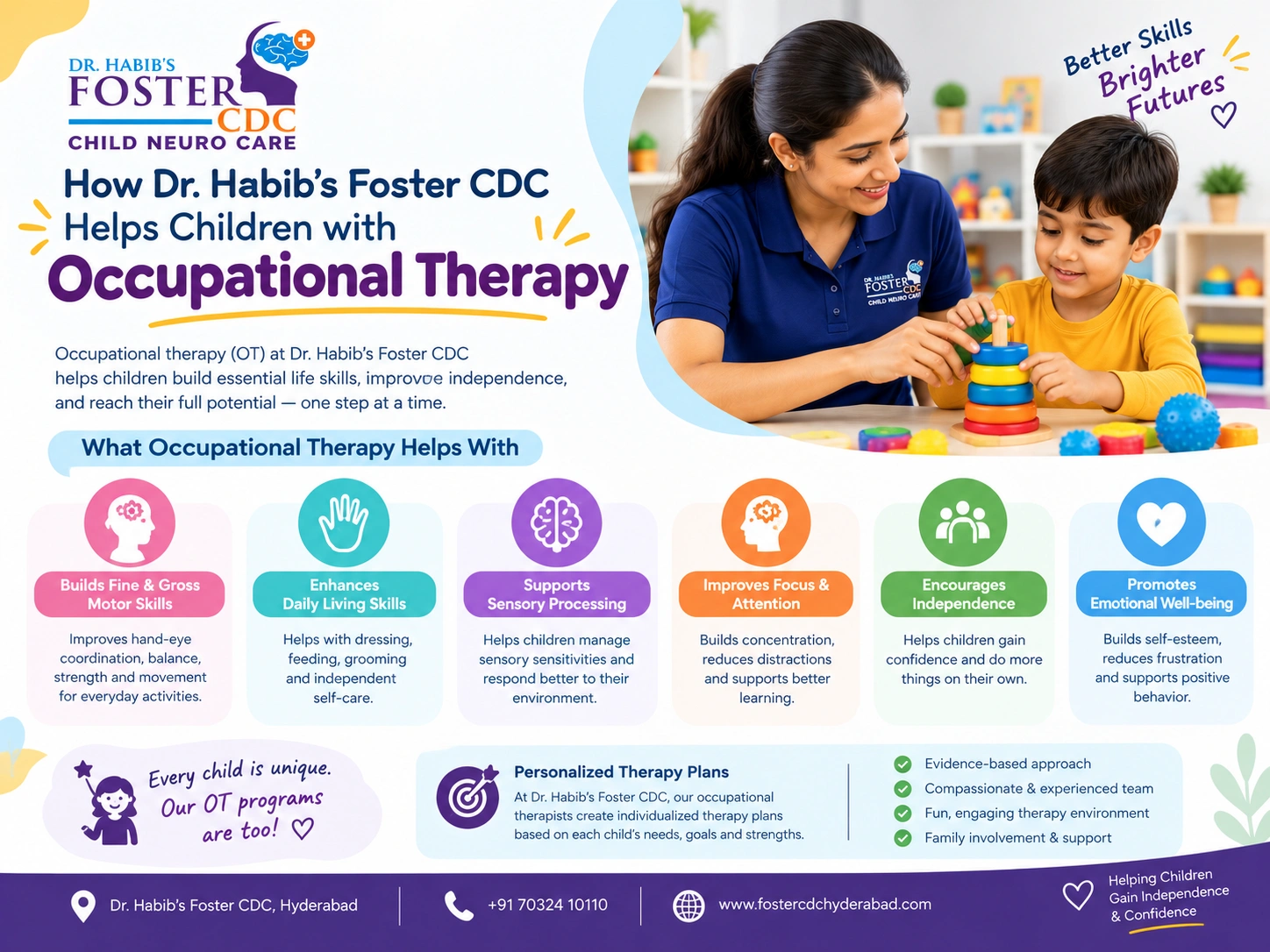
2. Occupational Therapy (OT)
While physical therapy focuses on large
muscle groups and movement, occupational treatment focuses on fine motor
skills. This type of therapy helps children perform daily activities such as
eating, dressing, and writing.
Adaptive Devices: Occupational
therapists often recommend specialized equipment like splints, orthotics, or
seating systems to help the child function more effectively.
Sensory Integration Therapy: This
approach is beneficial for children who struggle with processing sensory
information. It helps them respond appropriately to different stimuli and
improve their motor control.
Benefits:
- Enhances
hand-eye coordination and manual dexterity.
- Teaches
adaptive techniques for completing daily tasks.
- Helps
the child gain independence in personal care and schoolwork.
For children with conditions like dystonia
or ataxia, occupational therapy can offer strategies to perform tasks more
easily and comfortably.
3. Speech and Language Therapy
Children with movement disorders may also
experience difficulties with speech and swallowing due to impaired muscle
control.
Conditions like dystonia or ataxia can
interfere with the muscles used for speech and swallowing. Speech therapists
work on:
- Speech
Articulation: Helping children
improve the clarity of their speech through specific exercises.
- Swallowing
Techniques: Teaching methods to improve the
safety and effectiveness of eating, reducing the risk of choking.
- Alternative
Communication: For children who
cannot speak, therapists might introduce augmentative and alternative
communication (AAC) tools, such as picture boards or electronic
communication devices.
4. Medication Management
In many cases, medications can be a
crucial component of managing movement disorders. The choice of medication
depends on the specific disorder and its symptoms:
- Muscle
Relaxants: Drugs like baclofen are often
prescribed to reduce spasticity in children with cerebral palsy or other
spastic movement disorders.
- Anticholinergics:
These are used to help control tremors and other involuntary movements,
particularly in dystonia.
- Dopaminergic
Medications: For children with
conditions like juvenile Parkinsonism or dystonia, medications that
influence dopamine production or utilization can be helpful.
- Botox
Injections: Botulinum toxin (Botox) can be
injected into specific muscles to reduce spasticity or dystonia
temporarily. It helps improve movement and function in targeted areas.
5. Surgical Interventions
When medications and therapies are not
enough to manage symptoms, surgical interventions may be considered:
- Selective
Dorsal Rhizotomy (SDR): This procedure is
used primarily for children with spasticity in cerebral palsy. It involves
cutting certain nerve fibers in the spinal cord to reduce muscle
stiffness.
- Deep
Brain Stimulation (DBS): DBS is a
neurosurgical treatment where electrodes are implanted in the brain to
regulate abnormal brain signals that cause movement disorders. It's
commonly used in dystonia or tremor cases that are resistant to other
treatments.
- Orthopedic
Surgery: For children who have developed
muscle contractures, joint deformities, or scoliosis due to their movement
disorder, orthopedic surgery may be necessary to improve posture and
function.
6. Innovative Therapies for movement disorders
Several new and innovative therapies are
being developed or are in use to help children with movement disorders achieve
better outcomes:
- Robotic-Assisted
Therapy: Robotic devices can assist
children in performing repetitive movements with greater precision,
helping them improve motor control. For example, robotic exoskeletons can
assist with walking in children with severe mobility impairments.
- Virtual Reality
(VR): VR-based rehabilitation tools are
gaining popularity for their ability to engage children in therapeutic
exercises through interactive games. This not only makes therapy more
enjoyable but also improves motivation and adherence.
- Stem Cell Therapy:
Although still largely experimental, stem cell therapy holds promise for
regenerating damaged neural tissues in children with movement disorders,
particularly those stemming from brain injuries or neurodegenerative
diseases.
- Constraint-induced
movement Therapy (CIMT): CIMT involves
restraining the unaffected limb to encourage the use of the weaker or
impaired limb. It is especially beneficial for children with hemiplegic
cerebral palsy, helping improve movement in the affected side.
7. Psychosocial Support and Family Involvement
Therapies for movement disorders go beyond the physical. Emotional and psychological support is essential for children dealing with chronic conditions. Regular counseling or play therapy can help children cope with the challenges of their disorder. Equally important is the involvement of the family. Educating and supporting families through these challenges is key to ensuring that children receive consistent and appropriate care at home.
Conclusion
Treating movement disorders in children
requires a multifaceted approach that combines physical, occupational, and
speech therapies, medications, and sometimes surgical interventions. New and
innovative therapies continue to emerge, offering more hope for improved
quality of life. Early intervention and a team-based approach to care are
crucial for maximizing the potential for independence and functional mobility
in children with movement disorders.
Other Blogs
Services
- Behavioural Therapy
- Speech Therapy
- Special Education
- Parent Training
- Psychotherapy & Counselling
- Yoga Therapy
- Postural & Mobility Therapy
- Early Intervention Services
- Cognitive Behavioural Therapy
- Occupational Therapy
- Group Teaching
- Teachers' Training
- Certified Courses
- Developmental Therapy
- Autism Therapy