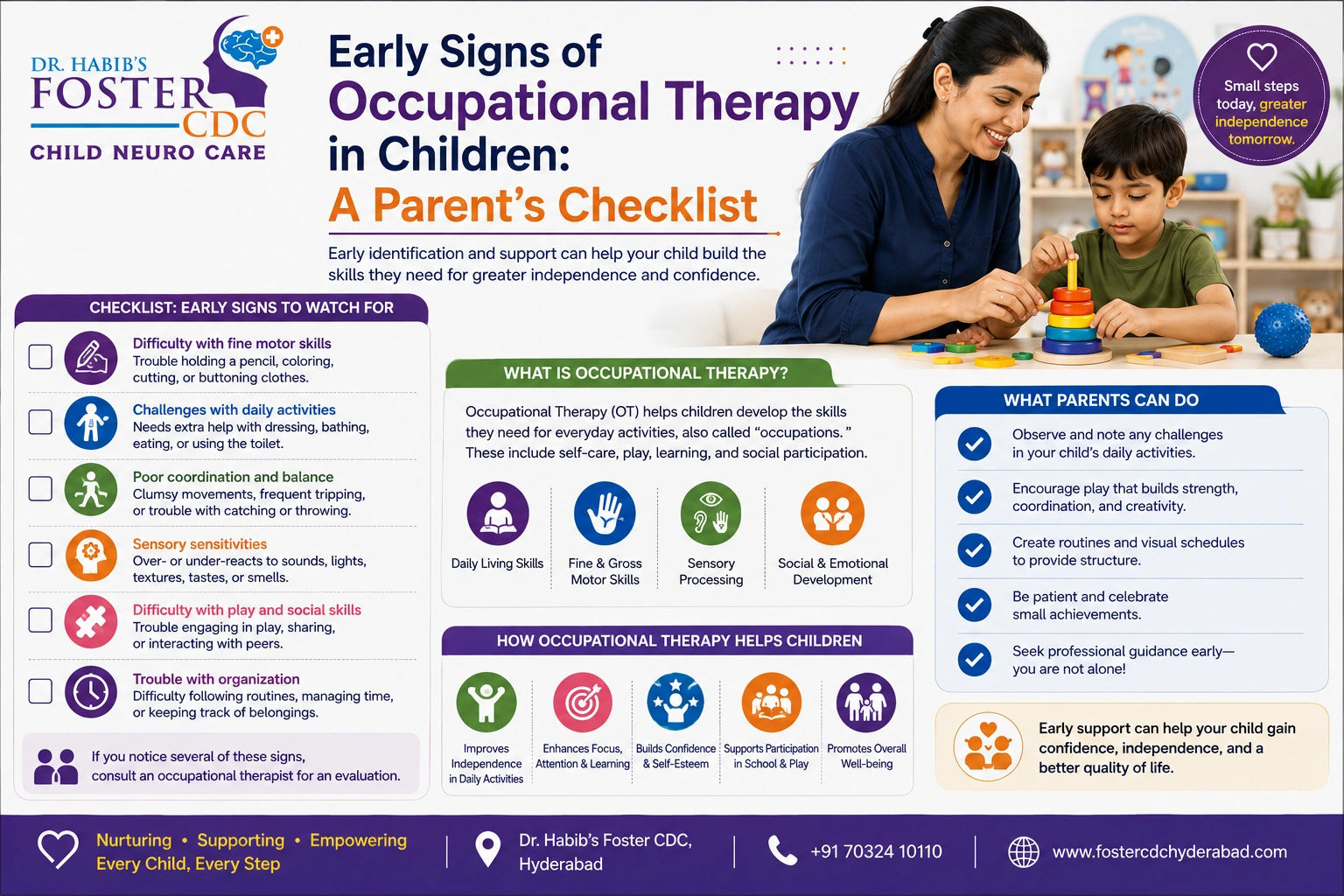
Early Signs of Occupational Therapy in Children: A Parent's Checklist
Struggling with a pencil grip, unusual reactions to certain textures or sounds, frequent clumsiness, or difficulty with everyday self-care tasks like buttoning a shirt can all be early signs a child may benefit from occupational therapy. No single sign confirms a need on its own — but a pattern across fine motor, sensory, or daily-living skills is worth a professional evaluation.
Why Recognizing Early Signs Matters
Occupational therapy (OT) helps children build the physical, sensory, and self-care skills they need for everyday life — from holding a crayon to managing a busy, noisy classroom. Sensory processing differences alone are common: roughly 1 in 6 children experience some degree of sensory processing difficulty, which can show up in handwriting, mealtimes, or making friends. Research also indicates that children who start occupational therapy before age five are more likely to catch up to developmental milestones than those who start later — which is why professional guidance consistently frames early recognition, not a "wait and see" approach, as the more effective path.
It's worth saying clearly: this checklist is a guide for noticing patterns, not a diagnostic tool. A formal evaluation by a pediatrician or occupational therapist is the only reliable way to confirm whether a child needs OT support.
The Parent's Checklist, by Category
Fine Motor Skills
Difficulty holding a pencil or crayon, or an unusual grip that hasn't improved with age
Rapid hand fatigue when writing or drawing
Avoids puzzles, building blocks, or small-object play
Struggles with buttons, zippers, or using scissors
Gross Motor Skills
Frequent falls, or noticeable clumsiness compared to peers
Difficulty with balance — climbing stairs, jumping, or riding a bike
Avoids physical play like running or climbing on playground equipment
Sensory Processing
Strong discomfort with certain clothing textures, tags, or fabrics
Overreacts to loud sounds, bright lights, or crowded spaces
Avoids or is unusually sensitive to certain food textures
Seeks out intense sensory input — spinning, crashing into objects, constant movement
Self-Care & Daily Living
Difficulty dressing independently, including shoes and fasteners
Struggles with feeding themselves at an age-appropriate level
Trouble with basic hygiene tasks like brushing teeth or hair
Attention, Behavior & Social Skills
Difficulty following multi-step instructions
Frequent meltdowns around transitions or changes in routine
Prefers solitary play or seems to struggle reading social cues
Typical Development vs. Signs Worth an Evaluation
What to Do If You Recognize These Signs
Talk to your pediatrician first. Share specific examples rather than general impressions — this helps guide whether a referral for occupational therapy evaluation makes sense.
Expect to be part of the evaluation. A typical OT evaluation involves the child completing fine motor, sensory, and self-care tasks while the therapist observes — and parents are usually in the room, sharing context and concerns throughout.
Ask for a personalised plan, not a generic one. Based on the evaluation, the therapist should set specific, measurable goals tied to your child's particular challenges and strengths.
Get involved in home strategies. Most OT plans include activities parents can build into daily routines — this consistency between sessions and home life tends to matter as much as the therapy sessions themselves.
How Foster CDC Approaches Occupational Therapy
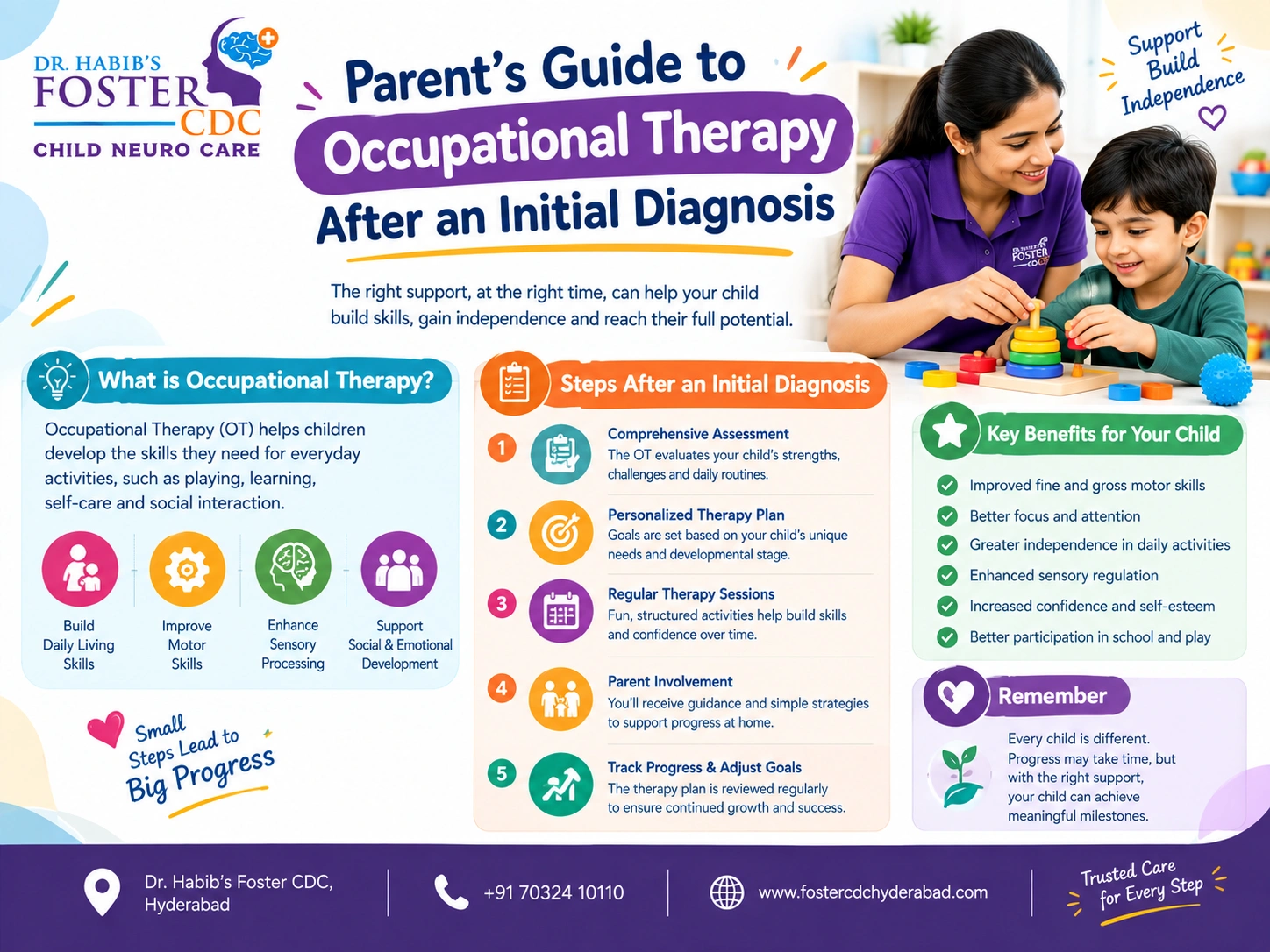
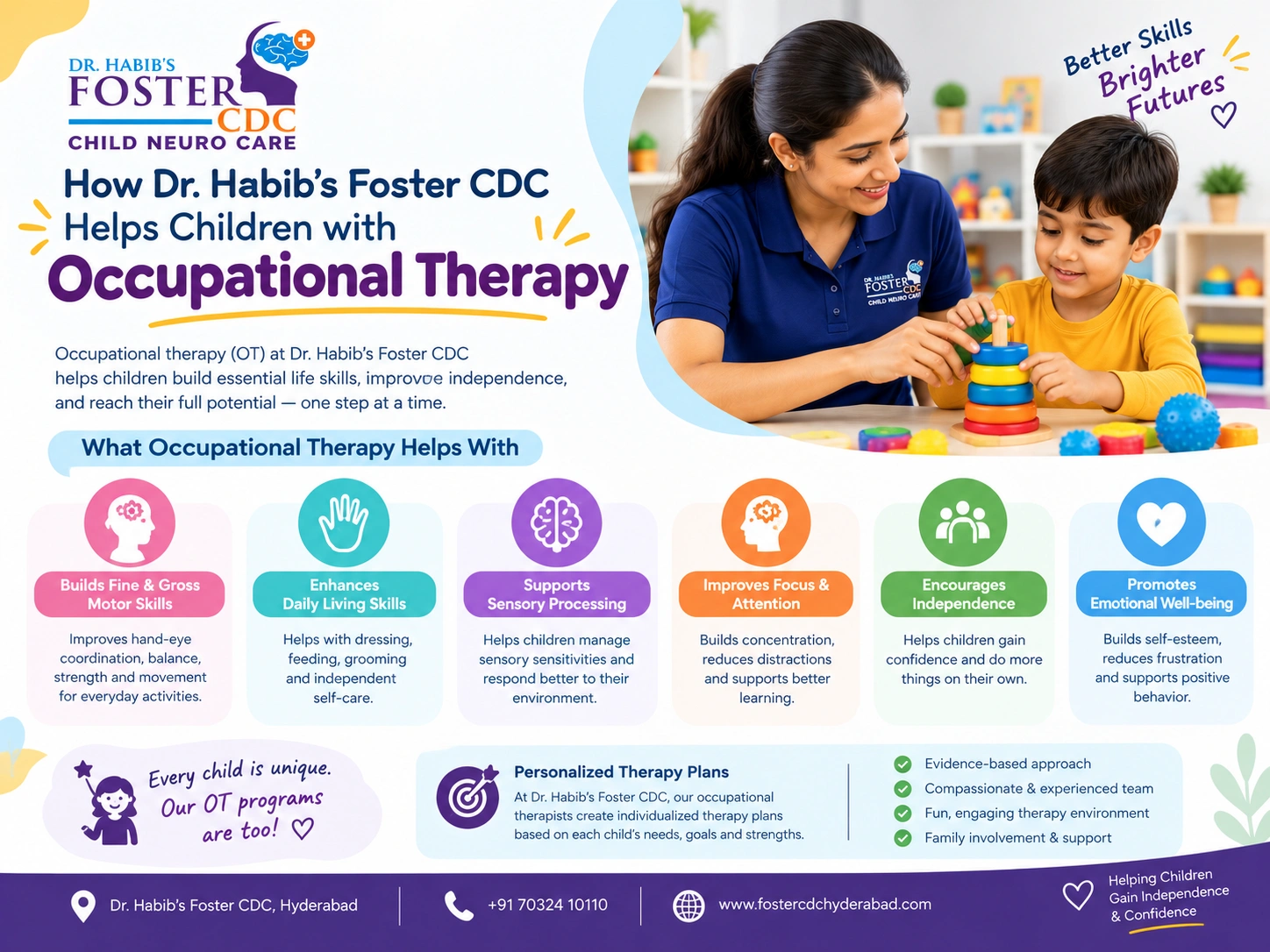
At Dr. Habib's Foster CDC, occupational therapy begins with a comprehensive evaluation across fine motor, gross motor, sensory processing, and daily-living skills. From there, the team builds an individualised plan and works closely with families — because progress in areas like sensory regulation and self-care tends to depend on consistency across the therapy room and home. Where a child's needs connect to speech, behavior, or a broader developmental picture, care is coordinated across specialists rather than treated as a separate track.
Frequently Asked Questions
Why does my child show signs of occupational therapy needs but seem fine in other areas?
It's common for OT-related challenges to be isolated to specific areas — like fine motor skills or sensory processing — without affecting a child's overall development. A targeted evaluation clarifies exactly what's involved.
At what age can a child start occupational therapy?
OT can begin in early childhood and continue through school-age years — earlier support is generally linked to better outcomes, but it's beneficial at any age a need is identified.
Is sensory processing difficulty the same as autism?
No. Sensory processing challenges can occur on their own or alongside other conditions, including autism — an evaluation helps clarify what's driving the specific symptoms.
My child avoids certain textures and sounds — does that always mean sensory processing issues?
Not necessarily. Mild preferences are common in early childhood; it's the intensity and impact on daily life that usually signals it's worth an evaluation.
What happens during a first occupational therapy evaluation?
The therapist observes the child completing fine motor, sensory, and self-care tasks, and discusses concerns with parents, who are typically present throughout.
Can occupational therapy help with handwriting specifically?
Yes — handwriting difficulties tied to fine motor or visual-motor skills are one of the more common reasons children are referred for OT.
My child struggles with transitions and meltdowns — is that an OT concern or a behavioral one?
It can be either, or both — which is exactly why a professional evaluation, rather than guessing, helps determine the right kind of support.
How long does occupational therapy typically continue?
This varies by child and the specific goals set after evaluation — progress is reviewed periodically rather than fixed to one timeline.
Do I need a doctor's referral before booking an OT evaluation?
It's a good first step to loop in your pediatrician, though centres like Foster CDC can also guide you through the evaluation and referral process directly.
How do I book an occupational therapy assessment at Foster CDC?
You can book an assessment directly through Foster CDC's website or by contacting your nearest centre.
Book an Occupational Therapy Assessment
If a few of these signs sound familiar, an evaluation is the clearest next step. Book an assessment with Dr. Habib's Foster CDC today.
Other Blogs


Services
- Behavioural Therapy
- Speech Therapy
- Special Education
- Parent Training
- Psychotherapy & Counselling
- Yoga Therapy
- Postural & Mobility Therapy
- Early Intervention Services
- Cognitive Behavioural Therapy
- Occupational Therapy
- Group Teaching
- Teachers' Training
- Certified Courses
- Developmental Therapy
- Autism Therapy