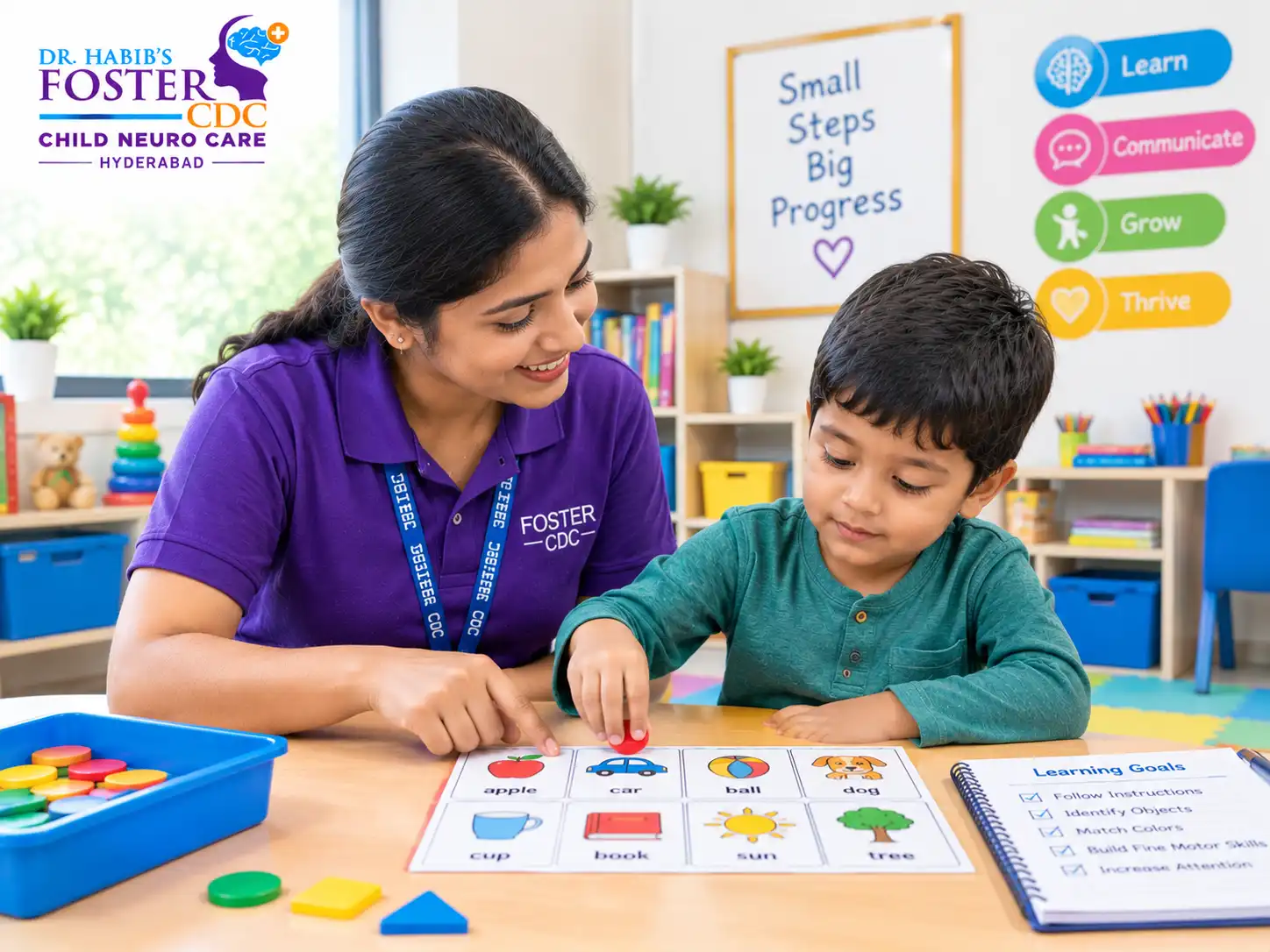
Early Signs of Special Education in Children: A Parent's Checklist
Maybe your child's teacher mentioned "extra support." Maybe homework takes three times longer than it should, or your child seems to be working twice as hard as classmates for half the result. If you're quietly wondering whether something is going on, you're not overreacting. Many parents searching for special education in Hyderabad start exactly here: unsure, a little worried, and looking for a clear way to tell what's normal from what needs attention.
This checklist walks you through the early signs that a child may benefit from special education support, what each one can mean, and what to do next. It comes from Dr. Habib G Pathan, Developmental Pediatrician at Dr. Habib's Foster CDC, and reflects what we see in clinic every week. It is general guidance, not a diagnosis.
Quick Answers
What is special education?
Special education is teaching that is adapted to a child's individual learning needs. It uses personalised goals, different teaching methods and extra support so children who learn differently can make steady progress.
What are the early signs a child may need special education?
Common signs include late speech or milestones, difficulty learning letters or numbers, trouble following instructions, poor attention, and a gap between effort and results at school. One sign alone rarely means much. A pattern matters.
At what age can learning needs be spotted?
Signs can appear in the toddler years, such as late talking, and become clearer in preschool or the first years of school, when reading, writing and maths begin.
Does needing special education mean my child is not intelligent?
No. Many children who need extra support have average or above-average intelligence. They simply learn, process or focus in a different way.
What is an individualized education plan?
An individualized education plan (IEP) is a written plan that sets learning goals for one child, lists the support needed and is reviewed regularly. It is built from an assessment of that child's strengths and needs.
Who decides if my child needs special education?
A developmental pediatrician, working with psychologists, therapists and special educators, assesses the child. Teachers' observations help, but they don't replace a proper assessment.
Why Spotting Signs Early Helps
Learning gaps tend to grow quietly. A child who can't yet read in Grade 1 may be labelled "lazy" or "careless" by Grade 3, and confidence suffers long before skills do. Early support protects both. According to guidance from bodies such as the World Health Organization and the American Academy of Pediatrics, regular developmental monitoring in childhood helps families act sooner. Acting sooner gives your child more time to benefit.
Early Signs Checklist by Age
| Age | What to Watch For |
|---|---|
| 1–3 years | Few or no words by 2 years, limited pointing or gestures, difficulty following simple instructions, late walking or sitting, little interest in play |
| 3–5 years | Unclear speech, trouble learning colours, shapes or counting, difficulty with pretend play or sharing, very short attention span, struggling with self-care like feeding or dressing |
| 5–7 years | Difficulty recognising letters or sounds, trouble copying shapes or writing, mixing up left and right, forgetting instructions, avoiding school tasks |
| 7–10 years | Reading well below grade level, slow or messy writing, difficulty with spelling or basic maths, losing track in class, frequent complaints about school |
| 10+ years | Poor comprehension, trouble organising work, low confidence, avoiding reading aloud, widening gap between ability and results |
Signs by Area of Learning
Language and communication
- Late to talk or limited vocabulary for age
- Difficulty understanding or following spoken instructions
- Trouble telling a story or answering questions
Reading, writing and maths
- Struggles to connect letters with sounds
- Reverses or confuses letters long after peers have stopped
- Very slow, effortful reading or handwriting
- Difficulty understanding number concepts
See our guides on early signs of dyslexia and types of learning difficulties for more detail.
Attention and behaviour
- Cannot stay on a task for age-appropriate time
- Fidgets, interrupts or seems "in another world"
- Frequent meltdowns around homework or school
Our article on ADHD in school children explains how attention difficulties can look in class.
Motor and daily skills
- Awkward pencil grip or very untidy writing
- Difficulty with buttons, shoelaces or cutting
- Clumsiness or poor coordination
Social and emotional
- Difficulty making or keeping friends
- Anxiety, tearfulness or refusal about going to school
- Low confidence, with comments like "I'm stupid"
Why Might a Child Need Special Education Support?
There is rarely one cause, and parents are never to blame. Support is often linked to:
- Developmental delay, where milestones arrive later than expected (read about developmental delay in children)
- Specific learning difficulties, such as dyslexia
- Attention difficulties, including ADHD
- Autism or communication differences
- Intellectual or cognitive differences
- Hearing, vision or health issues that affect learning
- Premature birth or early health complications
Sometimes the cause stays unclear. That doesn't change how well the right support can work.
Normal Variation or a Real Concern?
| Likely normal variation | Worth getting checked |
|---|---|
| Occasionally reverses a letter at age 4–5 | Still reversing letters regularly at 8 |
| Distracted during a boring task | Can't focus even on activities they enjoy |
| Shy in new settings | Avoids all peers or school completely |
| One late milestone | Several late skills, or a skill that was lost |
| Bad day with homework | Daily distress over schoolwork for months |
Myths vs Facts
| Myth | Fact |
|---|---|
| Special education is only for children with severe disabilities | It also supports children with mild to moderate learning, attention or language needs |
| Children will grow out of it | Some catch up, but many don't without targeted help |
| It means a child can't attend a regular school | Many children learn in mainstream schools with extra support |
| Poor results mean a child isn't trying | Effort and ability are different things; many struggling children try very hard |
| Seeking help labels a child for life | A proper assessment describes how a child learns best and guides support |
Do's and Don'ts for Worried Parents
Do:
- Write down specific examples with dates
- Ask the teacher what they observe in class
- Check hearing and vision first
- Request a developmental assessment
- Praise effort and small wins
Don't:
- Compare your child harshly with siblings or classmates
- Wait years hoping it will pass
- Pressure or punish a child for poor results
- Rely only on online checklists, including this one
What to Do Next
- Observe and note. Keep a short record of what you see at home and what the school reports.
- Talk to the school. Ask about reading level, attention and social behaviour.
- Get an assessment. A developmental pediatrician looks at development, learning, language, attention and emotional wellbeing together.
- Build a plan. Findings are turned into an individualized education plan with clear goals, reviewed regularly.
- Start support. This may include special education sessions, speech or occupational therapy, and strategies for home and school.
If you're wondering about timing, our guide on whether your child is ready for school may help. You can also read about our special education services.
Special School or Mainstream School?
Many parents ask about a special school for kids. There is no single right answer. Some children thrive in mainstream classrooms with extra help and adapted teaching. Others do better in a smaller, specialised setting for a period. The right choice depends on your child's needs, the support the school can give, and your family's circumstances. An assessment helps you make this decision with facts rather than fear. India's disability laws also encourage inclusive education wherever it works for the child.
Key Takeaways
- Early signs of learning needs often show up as a pattern, not a single issue.
- Struggling at school does not mean your child lacks intelligence or effort.
- A proper assessment is the most reliable way to understand what your child needs.
- An individualized education plan turns findings into clear, reviewable goals.
- Starting support early gives children more time to build skills and confidence.
Frequently Asked Questions
1. How do I know if my child needs special education?
Look for a pattern: late milestones, difficulty with reading, writing or maths, attention problems, or a gap between effort and results. A developmental assessment confirms whether extra support would help and what kind.
2. Can a child with a learning difficulty be intelligent?
Yes. Many children with dyslexia or attention difficulties have average or above-average intelligence. Their challenge lies in how they process or use information, not in their ability to think.
3. At what age should I seek an assessment?
Any age. If you notice delays in toddlerhood, assess early. If concerns appear in school, ask for an assessment once you see a pattern lasting several months.
4. What happens in a developmental assessment?
The doctor takes a detailed history, observes your child, uses age-appropriate tools to check language, learning, attention, motor and social skills, and explains the findings along with recommended next steps.
5. What is an IEP and who writes it?
An IEP is a written plan with individual learning goals and the support a child needs. It is usually created by a team that may include a developmental pediatrician, special educator, therapists, teachers and parents.
6. Will my child have to leave their regular school?
Not necessarily. Many children continue in mainstream schools with adapted teaching, extra practice and therapy support. A specialised setting is considered only when it better fits the child's needs.
7. Is special education the same as therapy?
No, but they often work together. Special education focuses on learning skills, while therapies such as speech or occupational therapy build communication, motor and sensory skills that support learning.
8. How long will my child need special education support?
It varies. Some children need support for a limited period, while others benefit over several years. Progress is reviewed regularly, and the plan changes as your child grows.
9. Can special education help older children?
Yes. Support can help older children and teenagers improve study skills, confidence and exam readiness, although earlier support usually gives a head start.
10. How can I support my child at home?
Keep routines predictable, break tasks into small steps, read together daily, praise effort, and follow the strategies your child's team recommends. Consistency matters more than long sessions.
Conclusion
Noticing early signs is not a failure on your part. It is the most useful thing a parent can do. Whether your child needs a little extra practice or a more structured plan, understanding how they learn is the first step toward helping them thrive. Support works best when it starts early and involves both home and school.
If something on this checklist sounds familiar, you don't need to wait for certainty. Book an assessment with Dr. Habib's Foster CDC and get a clear picture of your child's strengths, needs and next steps.
Other Blogs

Services
- Behavioural Therapy
- Speech Therapy
- Special Education
- Parent Training
- Psychotherapy & Counselling
- Yoga Therapy
- Postural & Mobility Therapy
- Early Intervention Services
- Cognitive Behavioural Therapy
- Occupational Therapy
- Group Teaching
- Teachers' Training
- Certified Courses
- Developmental Therapy
- Autism Therapy