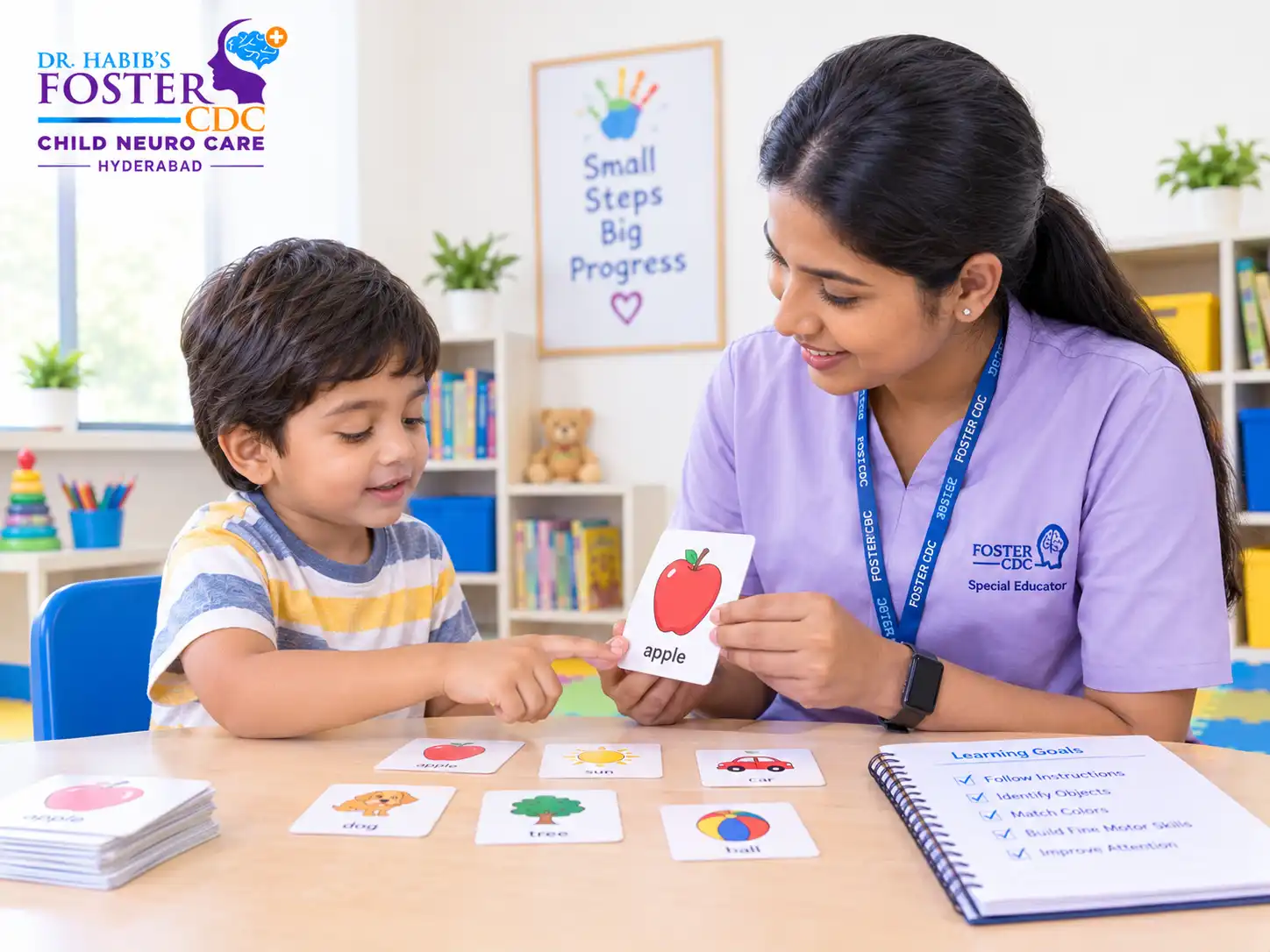
Special Education in Children: A Complete Guide for Parents
The diagnosis conversation is over. Now comes a different kind of question: where will my child learn best, and who will teach them? Parents in this position often type "special school for kids" into a search bar late at night, hoping for a simple answer. The honest answer is that there are several good paths, and the best one depends on your child.
This guide is a practical map of that decision. It explains how special education programs are built, what a day in one looks like, how to compare settings, and how to judge quality when you visit. It comes from Dr. Habib G Pathan, Developmental Pediatrician at Dr. Habib's Foster CDC. If you're still trying to work out whether your child needs this support at all, start with our early signs checklist instead.
Quick Answers
Is a special school right for my child?
It may be if your child needs smaller classes, specialist teaching and daily structure that a mainstream class cannot offer. Many children do well in mainstream schools with extra support, so the decision should follow an assessment.
How is a special school different from a mainstream school with support?
A special school builds the whole day around individual needs, with small groups and trained staff. A mainstream school with support keeps the child in a regular class and adds help such as a shadow teacher or extra sessions.
What does a typical day look like in a special education program?
Usually a mix of short, structured lessons, therapy time, movement or play breaks, and practice of daily living and social skills, with a visual routine so the child knows what comes next.
How long before I see progress?
Small gains, such as better focus or new words, often appear within a few months. Larger changes take longer. A good program sets short-term goals so you can see steps along the way.
Can my child switch between settings?
Yes. Many children move from special to mainstream settings, or the reverse, as their needs change. Regular reviews are what make these moves safe.
Who is on my child's team?
Typically a special educator, therapists, a developmental pediatrician, the class teacher and you.
Special Education Is a Program, Not a Place
Parents often picture a building. In reality, special education is a set of services that can be delivered in several places: a regular classroom, a small-group room, one-to-one sessions, or a dedicated school. What makes it "special" is that teaching goals, methods and pace are set for one child, based on assessment, and checked often.
A Day in a Special Education Program (Illustrative Example)
Programs differ, but a well-run day often has a predictable rhythm, because predictability helps children feel safe enough to learn.
| Time Block | Activity | Purpose |
|---|---|---|
| Arrival | Greeting, visual schedule review | Calm start, builds routine |
| Morning | Short focused lessons (language, early reading, numbers) | Core learning in small steps |
| Mid-morning | Movement or sensory break | Regulates energy and attention |
| Late morning | Therapy or one-to-one goal work | Targets individual skills |
| Lunch | Supported self-feeding, peer interaction | Independence and social skills |
| Afternoon | Creative or life-skills activity (art, music, daily living) | Generalises skills to real life |
| Close | Review of the day, home message | Links school and home |
Comparing the Main Options
| Option | How It Works | Strengths | Things to Weigh |
|---|---|---|---|
| Special school | Whole program designed for children with additional needs | Small classes, specialist staff, built-in therapy links | Less everyday contact with typically developing peers |
| Inclusive / mainstream with support | Regular class plus adaptations, shadow teacher or extra sessions | Peer role models, familiar community | Depends heavily on the school's resources and attitude |
| Hybrid | Part-time mainstream plus part-time specialist sessions | Flexibility, gradual transition | Needs good coordination between both settings |
| Small-group or group teaching | A few children with similar needs learn together | Peer practice with more attention than a large class | Group matching matters |
| One-to-one tutoring | Individual sessions with a special educator | Fully personalised pace | Less social practice unless paired with group time |
Five Questions to Help You Decide
- How does my child cope in a busy class? Overwhelm, shutdowns or constant distress are signals to consider smaller settings.
- How much individual attention do they need to learn? If new skills need one-to-one repetition, a mainstream class alone may not be enough.
- What do the assessment results recommend? Your doctor and team have seen your child's profile in detail.
- What support can a particular school really deliver? Promises are easy. Ask for specifics.
- How is my child's confidence? A child who feels constantly behind may blossom in a setting that fits, and a child who is thriving socially may need only extra academic help.
No single answer is permanent. Treat the first choice as a starting point, and review it.
Inside the IEP: What Goals Actually Look Like
An individualized education plan can sound abstract until you see examples. Here are illustrative goals, written the way a good plan phrases them.
| Area | Example Goal | Support | How Progress Is Checked |
|---|---|---|---|
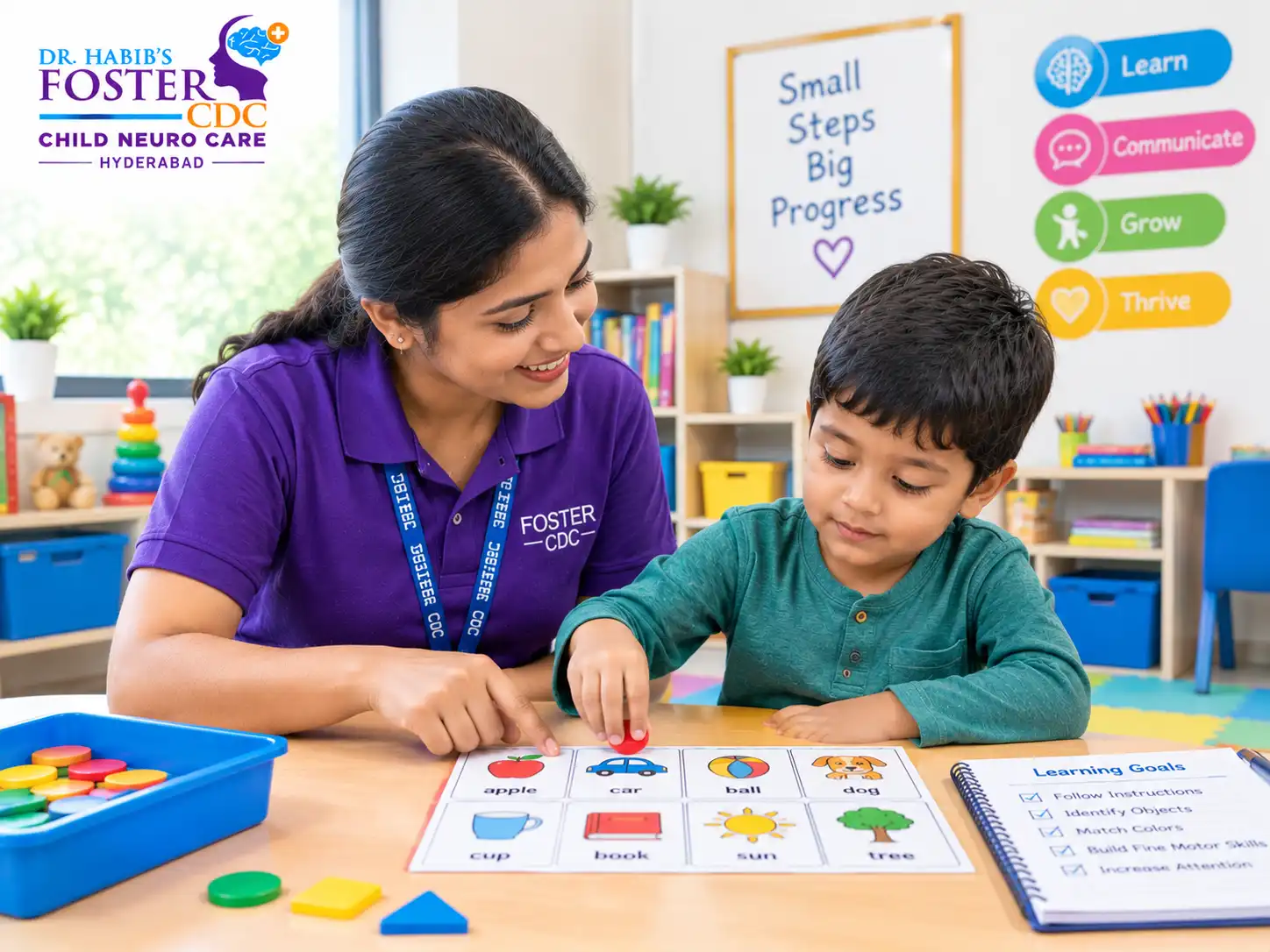
| Communication | Uses 2–3 word phrases to request items in class | Picture cues, daily practice | Weekly tally of requests |
| Early reading | Matches 15 letters to their sounds | Multi-sensory letter activities | Monthly short assessment |
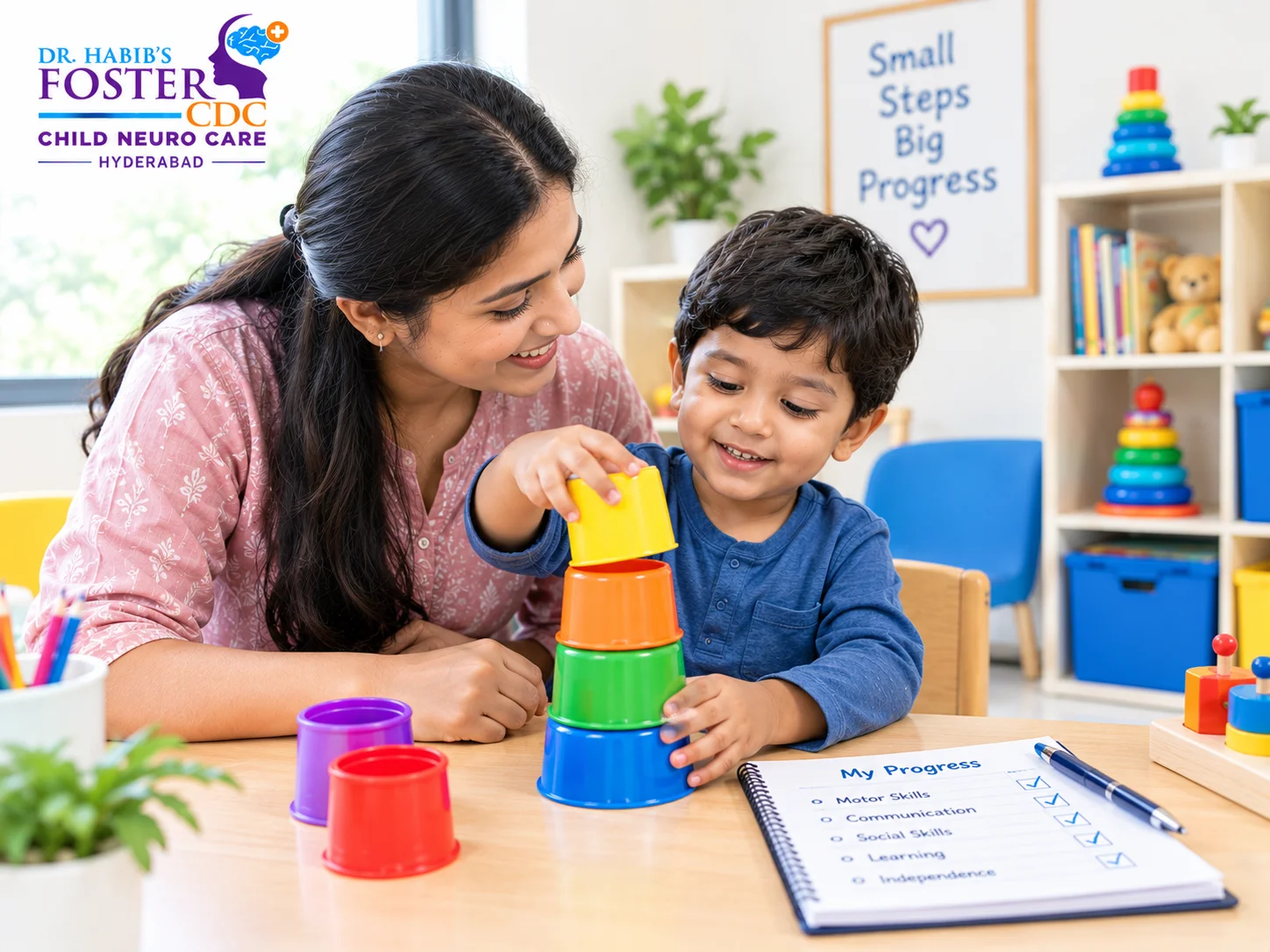
| Attention | Stays on a chosen task for 5 minutes | Timer, break card, quiet corner | Observation log |
| Daily living | Washes hands independently | Step-by-step picture sequence | Checklist at home and school |
| Social | Takes a turn in a simple group game | Role-play, adult prompting | Teacher notes |
Good goals are specific, measurable and reviewed. If a plan only says "will improve reading," ask what that means and how you'll know. Our guide on personalized therapy plans for children explains how findings become plans.
The Team Behind Your Child
| Professional | What They Contribute |
|---|---|
| Developmental pediatrician | Assessment, medical oversight, overall direction |
| Special educator | Designs and delivers learning goals |
| Speech therapist | Language and communication skills |
| Occupational therapist | Handwriting, sensory and self-care skills |
| Behaviour specialist | Strategies for attention, routines and behaviour |
| Class teacher / shadow teacher | Day-to-day classroom support |
| Parents | Consistency, insight and the longest view of the child |
Read more about how therapies fit alongside teaching in therapies for a special needs child.
Visiting a School or Centre: Green Flags and Red Flags
Green flags
- Staff speak to children with warmth and patience
- Clear assessment before a plan is made
- Goals are written, specific and shared with you
- Regular reviews and open communication
- Therapy and teaching are coordinated
- Calm, organised spaces with visual supports
Red flags
- A fixed program offered to every child regardless of assessment
- Vague answers about goals or progress
- Reluctance to let you observe or ask questions
- Guarantees of "cure" or fast results
- Little training or experience among staff
- Pressure to enrol immediately
Making Transitions Smoother
Changes are hardest on children who rely on routine. When starting a new setting or moving between settings:
- Visit together beforehand and take photos to make a simple picture story
- Share your child's likes, dislikes and calming strategies with staff
- Start with shorter days if possible
- Keep home routines steady while everything else is new
- Review progress after the first few weeks and adjust
Paperwork and Practical Support
Ask your doctor and the school what documentation might help your child access support, such as assessment reports or, where applicable, disability certification. Requirements and entitlements can change, so confirm current rules with the school, your doctor or the relevant government office rather than relying on hearsay.
Building the Home Partnership
You don't need to turn home into a classroom. Small habits help:
- Keep a simple communication notebook between home and school
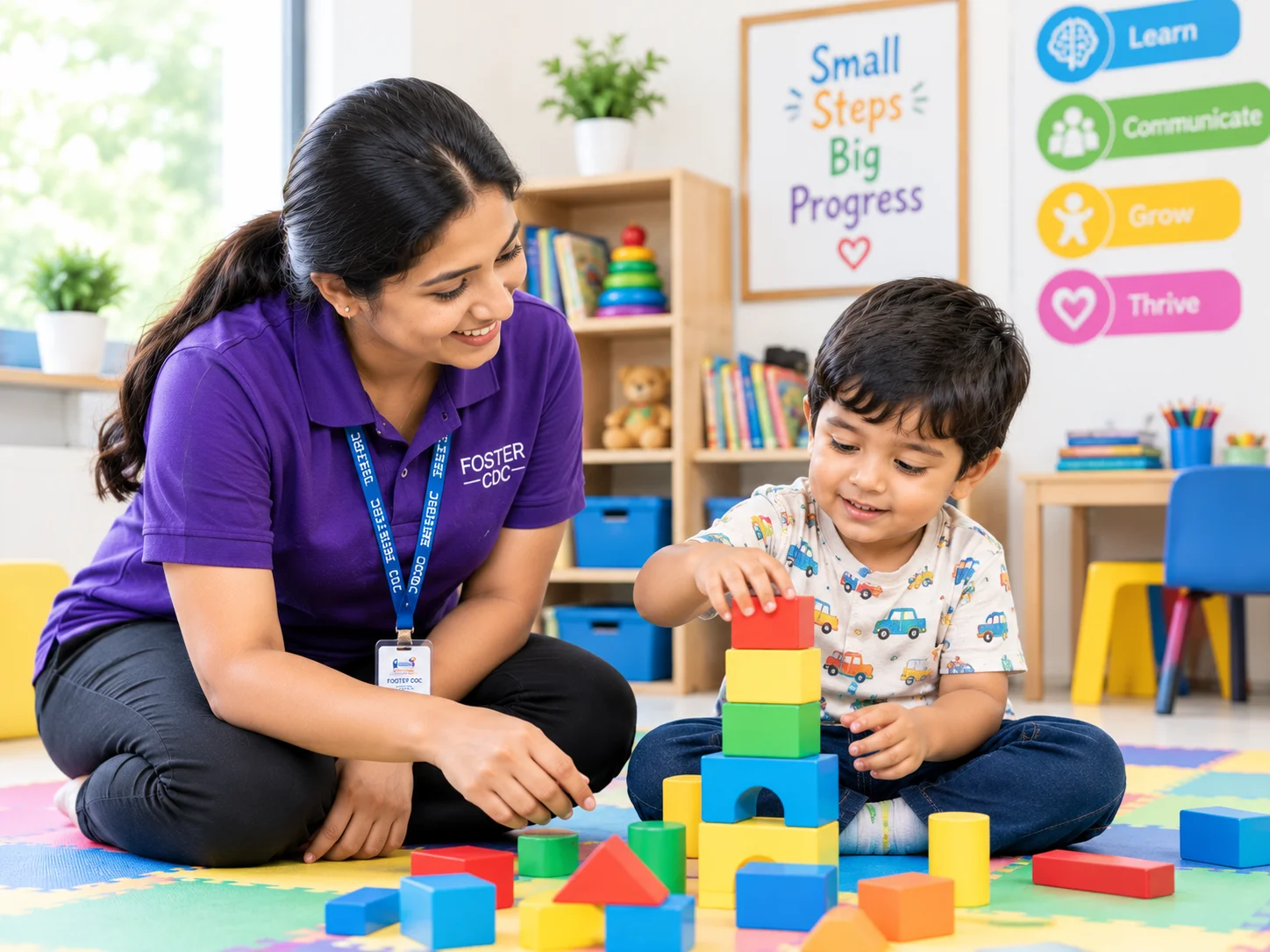
- Practise one skill at a time in short, playful bursts
- Use the same words and visual cues the school uses
- Build social skills through everyday play. See our guide on social skills in children.
- Protect your own energy. Our guide to parenting a child with special needs offers support for parents too.
Key Takeaways
- Special education is a set of services, not a single place, and the right setting depends on your child.
- A predictable daily structure and clear, measurable IEP goals are signs of a quality program.
- Special school, mainstream with support and hybrid models each have strengths. None is automatically best.
- Visit, ask for specifics and watch how staff treat children.
- Review the plan regularly. Moving between settings is normal as needs change.
Frequently Asked Questions
1. What should I look for when choosing a special school for kids? Look for trained staff, small groups, assessment-based goals, regular progress reports and coordination with therapists. A welcoming, organised environment and open communication with parents are equally important.
2. How many children are usually in a special education class? Class sizes are generally small so each child gets individual attention. Ask any program for its exact ratio and how staff are allocated across the day.
3. Do special schools teach the regular curriculum? Many adapt the regular curriculum, while others use functional or skill-based programs. The mix depends on each child's goals, and it should be explained to you.
4. What is a shadow teacher and when is one useful? A shadow teacher supports one child inside a mainstream class, helping them follow instructions and take part. It is useful when a child can learn in a regular class but needs in-the-moment help.
5. How do I know if the program is working? You'll see progress against written goals, feedback from teachers and changes in daily life, such as better communication or independence. If nothing changes over several months, ask for a review.
6. Can children with different needs learn in the same group? Sometimes, but groups work best when children's needs and levels are reasonably matched. Ask how the program forms groups.
7. How involved should parents be? Very. Parents should help set goals, receive regular updates and know what to practise at home. Good programs welcome questions.
8. Is therapy included in special education programs? Some programs include therapies in-house, while others coordinate with outside therapists. Ask what is included and how often.
9. What if my child is unhappy in the new setting? Some adjustment is normal. Talk with the team, look for patterns in what upsets your child and review the plan. If distress continues, reassess whether the setting fits.
10. When should a child's placement be reviewed? At least once a year, and sooner if there are big changes in progress, behaviour or wellbeing.
Conclusion
Choosing where and how your child will learn is one of the biggest decisions in this journey, but it doesn't have to be a leap of faith. With a clear assessment, a good understanding of your options and a few well-chosen questions, you can find the setting that fits your child today and stay ready to adjust as they grow.
If you'd like help working out the right support, book an assessment with Dr. Habib's Foster CDC and explore our special education services in Hyderabad.
Other Blogs

Services
- Behavioural Therapy
- Speech Therapy
- Special Education
- Parent Training
- Psychotherapy & Counselling
- Yoga Therapy
- Postural & Mobility Therapy
- Early Intervention Services
- Cognitive Behavioural Therapy
- Occupational Therapy
- Group Teaching
- Teachers' Training
- Certified Courses
- Developmental Therapy
- Autism Therapy