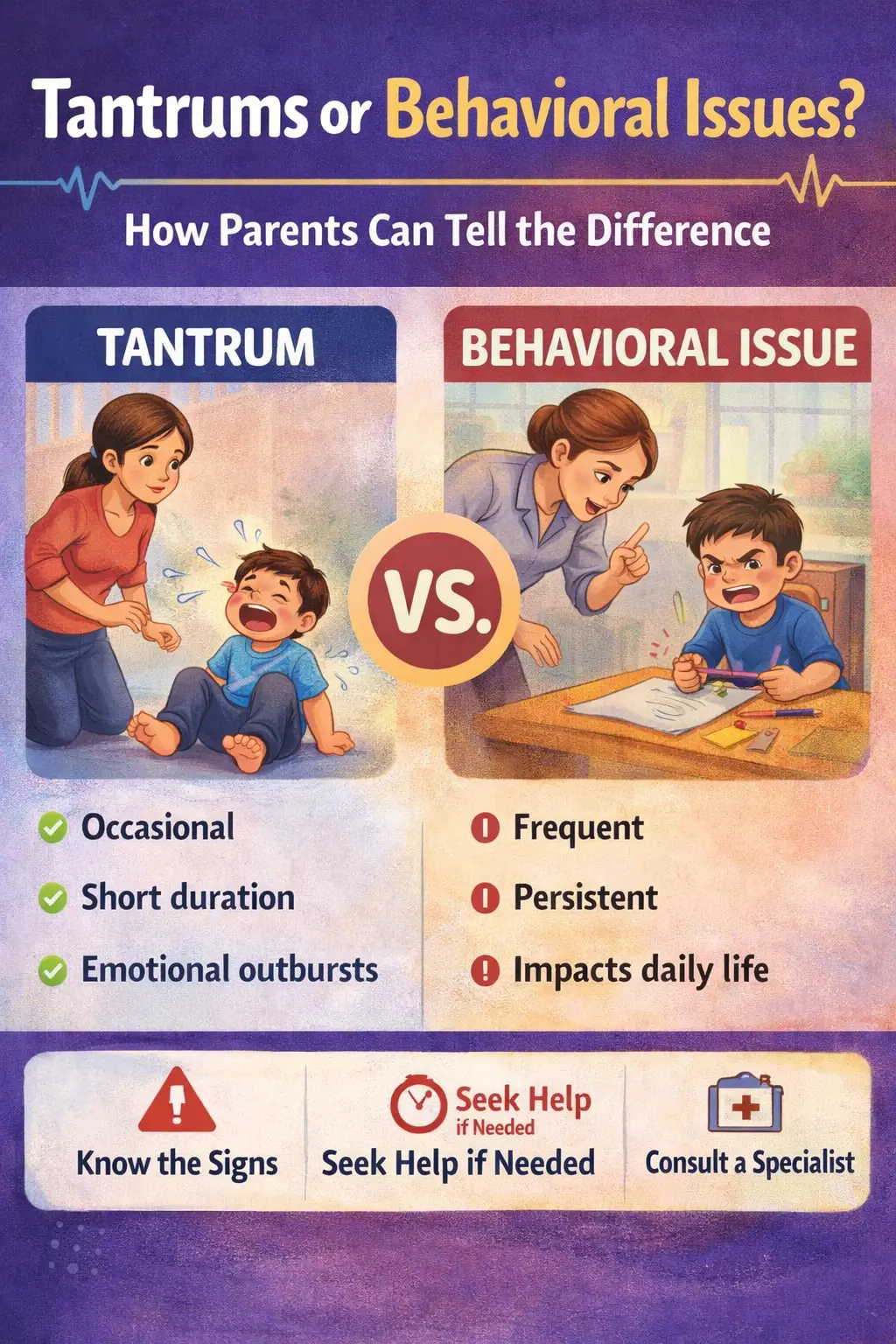
Tantrums or Behavioral Issues? How Parents Can Tell the Difference
Introduction
Every parent has faced emotional outbursts from their child at some point. But how do you know whether it’s just a normal tantrum or something more serious? Understanding the difference between tantrums vs behavioral issues in children is essential for early intervention and healthy child development.
In this guide, we’ll help you clearly identify signs, causes, and when to seek professional help—so you can support your child in the best way possible.
What Are Tantrums in Children?
Tantrums are emotional outbursts that are common in toddlers and young children, usually between ages 1 to 4.
They often happen because a child:
-
Feels frustrated
-
Cannot express emotions properly
-
Wants attention or control
-
Is tired, hungry, or overstimulated
Tantrums are a normal part of child development and usually decrease as communication skills improve.
What Are Behavioral Issues in Children?
Behavioral issues are more persistent and may indicate underlying developmental, emotional, or neurological concerns.
Unlike tantrums, behavioral problems in children:
-
Occur frequently and consistently
-
Happen across multiple environments (home, school)
-
Are difficult to manage with standard parenting techniques
-
May affect learning and social interaction
Tantrums vs Behavioral Issues in Children (Key Differences)
| Factor | Tantrums | Behavioral Issues |
|---|---|---|
| Duration | Short (few minutes) | Long-lasting patterns |
| Frequency | Occasional | Frequent & repetitive |
| Trigger | Specific (denied request) | Often unclear or multiple triggers |
| Control | Child regains control quickly | Child struggles to calm down |
| Age relevance | Common in toddlers | Can persist in older children |
Common Signs of Tantrums
-
Crying, screaming, or yelling
-
Throwing objects
-
Stomping feet
-
Temporary loss of control
-
Stops once need is fulfilled or distraction occurs
Warning Signs of Behavioral Issues in Children
Parents should watch for these red flags:
-
Aggression (hitting, biting regularly)
-
Difficulty following instructions
-
Lack of emotional regulation
-
Frequent defiance or anger
-
Trouble interacting with other children
-
Repetitive negative behavior
These may indicate conditions like:
-
ADHD
-
Autism spectrum disorder
-
Oppositional defiant disorder (ODD)
-
Anxiety or emotional disorders
Causes of Tantrums vs Behavioral Problems
Causes of Tantrums
-
Limited communication skills
-
Desire for independence
-
Emotional overload
-
Environmental triggers (noise, crowd)
Causes of Behavioral Issues
-
Neurological or developmental conditions
-
Parenting inconsistencies
-
Trauma or stress
-
Lack of routine
-
Genetic factors
How Parents Can Tell the Difference
Here’s a simple way to identify:
-
If the behavior is age-appropriate and occasional → Tantrum
-
If the behavior is persistent, intense, and impacts daily life → Behavioral Issue
Ask yourself:
-
Is this happening daily?
-
Is my child unable to calm down?
-
Is it affecting school or social life?
If yes, it may not be just a tantrum.
How to Handle Tantrums in Children
-
Stay calm and avoid reacting emotionally
-
Do not give in to unreasonable demands
-
Use distraction techniques
-
Maintain a consistent routine
-
Teach simple emotional words
How to Manage Behavioral Issues in Children
-
Observe patterns and triggers
-
Set clear boundaries and consequences
-
Use positive reinforcement
-
Maintain structured routines
-
Consult a child specialist if needed
When to Seek Professional Help
You should consult a specialist if:
-
Behavior continues beyond age 5–6
-
Tantrums become violent or self-harming
-
Child shows developmental delays
-
Behavior affects school performance
-
Social interaction is severely impacted
Early diagnosis can make a big difference in treatment outcomes.
Importance of Early Intervention
Recognizing the difference between tantrums and behavioral issues in children early helps:
-
Improve emotional development
-
Prevent long-term behavioral problems
-
Support better academic performance
-
Build stronger parent-child relationships
FAQs: Tantrums vs Behavioral Issues in Children
1. Are tantrums normal in children?
Yes, tantrums are a normal part of early childhood development and usually decrease with age.
2. At what age should tantrums stop?
Most tantrums reduce by age 4–5 as communication and emotional control improve.
3. How do I know if my child has behavioral issues?
If behavior is frequent, intense, and affects daily life, it may be more than a tantrum.
4. Can behavioral issues be treated?
Yes, with early intervention, therapy, and proper guidance, most behavioral issues can be managed effectively.
5. Should I ignore tantrums?
Mild tantrums can be ignored, but consistent guidance and emotional support are important.
Conclusion
Understanding the difference between tantrums vs behavioral issues in children empowers parents to respond appropriately. While tantrums are temporary and part of growing up, behavioral issues may need professional attention.
The key is observation, patience, and timely action. If something feels unusual, trust your instincts and seek expert advice.
Other Blogs

Services
- Behavioural Therapy
- Speech Therapy
- Special Education
- Parent Training
- Psychotherapy & Counselling
- Yoga Therapy
- Postural & Mobility Therapy
- Early Intervention Services
- Cognitive Behavioural Therapy
- Occupational Therapy
- Group Teaching
- Teachers' Training
- Certified Courses
- Developmental Therapy
- Autism Therapy