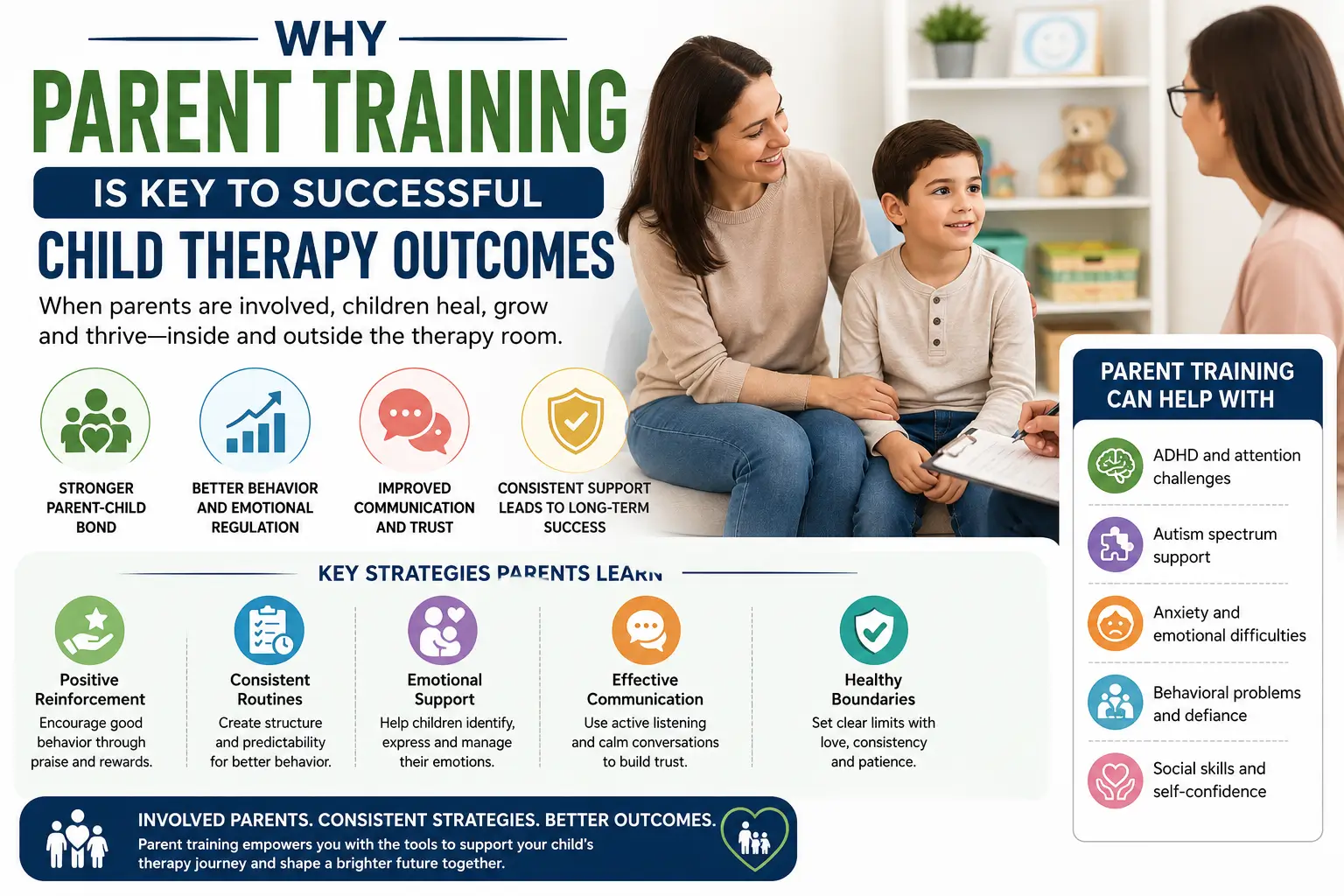
Why Parent Training Is Key to Successful Child Therapy Outcomes
Introduction
Child therapy plays a crucial role in helping children manage emotional, behavioral, developmental, and psychological challenges. However, therapy sessions alone are often not enough to create long-term improvement. One of the biggest factors influencing successful child therapy outcomes is active parental involvement through structured parent training.
Many therapists and child psychologists now emphasize that parent training in child therapy is essential because children spend most of their time at home, not inside the therapist’s office. Parents who understand therapeutic strategies can reinforce positive behaviors, improve emotional support, and create a healthier environment for their child’s growth.
This guide explains why parent training is important in child therapy, how it improves therapy outcomes, its benefits for families, and how parents can actively support their child’s emotional and behavioral development.
What Is Parent Training in Child Therapy?
Parent training refers to structured guidance provided by therapists, psychologists, or behavioral specialists to help parents understand and manage their child’s emotional or behavioral challenges effectively.
The goal is to teach parents:
- Positive parenting strategies
- Behavioral management techniques
- Emotional regulation support
- Communication skills
- Consistent discipline methods
- Reinforcement techniques
Parent training helps families continue therapeutic progress outside clinical sessions.
Why Parent Training Is Important for Child Therapy Success
Children Spend More Time With Parents Than Therapists
A child may attend therapy for one hour weekly, but parents interact with the child every day. This makes parents the most influential part of a child’s emotional and behavioral development.
When parents apply therapy techniques consistently at home, children improve faster and maintain progress longer.
Therapy Works Better With Consistency
Children respond best when expectations, routines, and emotional support remain consistent.
Without parent training:
- Therapy strategies may not continue at home
- Behavioral improvements may fade
- Emotional triggers may go unmanaged
Consistent reinforcement between therapy sessions strengthens positive outcomes.
Parent Training Builds Emotional Safety
Children heal and grow best in emotionally supportive environments.
Parent training teaches caregivers how to:
- Respond calmly during emotional outbursts
- Validate emotions
- Reduce criticism
- Build trust and emotional connection
A secure home environment can significantly improve therapy results.
How Parent Training Improves Child Therapy Outcomes
Encourages Positive Behavior Changes
Parents learn how to reinforce positive behaviors instead of unintentionally encouraging negative patterns.
Common behavior management techniques include:
- Positive reinforcement
- Reward systems
- Consistent consequences
- Structured routines
- Clear communication
These methods improve cooperation and emotional regulation.
Reduces Family Stress
Behavioral and emotional challenges often create stress for the entire family.
Parent training helps reduce:
- Daily conflicts
- Frustration
- Parenting burnout
- Emotional tension at home
As family relationships improve, children often feel safer and more emotionally stable.
Improves Communication Between Parents and Children
Many children struggle to express emotions clearly.
Parent training teaches communication strategies such as:
- Active listening
- Emotional validation
- Calm responses
- Age-appropriate conversations
Better communication strengthens parent-child relationships and supports emotional healing.
Helps Parents Understand Child Behavior
Parents may misinterpret anxiety, ADHD, autism-related behaviors, or emotional dysregulation as disobedience.
Training helps caregivers understand:
- Why behaviors occur
- Emotional triggers
- Developmental challenges
- Sensory sensitivities
- Stress responses
This understanding promotes empathy and patience.
Conditions Where Parent Training Is Especially Beneficial
ADHD in Children
Parent training for ADHD helps caregivers manage:
- Hyperactivity
- Impulsivity
- Attention difficulties
- Emotional outbursts
Structured parenting strategies can improve behavior and academic functioning.
Autism Spectrum Disorder
Parents of autistic children benefit from learning:
- Communication support strategies
- Sensory regulation techniques
- Social skill reinforcement
- Routine management
Parent involvement is essential in autism therapy programs.
Anxiety Disorders
Children with anxiety need reassurance, emotional regulation support, and gradual exposure techniques.
Parent training helps caregivers avoid unintentionally reinforcing anxiety behaviors.
Oppositional Defiant Disorder (ODD)
Behavioral parent training is highly effective for children with oppositional behaviors and frequent conflicts.
Emotional and Behavioral Disorders
Parent training also supports children dealing with:
- Aggression
- Emotional dysregulation
- Mood disorders
- Social difficulties
- Trauma-related behaviors
Key Skills Parents Learn During Parent Training
Positive Reinforcement Techniques
Parents learn how to reward healthy behaviors consistently.
Examples include:
- Praise
- Reward charts
- Encouragement
- Small incentives
Positive reinforcement motivates children more effectively than punishment alone.
Emotional Regulation Support
Parents learn how to help children:
- Identify emotions
- Manage frustration
- Calm themselves
- Express feelings safely
Emotional regulation skills improve long-term mental health.
Setting Healthy Boundaries
Consistent boundaries create predictability and emotional security.
Training helps parents establish:
- Clear expectations
- Healthy routines
- Consistent consequences
- Balanced discipline
Managing Challenging Behaviors Calmly
Parents learn how to respond without yelling, harsh punishment, or emotional escalation.
Calm responses reduce conflict and improve cooperation.
Benefits of Parent Training for Families
Stronger Parent-Child Relationships
Therapeutic parenting techniques strengthen emotional bonds and trust.
Better Academic and Social Functioning
Children who receive consistent support at home often perform better socially and academically.
Improved Emotional Stability
Children feel more secure when caregivers respond predictably and supportively.
Long-Term Therapy Success
Parent involvement increases the likelihood of lasting behavioral and emotional improvements.
Common Challenges Parents Face During Child Therapy
Feeling Overwhelmed
Parents may initially feel stressed by therapy recommendations and behavior management strategies.
However, gradual learning and therapist support make implementation easier over time.
Inconsistent Parenting Approaches
When caregivers use different parenting styles, children may become confused.
Parent training encourages consistency among caregivers.
Unrealistic Expectations
Behavioral improvement takes time. Parent training helps families understand realistic progress timelines.
Tips for Parents to Support Child Therapy at Home
Follow Therapist Recommendations Consistently
Consistency is one of the most important factors in successful child therapy outcomes.
Create a Structured Routine
Predictable schedules help children feel emotionally secure.
Encourage Open Communication
Allow children to express emotions without fear of criticism.
Practice Patience
Behavioral and emotional growth takes time and repetition.
Attend Parent Training Sessions Regularly
Active participation helps parents develop confidence and effective parenting skills.
When Should Parents Consider Parent Training?
Parents should consider training if their child:
- Shows emotional or behavioral difficulties
- Has ADHD or autism
- Struggles with anxiety
- Experiences frequent emotional outbursts
- Has difficulty following rules
- Is already attending therapy
Early parent involvement often improves therapy effectiveness significantly.
Frequently Asked Questions
What is parent training in child therapy?
Parent training teaches caregivers practical strategies to support their child’s emotional, behavioral, and developmental progress at home.
Why is parent involvement important in child therapy?
Children spend most of their time with parents, making parental support essential for consistent therapeutic progress.
Does parent training improve therapy outcomes?
Yes. Research shows that active parental involvement improves emotional regulation, behavior management, and long-term therapy success.
Can parent training help children with ADHD?
Yes. Parent training is highly effective for managing ADHD-related behaviors such as impulsivity, hyperactivity, and emotional outbursts.
How long does parent training take?
The duration depends on the child’s needs, therapy goals, and family participation. Many programs continue for several weeks or months.
Conclusion
Successful child therapy outcomes depend not only on therapists but also on strong parental involvement. Parent training helps caregivers understand their child’s emotional and behavioral needs while teaching effective strategies that reinforce therapeutic progress at home.
From improving communication and emotional regulation to reducing stress and strengthening family relationships, parent training creates a supportive environment where children can thrive emotionally, socially, and behaviorally.
When parents actively participate in the therapeutic process, children are far more likely to achieve lasting emotional growth and long-term mental wellness.
Other Blogs
Services
- Behavioural Therapy
- Speech Therapy
- Special Education
- Parent Training
- Psychotherapy & Counselling
- Yoga Therapy
- Postural & Mobility Therapy
- Early Intervention Services
- Cognitive Behavioural Therapy
- Occupational Therapy
- Group Teaching
- Teachers' Training
- Certified Courses
- Developmental Therapy
- Autism Therapy