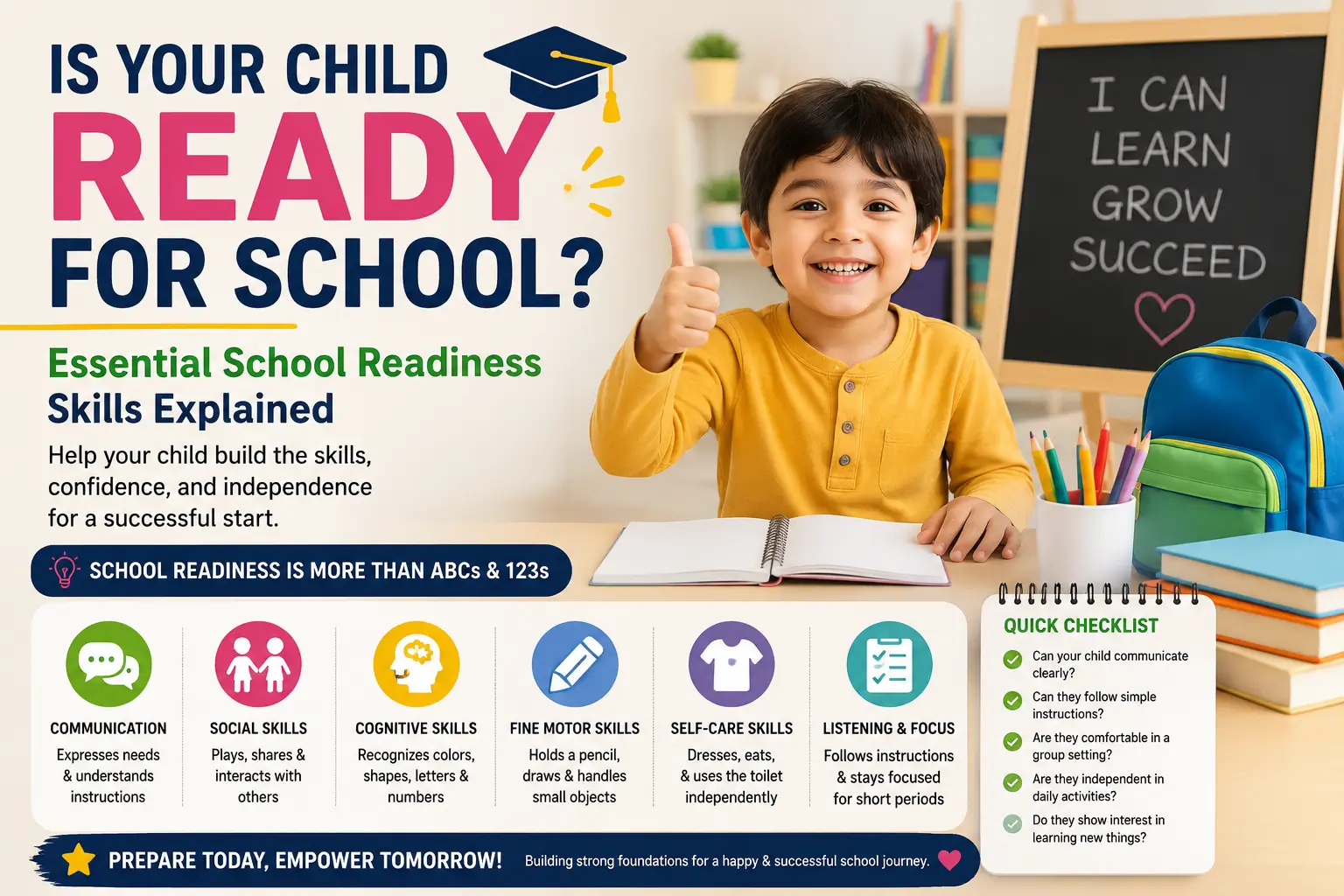
Is Your Child Ready for School? Essential School Readiness Skills Explained
Starting school is a big milestone—not just for children, but for parents too. If you’re wondering “is your child ready for school?”, you’re not alone. Many parents look for clear signs, practical checklists, and expert-backed guidance before taking this step.
This comprehensive guide explains essential school readiness skills, helping you understand whether your child is prepared—academically, socially, and emotionally.
What Does “School Readiness” Really Mean?
School readiness is not just about knowing ABCs or counting numbers. It’s a combination of:
- Cognitive skills (thinking and learning)
- Social and emotional development
- Physical coordination
- Communication abilities
A child ready for school can adapt to routines, interact with peers, and follow simple instructions independently.
Why School Readiness Skills Are Important
Strong school readiness skills for preschoolers set the foundation for:
- Better academic performance
- Confidence in social settings
- Smooth transition to classroom learning
- Reduced anxiety on the first day
Children who are prepared tend to enjoy school more and adapt quickly.
Essential School Readiness Skills Every Child Should Have
1. Communication and Language Skills
Your child should be able to:
- Speak in simple sentences
- Express needs clearly
- Understand basic instructions
Early language development for school readiness is crucial for classroom participation.
2. Social and Emotional Skills
A school-ready child can:
- Share toys and take turns
- Play with other children
- Manage basic emotions
These social skills for school readiness in children help them build friendships and adjust to group environments.
3. Basic Cognitive Skills
Look for abilities like:
- पहचान (recognition) of shapes, colors, and letters
- Simple counting (1–10)
- Problem-solving through play
These early learning skills for school readiness support academic growth.
4. Fine Motor Skills
Children should be able to:
- Hold a pencil or crayon
- Draw simple shapes
- Turn pages of a book
Fine motor development for school readiness helps in writing and classroom activities.
5. Independence and Self-Care
Your child should:
- Use the toilet independently
- Wash hands
- Eat without assistance
These self-care skills for school readiness are often overlooked but very important.
6. Ability to Follow Instructions
A child ready for school can:
- Listen carefully
- Follow 2–3 step instructions
- Sit for short periods
This improves classroom discipline and learning.
Signs Your Child Is Ready for School
Here are some common indicators:
- Shows curiosity and interest in learning
- Comfortable staying away from parents for a few hours
- Can interact with other children
- Follows daily routines
If most of these apply, your child is likely ready.
How Parents Can Improve School Readiness Skills
If your child is not fully ready, don’t worry—these skills can be developed.
✔ Encourage Play-Based Learning
Games, puzzles, and storytelling boost cognitive development.
✔ Build a Routine
Set fixed times for sleeping, eating, and learning.
✔ Practice Communication
Talk regularly with your child and encourage questions.
✔ Promote Social Interaction
Arrange playdates or group activities.
✔ Develop Motor Skills
Use coloring, clay, and simple crafts.
Common Mistakes Parents Should Avoid
- ❌ Forcing academic learning too early
- ❌ Ignoring emotional readiness
- ❌ Comparing with other children
- ❌ Overloading with activities
Every child develops at their own pace.
School Readiness Checklist for Parents
Use this quick checklist:
- ✔ Can your child communicate basic needs?
- ✔ Can they sit and focus for 10–15 minutes?
- ✔ Are they comfortable with other children?
- ✔ Can they follow simple instructions?
- ✔ Are they independent in basic tasks?
If most answers are “yes,” your child is on the right track.
FAQs: School Readiness Skills Explained
1. What age should a child be ready for school?
Most children are ready between 3.5 to 5 years, depending on development.
2. What are the most important school readiness skills?
Communication, social interaction, basic motor skills, and emotional control are key.
3. Can a child go to school without knowing how to read?
Yes. Reading is not mandatory. Basic communication and understanding are more important.
4. How can I prepare my child for the first day of school?
Create a routine, talk positively about school, and visit the school beforehand if possible.
5. What if my child is not ready for school?
Give them more time and focus on developing readiness skills through play and interaction.
Final Thoughts
Understanding “is your child ready for school” goes beyond academics. It’s about emotional strength, independence, and the ability to adapt to a structured environment.
Focus on developing essential school readiness skills gradually. With the right support and patience, your child will step into school life with confidence.
Other Blogs
Services
- Behavioural Therapy
- Speech Therapy
- Special Education
- Parent Training
- Psychotherapy & Counselling
- Yoga Therapy
- Postural & Mobility Therapy
- Early Intervention Services
- Cognitive Behavioural Therapy
- Occupational Therapy
- Group Teaching
- Teachers' Training
- Certified Courses
- Developmental Therapy
- Autism Therapy