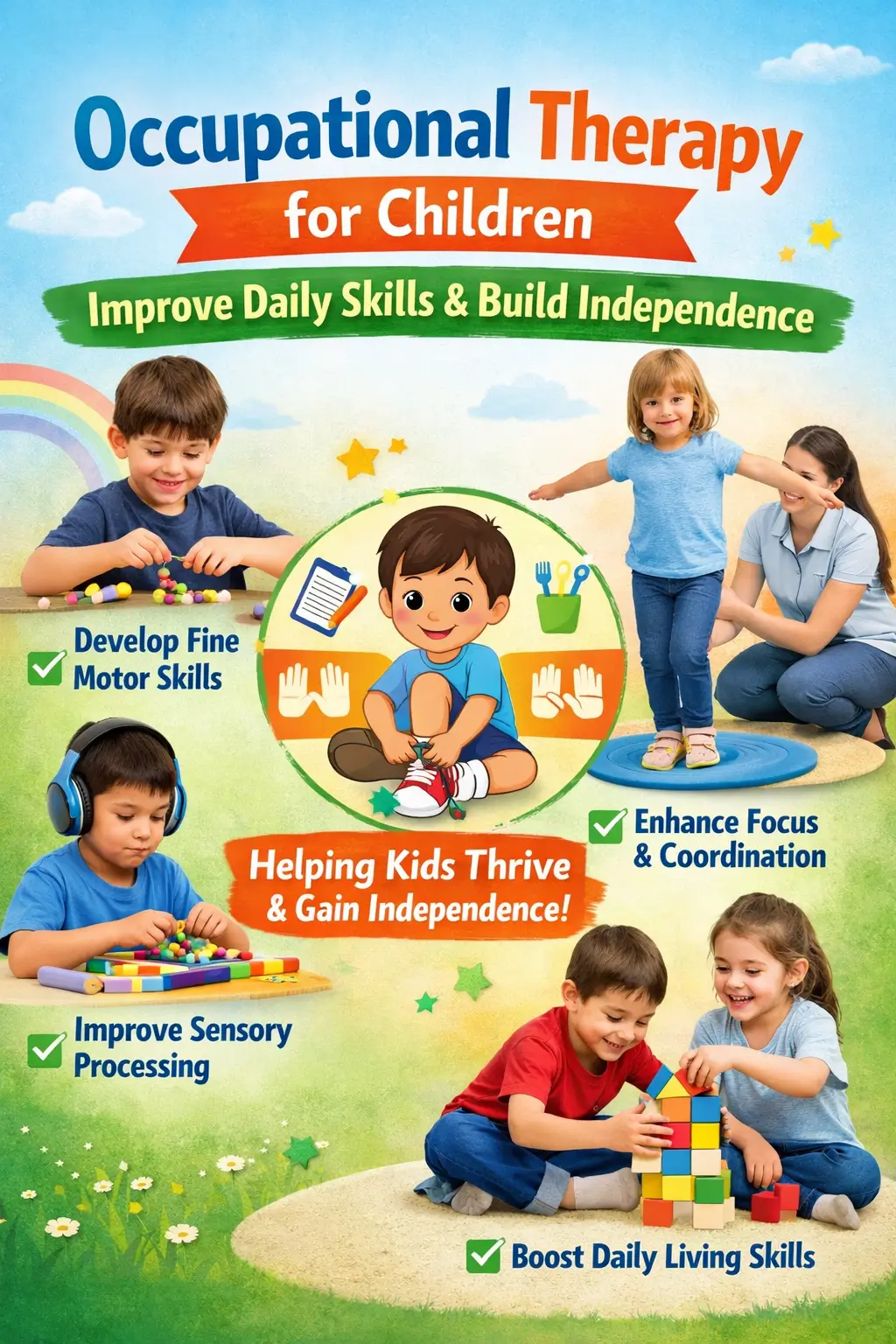
Occupational Therapy for Children: Improving Daily Skills & Independence Naturally
When a child struggles with simple daily activities—like holding a spoon, tying shoelaces, or even focusing in class—it can feel overwhelming for parents. You may wonder, “Is this normal, or does my child need support?”
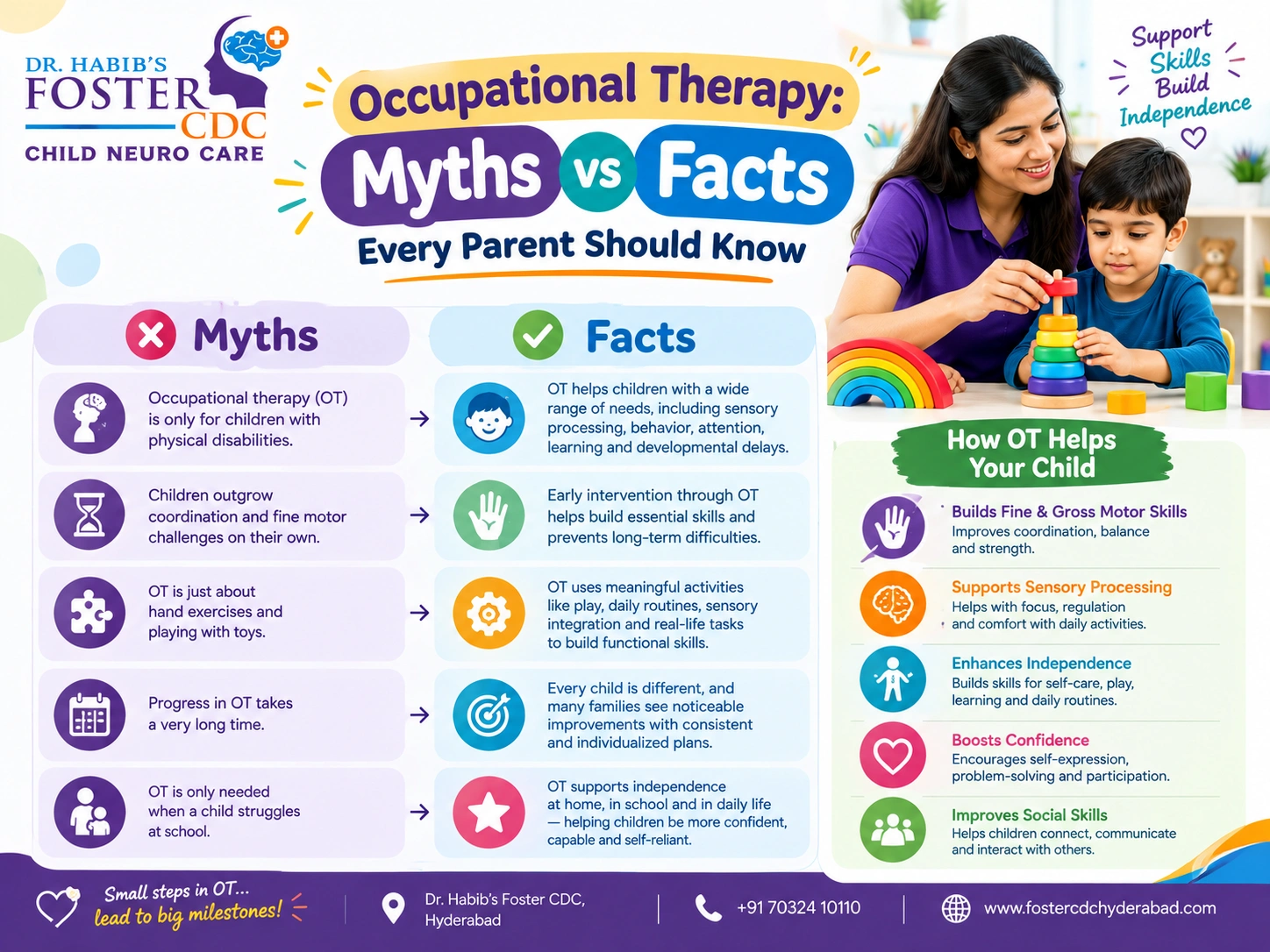
This is exactly where occupational therapy for children to improve daily skills and independence becomes life-changing.
Instead of focusing only on medical treatment, occupational therapy helps children build real-life skills—the kind they need every single day.
Let’s break it down in a simple, practical way ????
What is Occupational Therapy for Children?
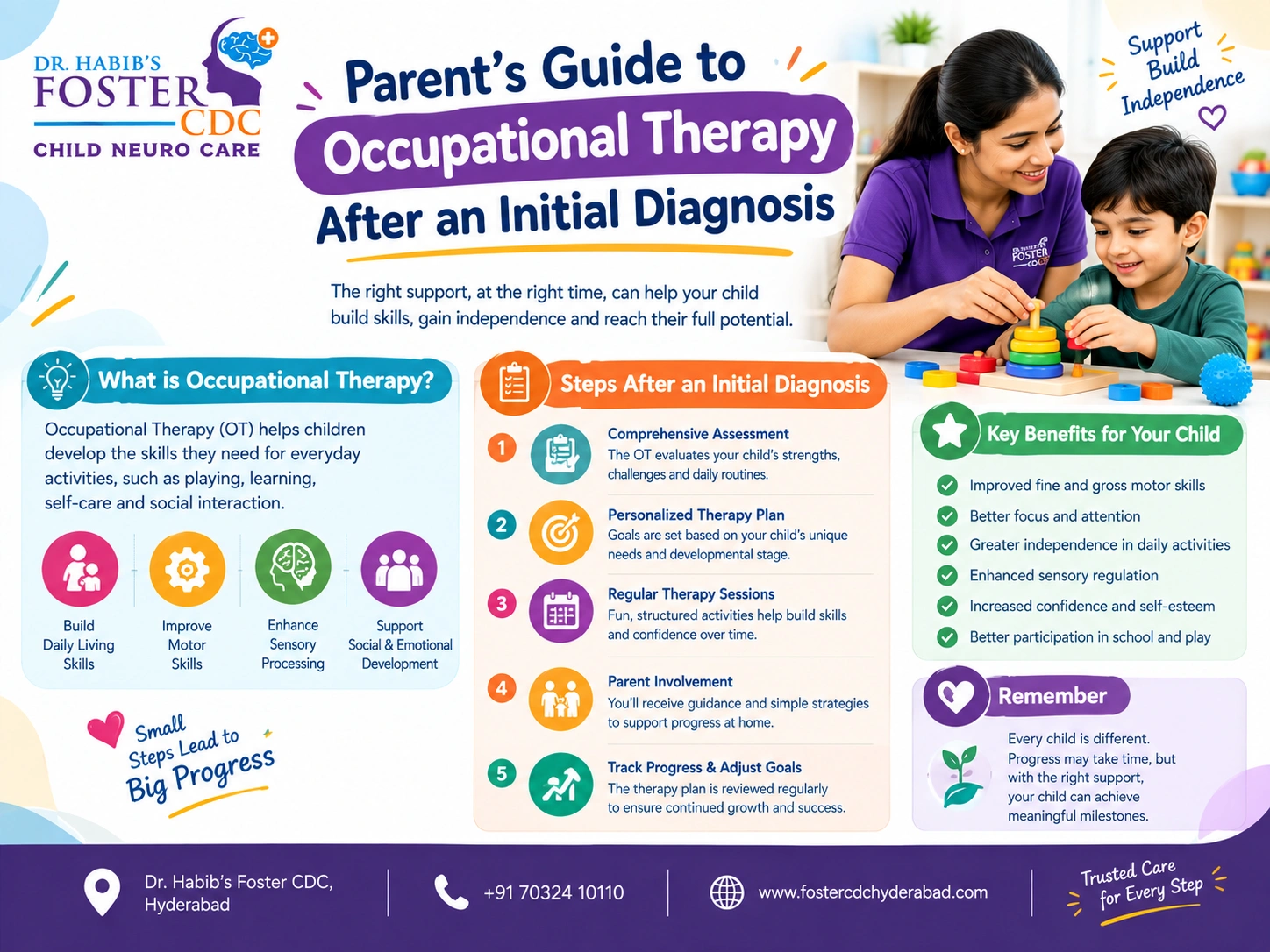
Occupational therapy (OT) is a specialized therapy that helps children develop the skills needed for:
- Daily self-care (eating, dressing, brushing)
- School activities (writing, attention, sitting tolerance)
- Social interaction and play
- Sensory and motor coordination
In simple words:
???? Occupational therapy teaches children how to live independently.
Signs Your Child May Need Occupational Therapy
Many parents ignore early signs thinking the child will “catch up.” But early intervention matters a lot.
Here are some common signs:
1. Difficulty in Daily Activities
- Trouble holding spoon or feeding
- Cannot button clothes or zip
- Poor handwriting
2. Sensory Issues
- Gets irritated by loud sounds
- Avoids touch or certain textures
- Overactive or extremely passive behavior
3. Poor Motor Skills
- Difficulty in running, jumping
- Weak hand grip
- Delayed fine motor development
4. Attention & Focus Problems
- Cannot sit for long
- Easily distracted
- Struggles in school tasks
???? If you notice 2–3 of these signs, it's worth exploring occupational therapy for kids with developmental delays.
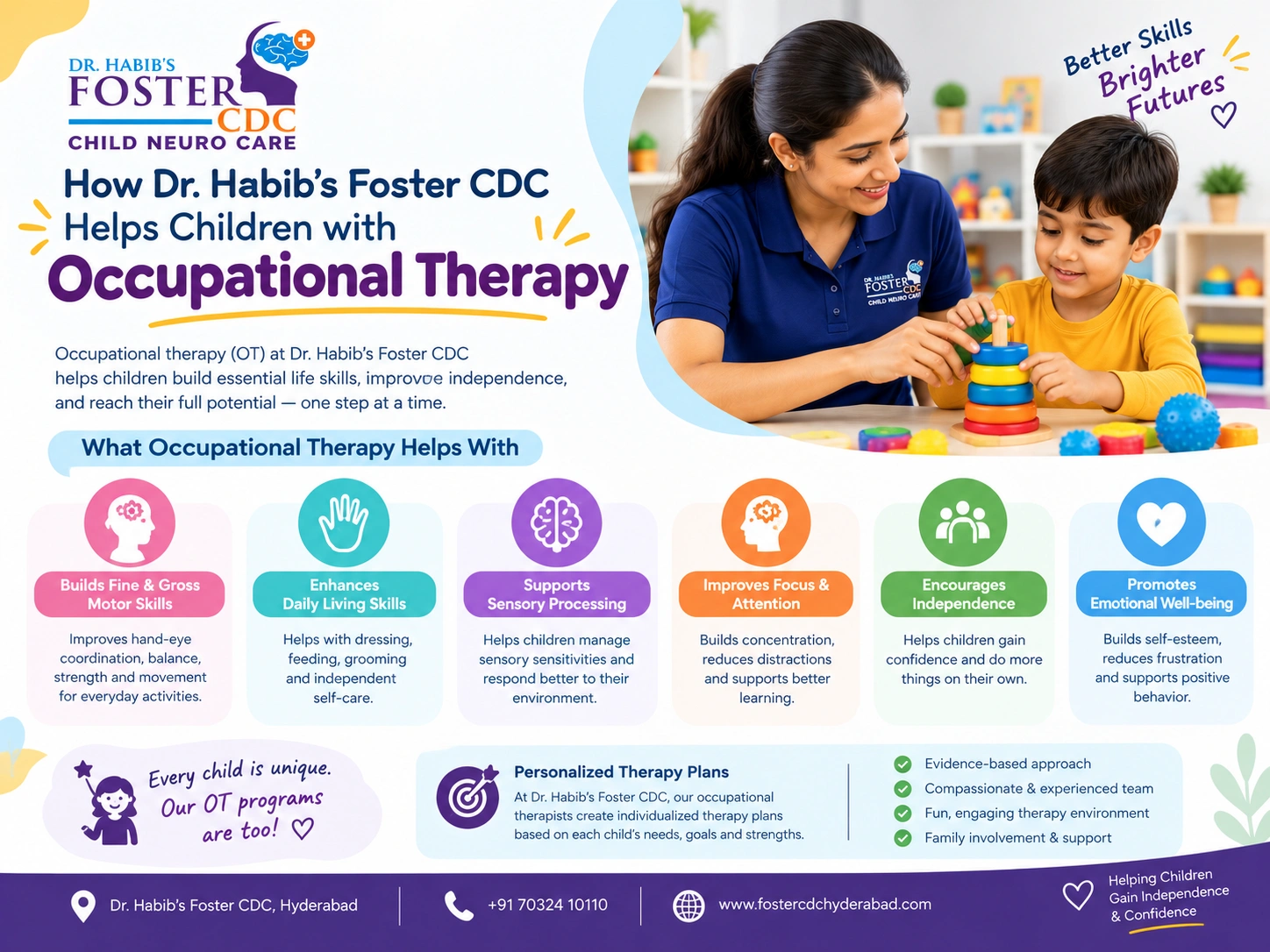
How Occupational Therapy Improves Daily Skills & Independence
This is where OT truly shines.
1. Builds Self-Care Independence
Children learn:
- Eating properly
- Dressing independently
- Personal hygiene routines
???? Result: Less dependency on parents
2. Improves Fine Motor Skills
Activities include:
- Bead threading
- Pencil grip training
- Hand strengthening exercises
???? Helps in writing, drawing, and school work
3. Enhances Sensory Processing
Children learn to:
- Handle noise, textures, lights
- Stay calm in overstimulating environments
???? Especially helpful for children with autism or sensory processing disorder
4. Boosts Attention & Focus
Through structured therapy:
- Improves concentration
- Increases sitting tolerance
- Enhances task completion
5. Develops Social & Play Skills
Children learn:
- Interaction with peers
- Sharing and communication
- Functional play behavior
Occupational Therapy for Autism, ADHD & Developmental Delays
OT is widely used for:
- Autism Spectrum Disorder (ASD)
- ADHD (Attention Deficit Hyperactivity Disorder)
- Cerebral Palsy
- Learning Disabilities
- Developmental Delays
For example:
???? A child with autism who avoids eye contact and struggles with touch can gradually become more comfortable through sensory integration therapy.
???? A child with ADHD can improve focus and classroom behavior with structured OT activities.
Types of Occupational Therapy Techniques Used for Children
1. Sensory Integration Therapy
Helps children process sensory information better.
2. Play-Based Therapy
Therapy through games to make learning fun.
3. Fine Motor Skill Training
Focus on hand and finger coordination.
4. Visual-Motor Integration
Improves hand-eye coordination.
5. Behavioral & Routine Training
Helps establish daily habits.
Benefits of Occupational Therapy for Children
Here’s what parents usually notice after consistent therapy:
- ✔ Improved independence in daily activities
- ✔ Better handwriting and school performance
- ✔ Increased confidence and social interaction
- ✔ Reduced frustration and behavioral issues
- ✔ Stronger motor and coordination skills
When Should You Start Occupational Therapy?
The best answer is:
???? As early as possible
Early therapy leads to:
- Faster improvement
- Better brain development
- Long-term independence
Even children as young as 2–3 years can benefit from early OT intervention.
What Happens in an Occupational Therapy Session?
A typical session includes:
- Warm-up sensory activities
- Task-based training (writing, dressing, etc.)
- Play-based exercises
- Parent guidance for home practice
Sessions are always:
???? Personalized
???? Child-friendly
???? Goal-oriented
Home Tips to Support Your Child’s Progress
Parents play a huge role.
Try these at home:
- Encourage self-feeding
- Give small tasks (folding clothes, picking toys)
- Limit screen time
- Engage in play-based learning
- Maintain routine
???? Consistency at home + therapy = faster results
Why Occupational Therapy is Important for Long-Term Independence
Without early intervention, small difficulties can turn into bigger challenges.
But with the right therapy:
- Children become confident
- They perform better academically
- They become independent in daily life
And most importantly…
???? They feel capable, not different.
FAQs – Occupational Therapy for Children
Q1. What age is best for occupational therapy?
Early intervention (2–6 years) is ideal, but children of any age can benefit.
Q2. How long does occupational therapy take to show results?
It depends on the child’s condition, but noticeable improvement usually starts within 3–6 months.
Q3. Is occupational therapy only for special needs children?
No. Even children with mild delays, handwriting issues, or focus problems can benefit.
Q4. Can occupational therapy improve writing skills?
Yes, OT significantly improves fine motor skills, pencil grip, and handwriting.
Q5. How often should a child attend OT sessions?
Typically 2–3 sessions per week, depending on the therapist’s plan.
Final Thoughts
Every child develops differently—but when daily activities become a struggle, early support can change everything.
Occupational therapy for children to improve daily skills and independence is not just therapy—it’s a foundation for a better, more confident future.
If you’re noticing delays, don’t wait.
???? The earlier you act, the easier the journey becomes.
Other Blogs

Services
- Behavioural Therapy
- Speech Therapy
- Special Education
- Parent Training
- Psychotherapy & Counselling
- Yoga Therapy
- Postural & Mobility Therapy
- Early Intervention Services
- Cognitive Behavioural Therapy
- Occupational Therapy
- Group Teaching
- Teachers' Training
- Certified Courses
- Developmental Therapy
- Autism Therapy