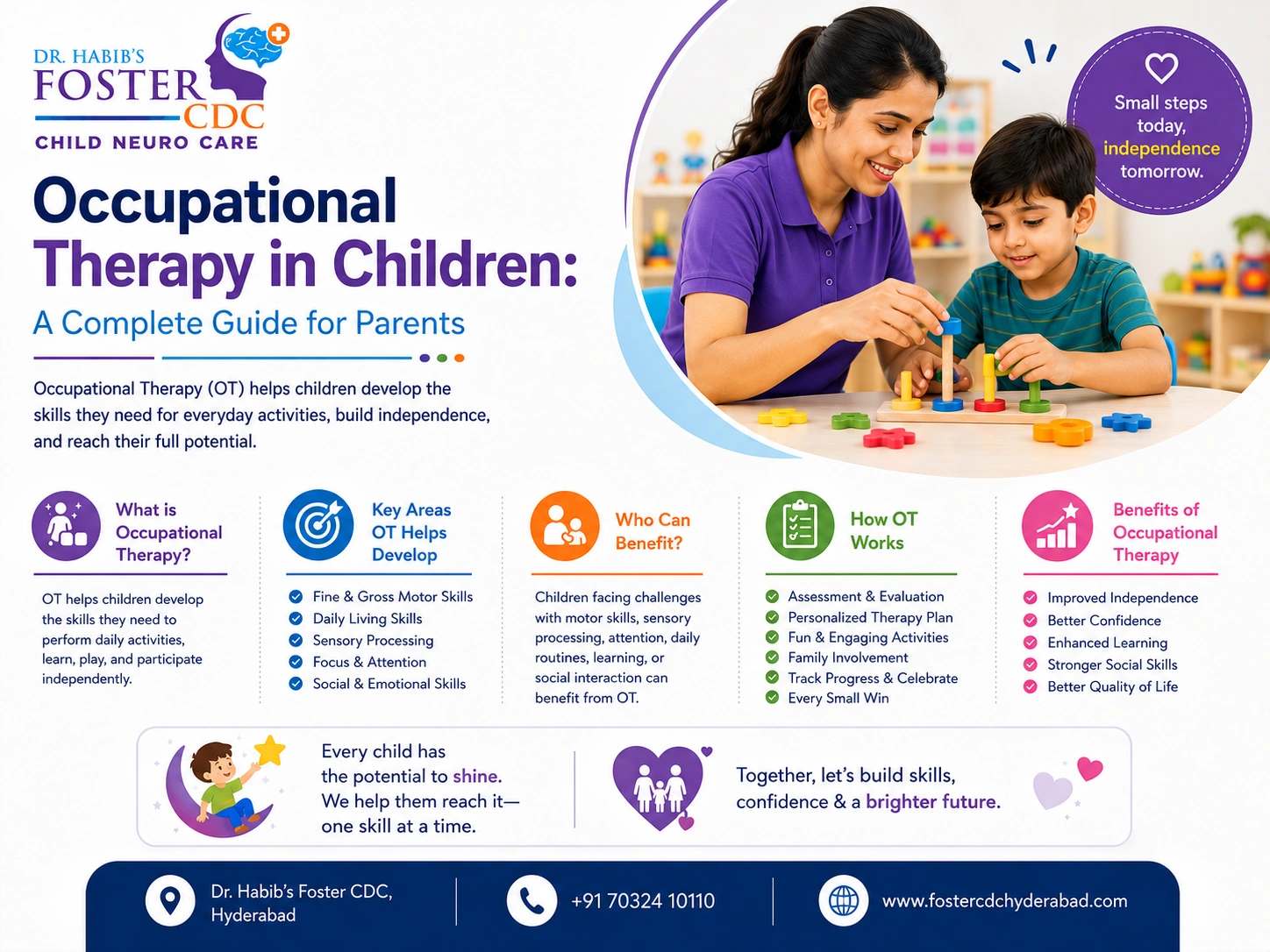
Occupational Therapy in Children: A Complete Guide for Parents
Occupational therapy (OT) helps children build the physical, sensory, and self-care skills they need for everyday life — from holding a pencil to managing a noisy classroom to getting dressed independently. It typically begins with a comprehensive evaluation, followed by a personalised plan using techniques like sensory integration, fine motor training, and self-care coaching, delivered by a licensed occupational therapist.
What Is Pediatric Occupational Therapy?
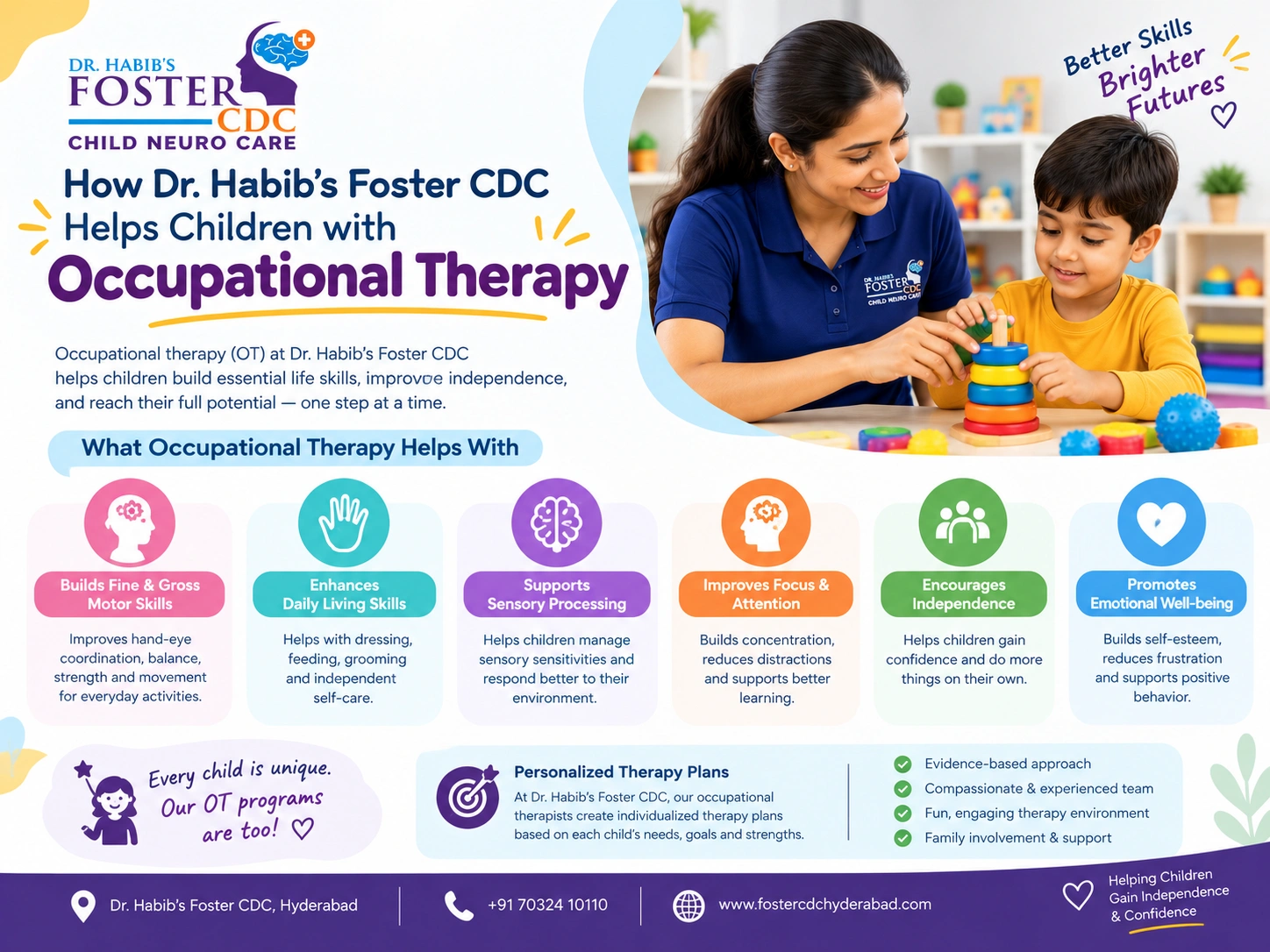
Pediatric occupational therapy is a specialised discipline focused on helping children participate fully in the "occupations" of childhood — play, learning, self-care, and social interaction. Unlike therapies that target a single skill, OT looks at the whole picture: fine motor coordination, sensory processing, visual-motor skills, and daily living tasks, all viewed through how they affect a child's ability to function at home, at school, and with peers.
OT is commonly recommended for children with autism, ADHD, developmental delays, sensory processing differences, and speech delays, but it also benefits children without a formal diagnosis who are simply struggling with specific skills — handwriting, buttoning a shirt, or tolerating certain textures, for example.
Who Benefits From Occupational Therapy?
Children with delayed fine or gross motor skills
Children with sensory processing differences — over- or under-reacting to touch, sound, or movement
Children with autism spectrum conditions, ADHD, or other developmental delays
Children struggling with self-care independence — dressing, feeding, grooming
Children with handwriting difficulties affecting school performance
Children who struggle with social participation or peer interaction
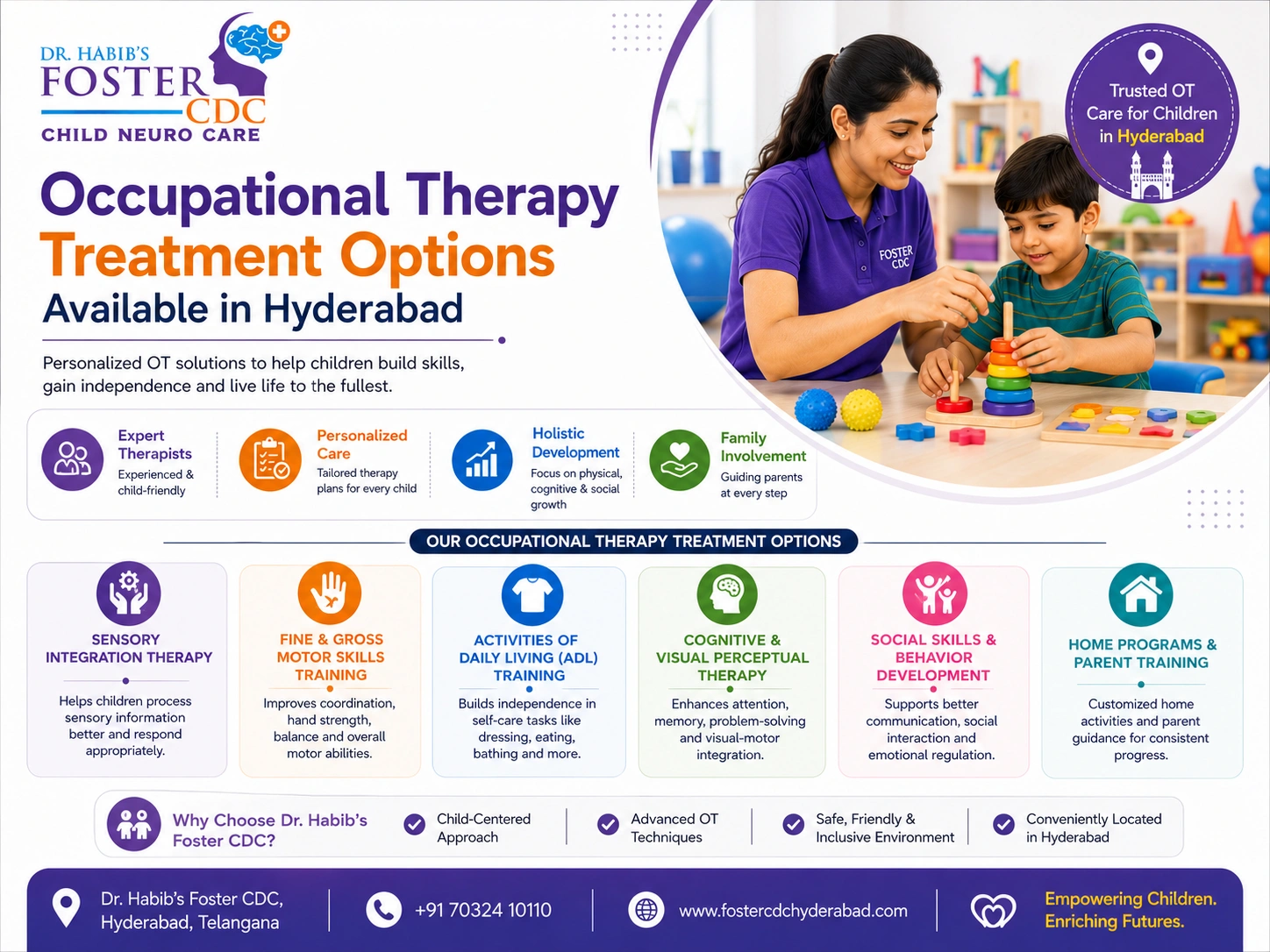
Common Occupational Therapy Techniques
Not every child needs every technique — the evaluation determines which combination fits a child's specific profile, and plans are adjusted as skills develop.
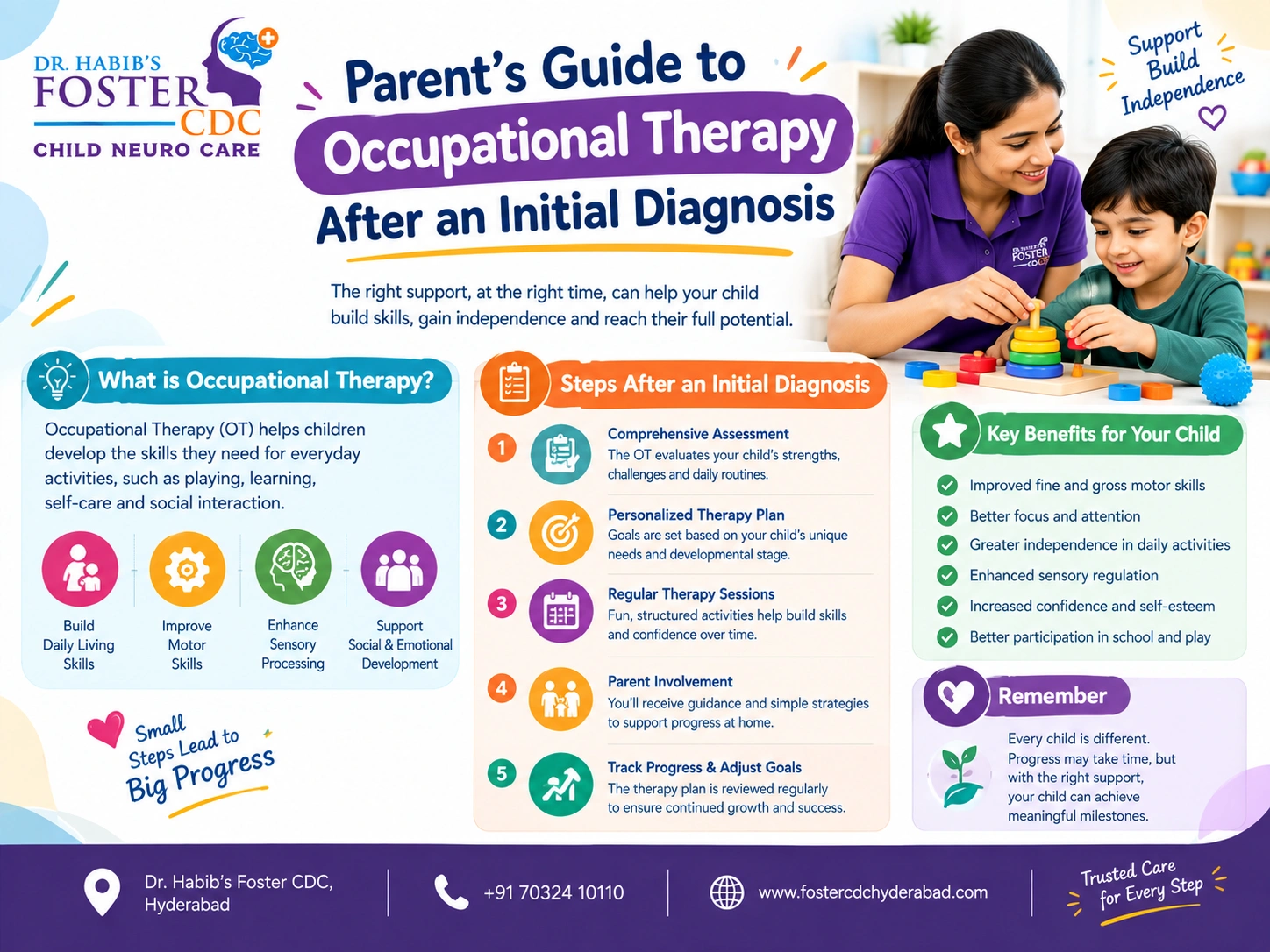
The Foster CDC Approach, Step by Step
Comprehensive Evaluation — An occupational therapist assesses fine motor, gross motor, sensory processing, visual-motor, and self-care skills, often through hands-on tasks like drawing, building, or dressing exercises, with parents present throughout.
Personalised Therapy Plan — Based on the evaluation, the team sets specific, measurable goals tied to the child's particular challenges — not a one-size-fits-all worksheet.
Structured Therapy Sessions — Children work through targeted activities using consistent, goal-tracked techniques suited to their plan.
Parent & Caregiver Coaching — Parents and teachers are shown how to reinforce strategies at home and in the classroom, since consistency across environments has a direct bearing on progress.
Ongoing Review — Goals and techniques are reassessed periodically as the child's skills develop.
Why Families Choose Foster CDC for Occupational Therapy
Three accessible centres across Hyderabad — Toli Chowki, Malakpet, and Suncity (Bandlaguda Jagir)
Evaluation-led, individualised OT plans rather than generic activity sheets
One coordinated team, so OT connects with speech, behavioural, or developmental support when a child needs it
Active parent and teacher involvement built into every stage
Ongoing progress review as the child's skills grow
Frequently Asked Questions
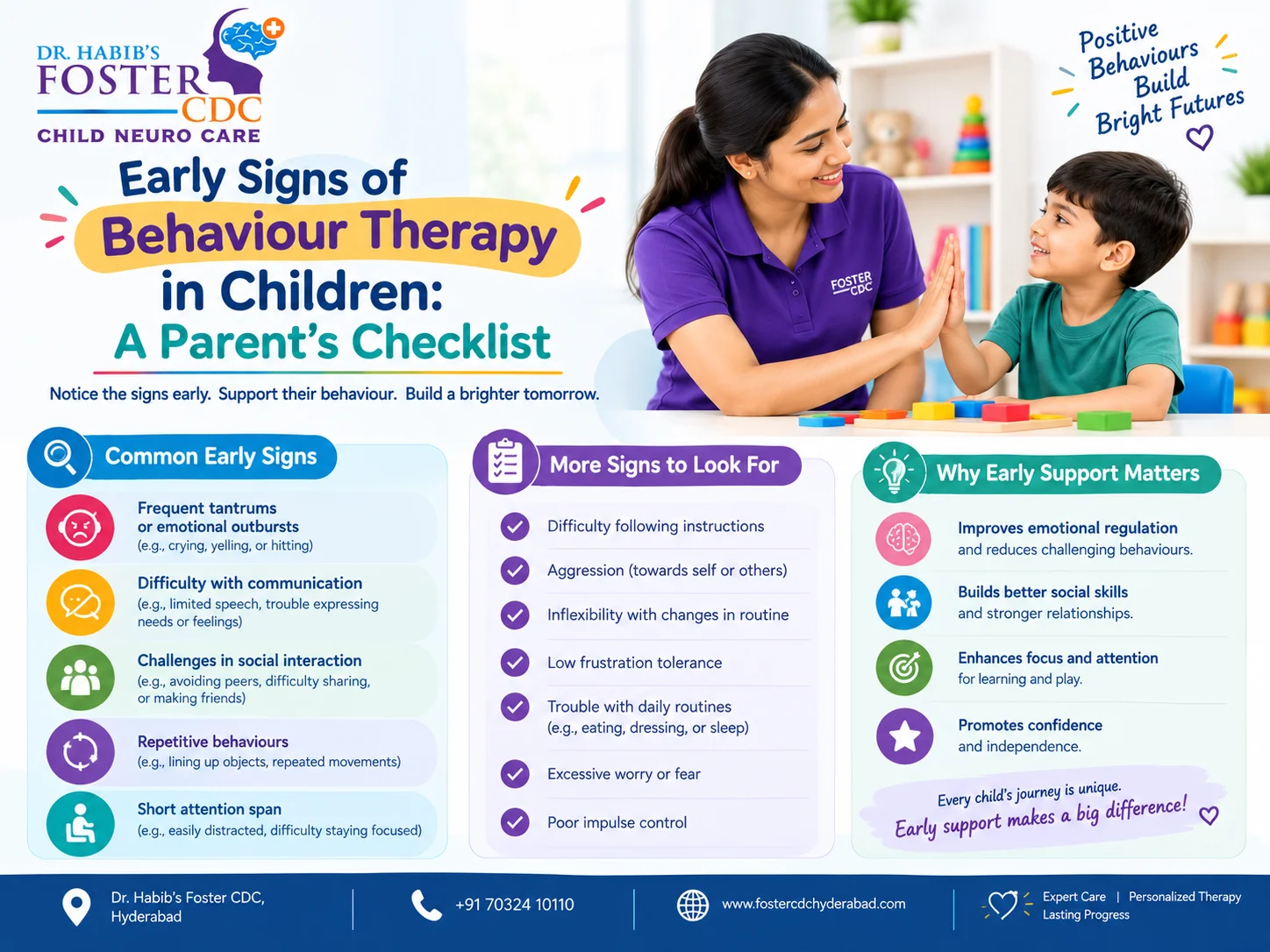
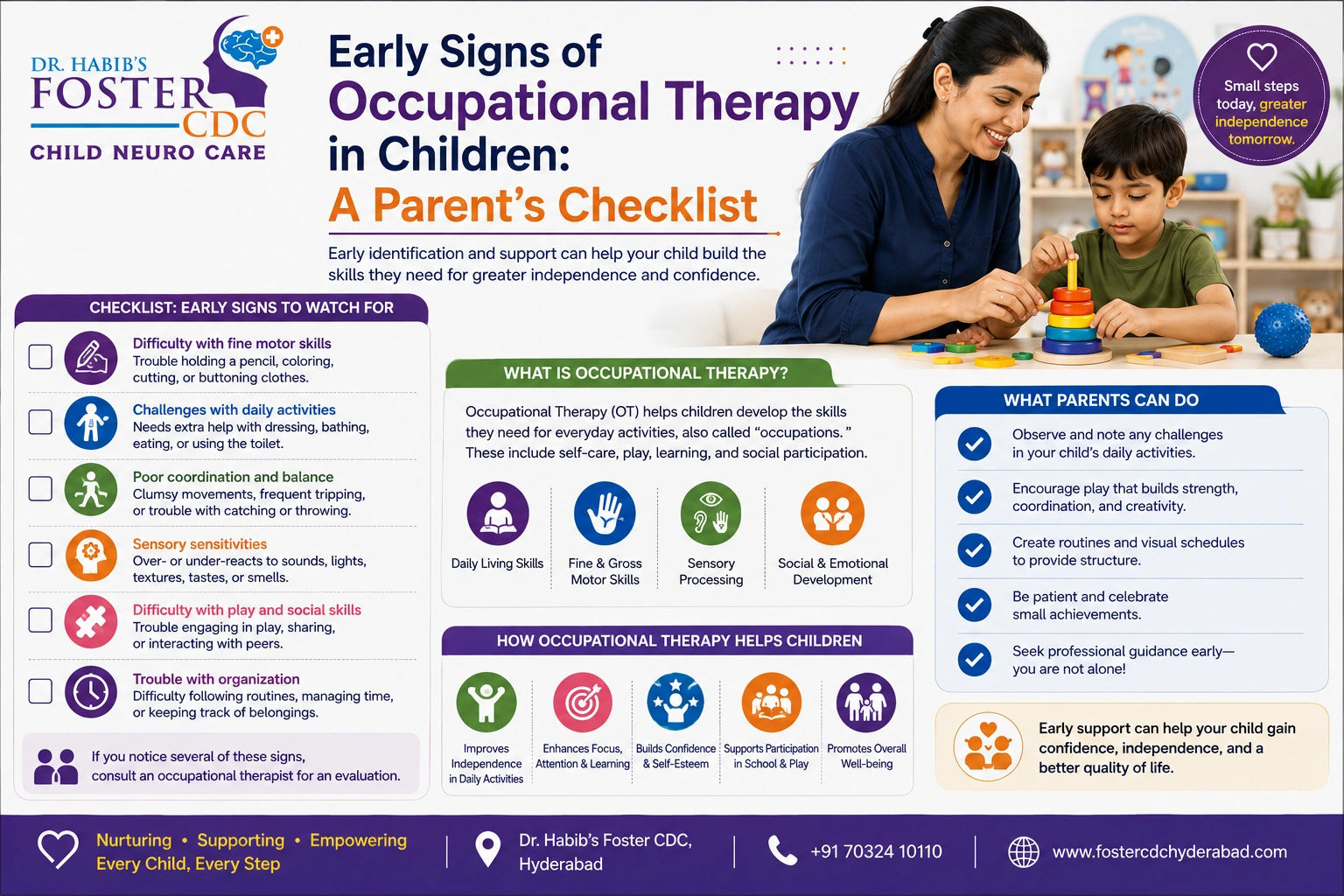
Why does my child show signs of needing occupational therapy? Signs can include difficulty with fine motor tasks, sensory sensitivities, clumsiness, or struggles with self-care skills like dressing or feeding — a comprehensive evaluation clarifies which areas actually need support.
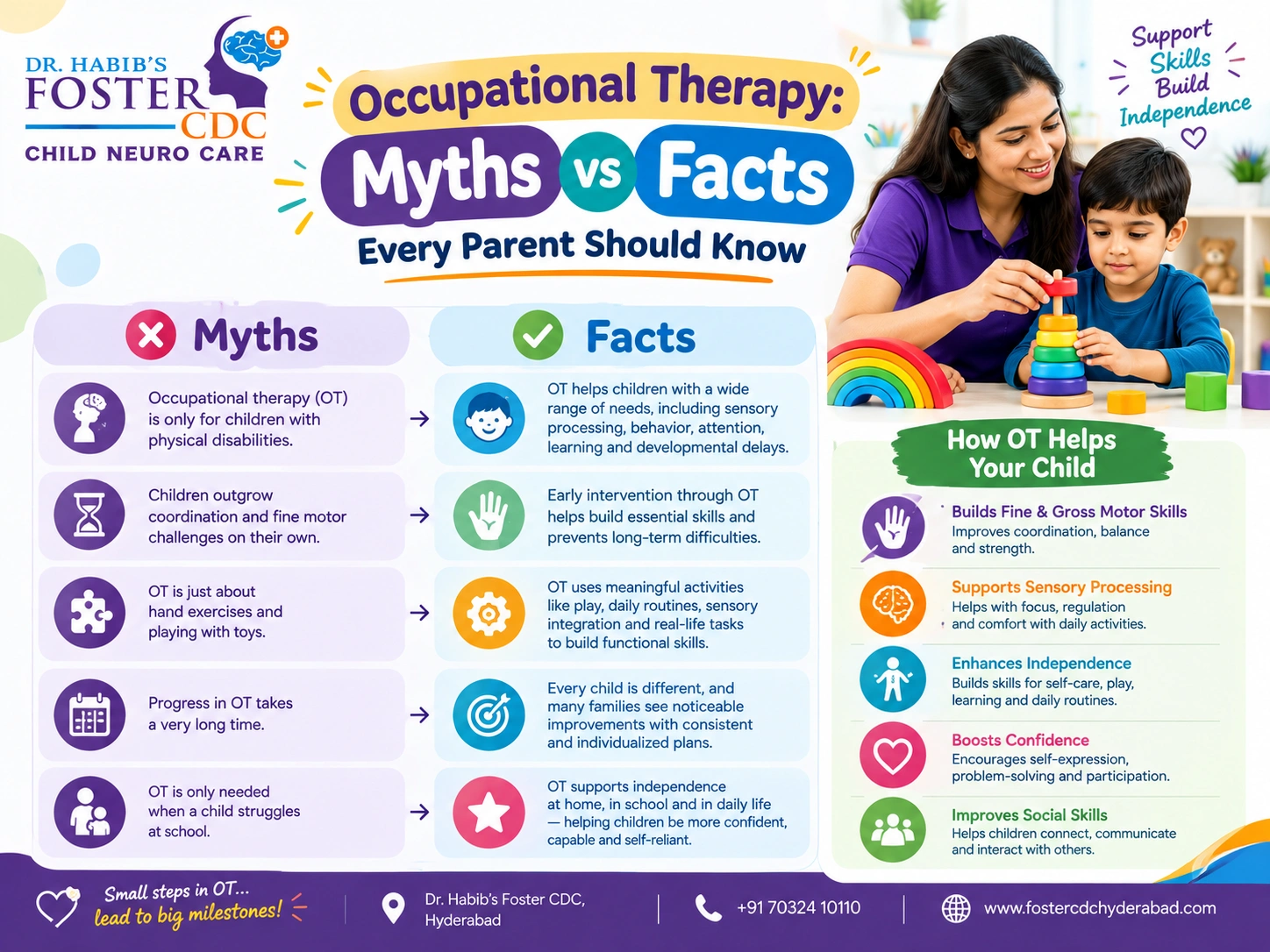
What's the difference between occupational therapy and physical therapy? Physical therapy typically focuses on gross motor skills like walking and strength, while occupational therapy addresses the broader range of skills needed for daily functioning, including fine motor, sensory, and self-care skills.
Does occupational therapy help with sensory processing issues? Yes — sensory integration therapy is one of the core techniques used in pediatric OT to help children regulate responses to touch, sound, and movement.
Can occupational therapy improve my child's handwriting? Yes — handwriting difficulties tied to fine motor or visual-motor skills are a common and well-addressed focus area in pediatric OT.
Is occupational therapy only for children with a diagnosed condition? No — OT also supports children without a formal diagnosis who are struggling with specific skills like self-care independence or fine motor coordination.
How long does a typical occupational therapy program take to show results? This depends on the child, the specific goals set after evaluation, and consistency of practice — plans are reviewed periodically rather than fixed to one timeline.
Is parent involvement necessary in occupational therapy? Yes. Reinforcing strategies at home between sessions is one of the strongest factors in how quickly a child progresses.
Can teachers be involved in a child's occupational therapy plan? Yes — coordinating strategies between home, therapy, and the classroom is often part of an effective OT plan, especially for school-related fine motor or attention challenges.
What happens during a first occupational therapy evaluation at Foster CDC? An occupational therapist observes the child completing fine motor, sensory, and self-care tasks and discusses goals with the family. (See our guide on preparing your child for their first therapy session for what to expect.)
How do I book an occupational therapy assessment? You can book an assessment directly through Foster CDC's website or by contacting your nearest centre.
Book an Occupational Therapy Assessment
Every child's needs look different — the first step is a proper evaluation. Book an assessment with Dr. Habib's Foster CDC today.
Other Blogs
Services
- Behavioural Therapy
- Speech Therapy
- Special Education
- Parent Training
- Psychotherapy & Counselling
- Yoga Therapy
- Postural & Mobility Therapy
- Early Intervention Services
- Cognitive Behavioural Therapy
- Occupational Therapy
- Group Teaching
- Teachers' Training
- Certified Courses
- Developmental Therapy
- Autism Therapy