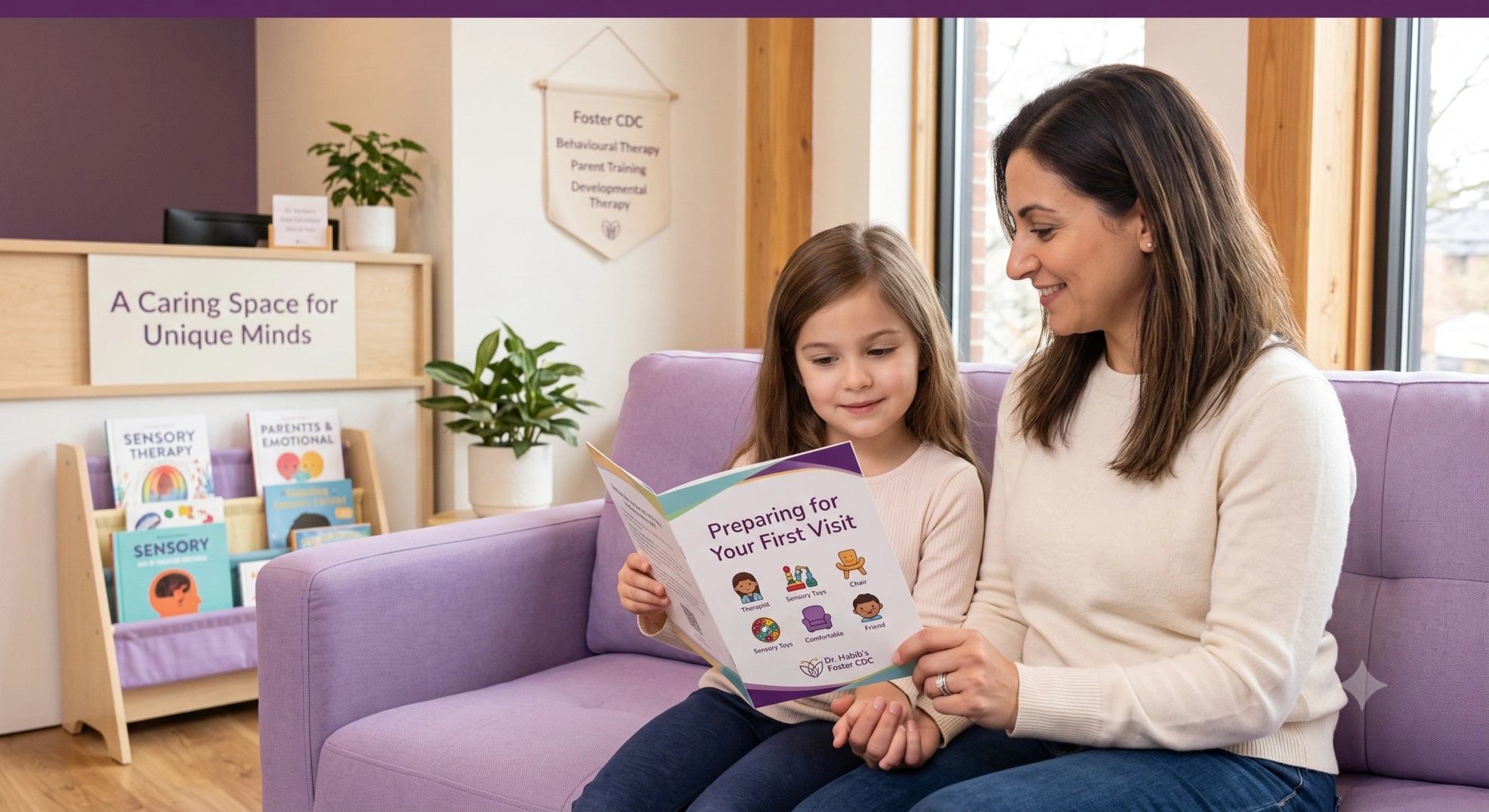
How to Prepare Your Child for Their First Therapy Session: A Parent's Complete Guide
For many parents, scheduling a First Therapy Session for Child is an important step toward supporting their child's development. Whether your child has been referred for Speech Therapy for Children, Occupational Therapy for Children, behavioural therapy, or Early Intervention Services, it's natural to feel a mix of hope, curiosity, and uncertainty.
Children also experience new emotions when visiting an unfamiliar place or meeting new professionals. The good news is that a little preparation can make the first session more comfortable and enjoyable for both parents and children.
This guide explains what to expect, how to prepare your child, and simple ways to create a positive therapy experience.
Why the First Therapy Session Matters
The first appointment is more than an evaluation—it's an opportunity for therapists to understand your child's strengths, challenges, interests, and developmental needs.
During this visit, therapists focus on building trust with your child while gathering information that helps create an individualized therapy plan.
Parents should remember that this session is not a test. Instead, it is the beginning of a collaborative journey focused on helping the child achieve meaningful developmental goals.
What Happens During the First Therapy Session?
Although every child is unique, the first session generally includes:
Discussion about your child's developmental history
Observation of communication, play, and behaviour
Age-appropriate activities and games
Interaction with parents or caregivers
Initial assessment of developmental skills
Goal-setting discussion
Therapists often use play-based activities because children naturally express themselves through play.
Talk to Your Child Before the Appointment
Children usually feel more confident when they know what to expect.
You can explain the visit using simple language, such as:
"We're going to meet someone who helps children learn new skills through fun games and activities."
Avoid saying:
"The doctor will fix you."
"You have to behave."
"If you don't listen, they'll be upset."
Positive language helps reduce anxiety.
Keep the Conversation Honest and Reassuring
If your child asks questions, answer honestly without creating unnecessary fear.
For example:
"You'll play some games."
"You'll meet friendly people."
"We'll be with you."
Children don't need detailed medical explanations. They simply need reassurance.
Bring Familiar Comfort Items
Many children feel more secure when they bring something familiar.
Consider carrying:
Favourite toy
Small blanket
Storybook
Water bottle
Healthy snack
These familiar objects can help children feel relaxed in a new environment.
Share Important Information with the Therapist
Parents know their children best.
Before the session, make a list of:
Current concerns
Medical history
Previous evaluations
Medications (if any)
School reports
Developmental milestones
Behavioural observations
Providing accurate information helps therapists create a more personalized plan.
Arrive Early
Reaching the Child Development Centre 10–15 minutes early gives your child time to become familiar with the surroundings.
A calm start often leads to better participation during therapy.
Dress Your Child Comfortably
Choose clothing that allows easy movement.
Many therapy sessions include activities involving:
Walking
Crawling
Climbing
Drawing
Playing with toys
Fine motor exercises
Comfortable clothing helps children participate freely.
Let the Therapist Lead
Parents naturally want to help, but it's important to allow therapists to build rapport independently.
Children often respond differently when given space to interact directly with therapists.
The therapist may invite parents to participate when appropriate.
Every Child Adjusts at Their Own Pace
Some children immediately enjoy therapy.
Others may need several sessions before they feel completely comfortable.
This adjustment period is perfectly normal.
Building trust takes time, especially for younger children or those with communication or sensory challenges.
Celebrate Small Wins
Progress doesn't always happen overnight.
Celebrate small achievements such as:
Entering the therapy room confidently
Making eye contact
Following simple instructions
Participating in activities
Trying something new
These small successes build confidence over time.
Common Mistakes Parents Should Avoid
Many parents unintentionally create additional pressure.
Try to avoid:
Comparing your child with others
Expecting immediate results
Promising rewards for "perfect behaviour"
Discussing concerns in front of the child
Missing scheduled sessions without reason
Consistency plays an important role in therapy outcomes.
How Parents Can Support Therapy at Home
Therapy doesn't end when the session finishes.
Parents can reinforce learning by:
Practising therapist-recommended activities
Reading together daily
Encouraging communication during play
Following consistent routines
Offering positive encouragement
Limiting unnecessary screen time
Small daily efforts can complement professional therapy.
When Should Parents Ask Questions?
Parents are encouraged to ask questions throughout the therapy journey.
Helpful questions include:
What are my child's current goals?
How can I support therapy at home?
How will progress be monitored?
How often should therapy sessions take place?
What activities should we practise between visits?
Open communication strengthens the partnership between families and therapists.
Frequently Asked Questions
Will my child be forced to participate?
No. Therapists gradually build trust and encourage participation through child-friendly activities.
Can parents stay during the session?
Depending on your child's needs and the therapy approach, therapists may invite parents to observe or participate.
How long does the first therapy session usually take?
The duration varies depending on the assessment and therapy type, but many initial sessions take around 45–60 minutes.
What if my child cries?
It's common for some children to feel uncertain in a new environment. Experienced therapists use gentle, play-based techniques to help children feel comfortable.
How soon will we see progress?
Every child develops at their own pace. Progress depends on the child's individual needs, therapy goals, consistency, and family involvement.
Conclusion
A First Therapy Session for Child marks the beginning of a supportive journey toward building communication, independence, confidence, and developmental skills. Preparing your child with honest conversations, familiar routines, and positive encouragement can make the experience more comfortable and productive.
If you have concerns about your child's communication, behaviour, learning, or development, seeking guidance from a qualified Child Development Centre can help you understand your child's strengths and identify the most appropriate support. Early action and consistent family involvement often contribute to the best long-term outcomes.
Other Blogs






Services
- Behavioural Therapy
- Speech Therapy
- Special Education
- Parent Training
- Psychotherapy & Counselling
- Yoga Therapy
- Postural & Mobility Therapy
- Early Intervention Services
- Cognitive Behavioural Therapy
- Occupational Therapy
- Group Teaching
- Teachers' Training
- Certified Courses
- Developmental Therapy
- Autism Therapy