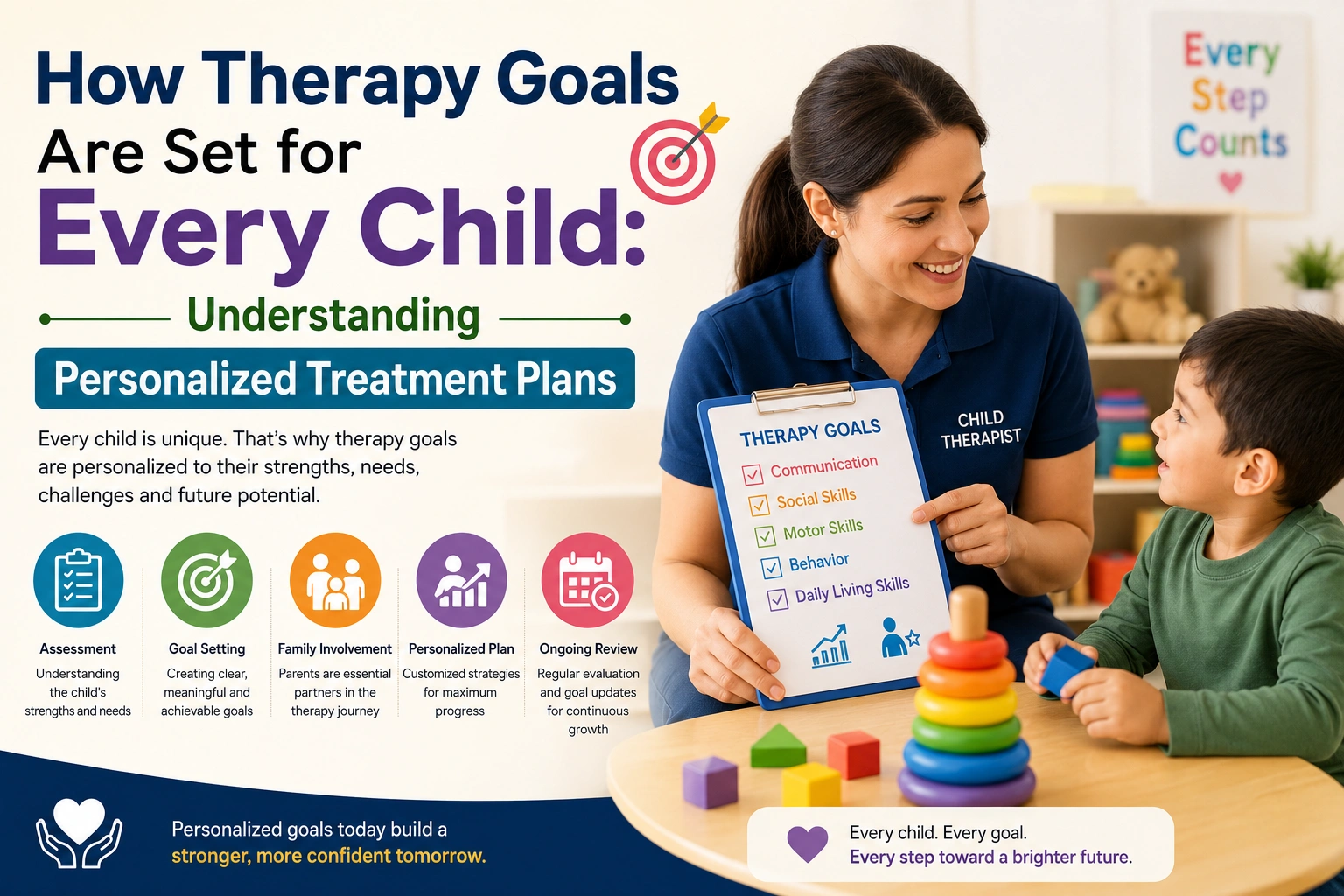
How Therapy Goals Are Set for Every Child: Understanding Personalized Treatment Plans
When parents begin therapy for their child, one of the first questions they often ask is, "How do therapists decide what my child needs?" The answer is simple—every child is unique, and so is their therapy journey.
A Personalized Therapy Plan for Children is carefully designed after understanding a child's strengths, developmental needs, interests, daily challenges, and family goals. Rather than following a one-size-fits-all approach, therapists develop individualized treatment plans that focus on helping each child achieve meaningful progress at their own pace.
Whether a child requires Speech Therapy, Occupational Therapy, Behavioural Therapy, Developmental Therapy, or Early Intervention Services, personalized goals help ensure that therapy is relevant, measurable, and achievable.
Why Every Child Needs a Personalized Therapy Plan
No two children develop in exactly the same way. Even children with similar diagnoses may have different strengths, challenges, learning styles, and communication abilities.
A personalized therapy plan helps therapists:
Understand the child's current developmental level
Identify specific areas requiring support
Set realistic short-term and long-term goals
Monitor progress over time
Adjust therapy strategies when needed
This individualized approach makes therapy more meaningful for both children and their families.
How Therapists Assess a Child Before Setting Goals
Before creating a therapy plan, therapists conduct a comprehensive assessment.
This may include:
Developmental history
Parent interviews
Medical history review
Observation during play
Communication assessment
Motor skill evaluation
Social interaction assessment
Behaviour observations
Learning abilities
Daily living skills
These assessments provide valuable information about the child's overall development.
Factors That Influence Therapy Goals
Every therapy plan considers multiple aspects of a child's life.
Some important factors include:
Age
Goals for a two-year-old will differ significantly from those for a school-age child.
Developmental Needs
Therapists identify which developmental skills require the greatest attention.
Child's Interests
Children learn more effectively when therapy incorporates activities they enjoy.
Family Priorities
Parents play an essential role in identifying daily challenges that therapy should address.
School Requirements
When appropriate, therapy goals may also support classroom participation and learning.
Examples of Therapy Goals
Goals vary depending on each child's needs.
Speech Therapy
Examples include:
Increasing vocabulary
Improving sentence formation
Following simple instructions
Enhancing pronunciation
Developing conversational skills
Occupational Therapy
Goals may focus on:
Pencil grip
Dressing independently
Handwriting readiness
Fine motor coordination
Self-care activities
Behavioural Therapy
Therapists may work on:
Managing emotional outbursts
Improving attention
Following routines
Building social skills
Positive behaviour strategies
Developmental Therapy
Goals often include:
Problem-solving
Play skills
Communication
Cognitive development
Social interaction
Why Parents Are Part of the Therapy Team
Parents spend the most time with their children, making their involvement essential.
Therapists regularly discuss:
Progress updates
Home practice activities
New developmental goals
Daily challenges
Strategies for home and school
When parents actively participate, children often have more opportunities to practice skills in everyday situations.
How Therapy Goals Change Over Time
Development is a continuous process.
As children achieve milestones, therapists review progress and introduce new goals that match the child's current abilities.
Regular reassessments ensure therapy remains effective and relevant.
Measuring Progress
Progress is not measured only by test scores.
Therapists also observe improvements in:
Daily independence
Communication
Confidence
Social interaction
Classroom participation
Emotional regulation
Family routines
Even small improvements represent meaningful developmental progress.
Common Misconceptions About Therapy Goals
"Every child should achieve the same milestones."
Children develop at different rates, and therapy plans reflect individual needs rather than comparisons.
"Progress should happen quickly."
Meaningful development often occurs gradually through consistent practice and support.
"Therapy ends once one goal is achieved."
As children grow, new developmental opportunities and challenges emerge, requiring updated goals.
How Families Can Support Therapy Goals at Home
Parents can strengthen therapy outcomes by:
Following therapist recommendations
Practicing skills during daily routines
Encouraging communication
Creating structured routines
Celebrating small achievements
Maintaining consistency
Home practice reinforces learning beyond therapy sessions.
When Should Therapy Goals Be Reviewed?
Therapy goals should be reviewed regularly to ensure they continue to meet the child's evolving developmental needs.
Parents are encouraged to discuss progress with therapists and ask questions whenever they have concerns or notice changes in their child's abilities.
Conclusion
A Personalized Therapy Plan for Children is more than a list of activities—it's a roadmap designed to support each child's unique developmental journey. By combining professional assessment, family involvement, and individualized goals, therapists help children build meaningful skills that improve communication, independence, learning, and confidence.
Every child progresses at their own pace, and consistent collaboration between families and therapists plays an important role in helping children reach their fullest potential.
Frequently Asked Questions (FAQs)
1. What is a personalized therapy plan for children?
A personalized therapy plan is an individualized treatment plan created after assessing a child's strengths, challenges, developmental needs, and family goals.
2. How are therapy goals decided?
Therapists develop goals based on comprehensive assessments, observations, parent discussions, and the child's current developmental abilities.
3. Can therapy goals change over time?
Yes. Goals are reviewed regularly and updated as children develop new skills and achieve previous milestones.
4. How can parents support therapy goals at home?
Parents can reinforce therapy by practicing recommended activities, maintaining routines, encouraging communication, and working closely with therapists.
5. How long does it take to achieve therapy goals?
The timeline varies for every child depending on their individual needs, consistency of therapy, home practice, and developmental progress.
6. Why is parent involvement important during therapy?
Parents help children practice skills in daily life, making learning more consistent and meaningful beyond therapy sessions.
7. What happens if a child does not achieve a goal immediately?
Therapists review the child's progress, adjust strategies if needed, and continue working toward realistic developmental milestones.
8. Can children receive more than one type of therapy?
Yes. Some children benefit from multidisciplinary care, where therapies such as speech, occupational, behavioural, and developmental therapy work together to address different needs.
Other Blogs









Services
- Behavioural Therapy
- Speech Therapy
- Special Education
- Parent Training
- Psychotherapy & Counselling
- Yoga Therapy
- Postural & Mobility Therapy
- Early Intervention Services
- Cognitive Behavioural Therapy
- Occupational Therapy
- Group Teaching
- Teachers' Training
- Certified Courses
- Developmental Therapy
- Autism Therapy