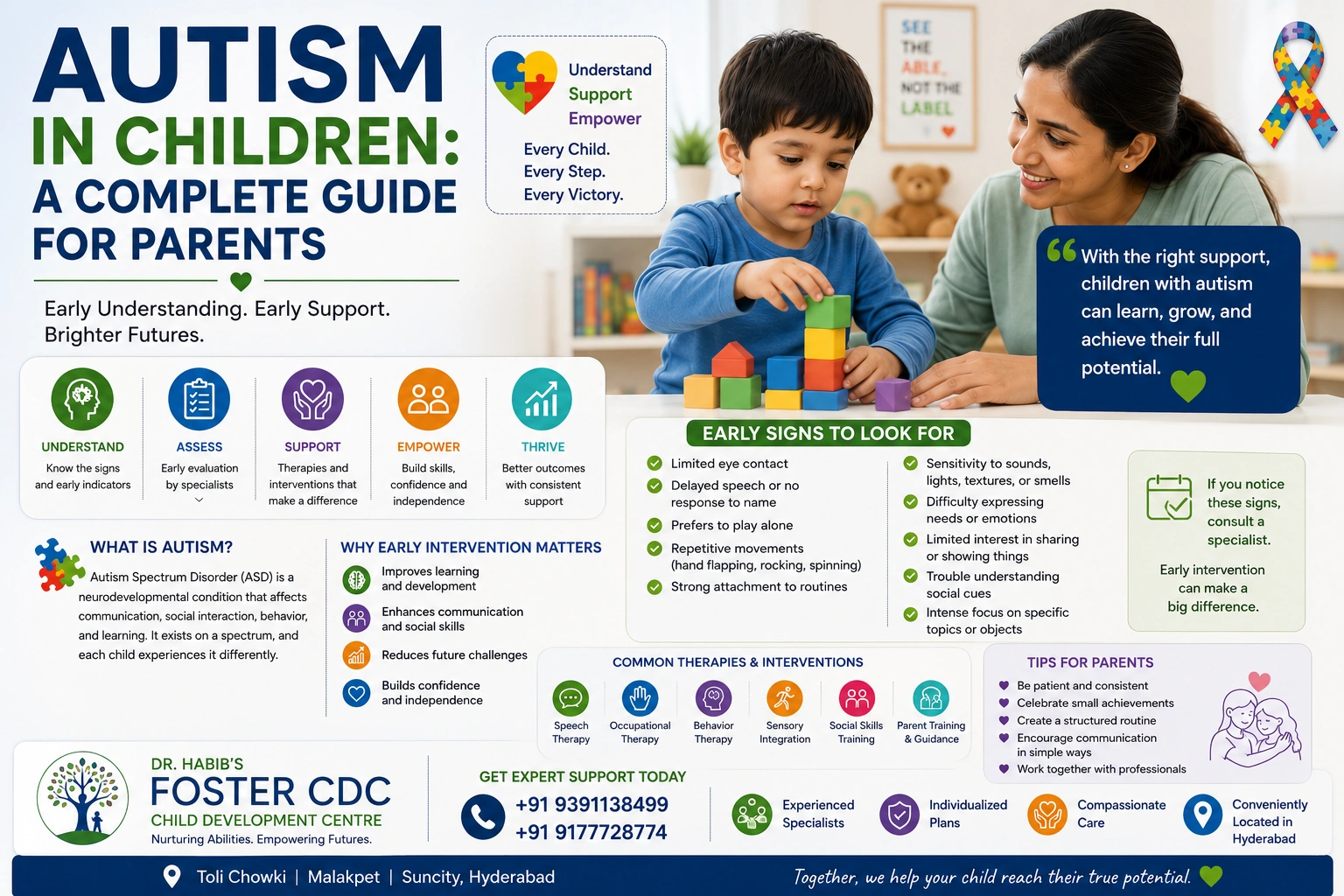
Autism in Children: A Complete Guide for Parents
If you've noticed your child isn't responding to their name, avoids eye contact, or hasn't started talking the way other kids their age do, you're probably searching for answers about autism symptoms in children. You're not alone — and noticing these signs early is one of the most important things a parent can do. This guide walks you through what autism looks like at different ages, what causes it, how it's diagnosed, and what steps to take next if you're worried about your child's development.
At Dr. Habib's Foster CDC, Hyderabad's trusted child development centre, we work with families every day who are navigating exactly this journey. This guide reflects insights from Dr. Habib G Pathan and years of clinical experience — but it isn't a substitute for a professional evaluation.
Quick Answers
What is Autism Spectrum Disorder?
Autism Spectrum Disorder (ASD) is a neurodevelopmental condition that affects how a person communicates, interacts socially, and processes the world around them. It's called a "spectrum" because it looks different in every child — some need significant daily support, others are highly independent with subtler differences in social communication.
What are the first signs of autism in a child?
Common early signs include limited eye contact, not responding to their name by 12 months, delayed or absent speech, repetitive movements (like hand-flapping or rocking), and a strong preference for routines. Not every child shows every sign, and some signs overlap with normal developmental variation.
At what age can autism be diagnosed?
Autism can often be reliably diagnosed by age 2, though many children aren't formally diagnosed until 3–4 years old. Some signs may be noticeable as early as 12–18 months, which is why early screening matters.
Can autism symptoms improve with therapy?
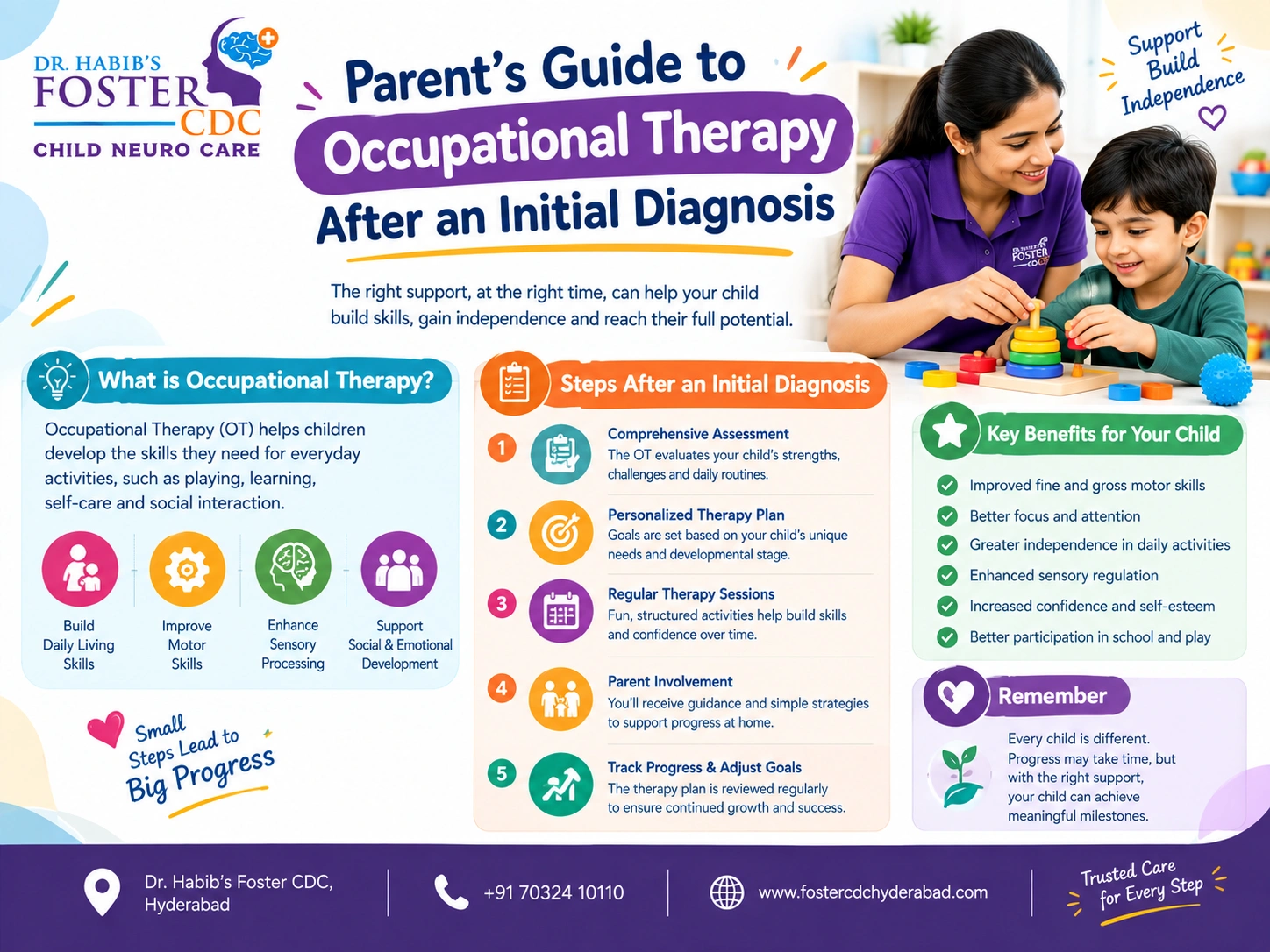
Yes. While autism itself isn't "cured," early and consistent therapy — such as speech therapy, occupational therapy, and behavioral intervention — can meaningfully improve communication, social skills, and daily independence for many children.
Is autism caused by parenting or vaccines?
No. Decades of research have found no link between parenting style or vaccines and autism. Current evidence points to a combination of genetic and neurological factors.
How long does autism therapy usually take?
There's no fixed timeline — it depends on the child's age at diagnosis, the severity of symptoms, and the therapy plan. Many families see steady progress over months to years with consistent, individualized therapy.
What Is Autism Spectrum Disorder?
Autism Spectrum Disorder is a lifelong neurodevelopmental difference, not an illness. Children with autism often experience the world differently — they may process sounds, textures, or social cues in ways that differ from neurotypical peers. This isn't a flaw to "fix," but it can create real challenges in communication, learning, and daily life that benefit from structured support.
Global health bodies, including the World Health Organization (WHO), estimate that autism affects roughly 1 in 100 children worldwide, and awareness has grown significantly over the past two decades as screening and diagnostic tools have improved.
Early Signs and Symptoms of Autism in Children
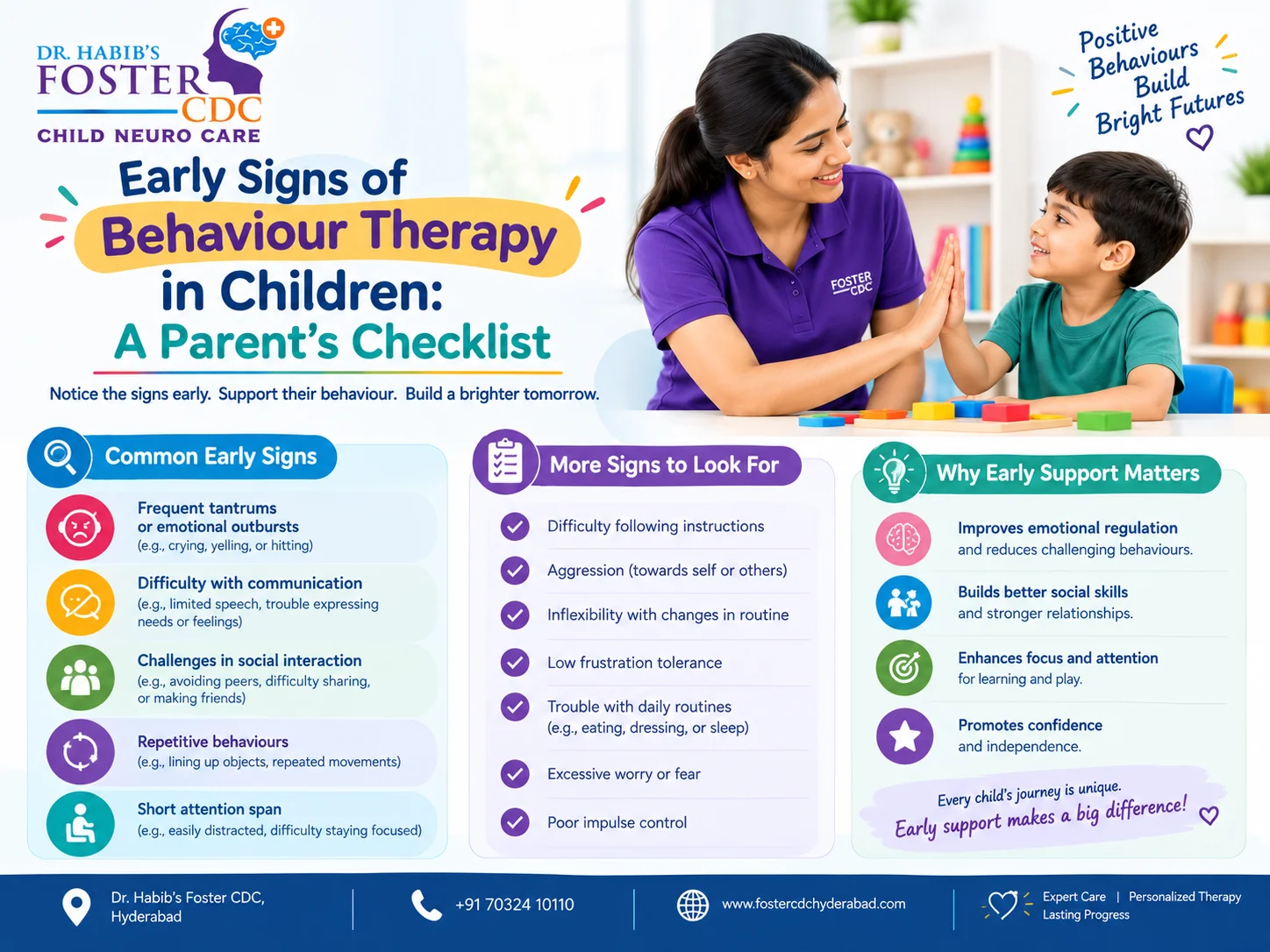
Autism symptoms in children often emerge gradually and vary by age. Here's a general guide — remember, every child develops at their own pace, and one or two signs alone don't confirm autism. For a printable version of these signs, see our Early Signs of Autism: A Parent's Checklist.
Common Behavioral Signs
Repetitive movements (rocking, spinning, hand-flapping)
Intense, narrow interests
Difficulty with changes in routine
Unusual reactions to sounds, lights, or textures
Limited pretend or imaginative play
Common Communication Signs
Delayed speech development
Repeating words or phrases (echolalia)
Difficulty starting or maintaining conversations
Limited use of gestures like pointing or waving
Common Social Signs
Reduced eye contact
Difficulty understanding others' emotions
Preferring to play alone
Trouble making or keeping friends
What Causes Autism?
There's no single known cause of autism. Research points to a combination of factors:
Genetics — Autism often runs in families, and certain gene variations are linked to higher likelihood.
Prenatal and birth factors — Advanced parental age, premature birth, and certain prenatal complications are associated with slightly higher risk.
Brain development differences — Studies show differences in how the brains of autistic children process information, particularly around social and sensory input.
It's worth repeating clearly: autism is not caused by parenting style, emotional neglect, or vaccines. This has been studied extensively and repeatedly disproven.
Types and Severity Levels of Autism
Under current diagnostic guidelines, autism is classified by support level rather than separate subtypes:
Level 1 – Requiring Support: Can communicate but may struggle with social nuance and switching between activities.
Level 2 – Requiring Substantial Support: Noticeable communication difficulties, more restrictive/repetitive behaviors.
Level 3 – Requiring Very Substantial Support: Significant communication challenges and behaviors that markedly interfere with daily functioning.
These levels can shift over time, especially with therapy and support.
Myths vs. Facts About Autism
When Should Parents Seek an Autism Assessment?
If your child shows several signs from the list above — especially delayed speech, limited eye contact, or repetitive behaviors — by 18–24 months, it's worth speaking to a developmental pediatrician. Early evaluation doesn't mean jumping to conclusions; it means giving your child the best possible head start if support is needed. Learn more about our autism therapy programs in Hyderabad and how a structured plan can help.
Do's and Don'ts for Parents
Do:
Track specific behaviors and when you noticed them
Talk to your pediatrician even if you're unsure
Seek evaluation from a qualified developmental specialist
Stay involved and consistent once therapy begins
Don't:
Wait and hope signs will simply disappear
Compare your child harshly to siblings or peers
Rely solely on online checklists for diagnosis
Blame yourself — autism is not caused by parenting
How Autism Is Diagnosed
Diagnosis typically involves:
Developmental screening — A standardized questionnaire during routine pediatric visits.
Comprehensive evaluation — A developmental pediatrician or child psychologist observes behavior, communication, and social interaction directly.
Standardized assessment tools — Instruments aligned with criteria from the American Academy of Pediatrics (AAP) and international diagnostic standards are used to assess developmental milestones.
Multidisciplinary input — Speech-language pathologists (guided by frameworks like those from ASHA, the American Speech-Language-Hearing Association) and occupational therapists often contribute to a full picture.
At Foster CDC, autism diagnosis in Hyderabad follows this structured, multi-step process rather than a single test — because no single sign confirms autism on its own.
Common Mistakes Parents Make
Delaying evaluation due to fear of a "label"
Trying multiple unproven remedies before seeking professional therapy
Expecting quick fixes rather than consistent, gradual progress
Not involving the whole family in supporting the child's routine
Expert Tips for Supporting Your Child
Maintain consistent daily routines — predictability reduces anxiety for many autistic children
Use simple, clear language and give your child extra time to respond
Other Blogs

Services
- Behavioural Therapy
- Speech Therapy
- Special Education
- Parent Training
- Psychotherapy & Counselling
- Yoga Therapy
- Postural & Mobility Therapy
- Early Intervention Services
- Cognitive Behavioural Therapy
- Occupational Therapy
- Group Teaching
- Teachers' Training
- Certified Courses
- Developmental Therapy
- Autism Therapy

Special School for Kids with vocational courses & therapies coming soon...