Speech Therapy vs Occupational Therapy: Which Does Your Child Need?
As a parent, noticing your child struggle with communication, learning, social interaction, or everyday activities can be concerning. You may have heard professionals recommend either speech therapy or occupational therapy, but understanding the difference between the two can feel overwhelming.
One of the most common questions parents ask is: "Speech therapy vs occupational therapy: which does your child need?"
The answer depends on your child's unique developmental challenges. While both therapies support children in reaching important milestones, they focus on different areas of development. Understanding these differences can help you make informed decisions and ensure your child receives the right support at the right time.
In this guide, we'll explore speech therapy and occupational therapy in detail, discuss their benefits, identify signs your child may need one or both therapies, and help you determine the best path forward.
Understanding Child Development and Early Intervention
Every child develops at their own pace. However, there are expected developmental milestones related to speech, language, motor skills, social interaction, and daily functioning.
When delays occur, early intervention can make a significant difference. Research consistently shows that children who receive therapeutic support early often achieve better outcomes in communication, learning, independence, and overall quality of life.
Both speech therapy and occupational therapy play vital roles in helping children overcome developmental challenges.
What Is Speech Therapy?
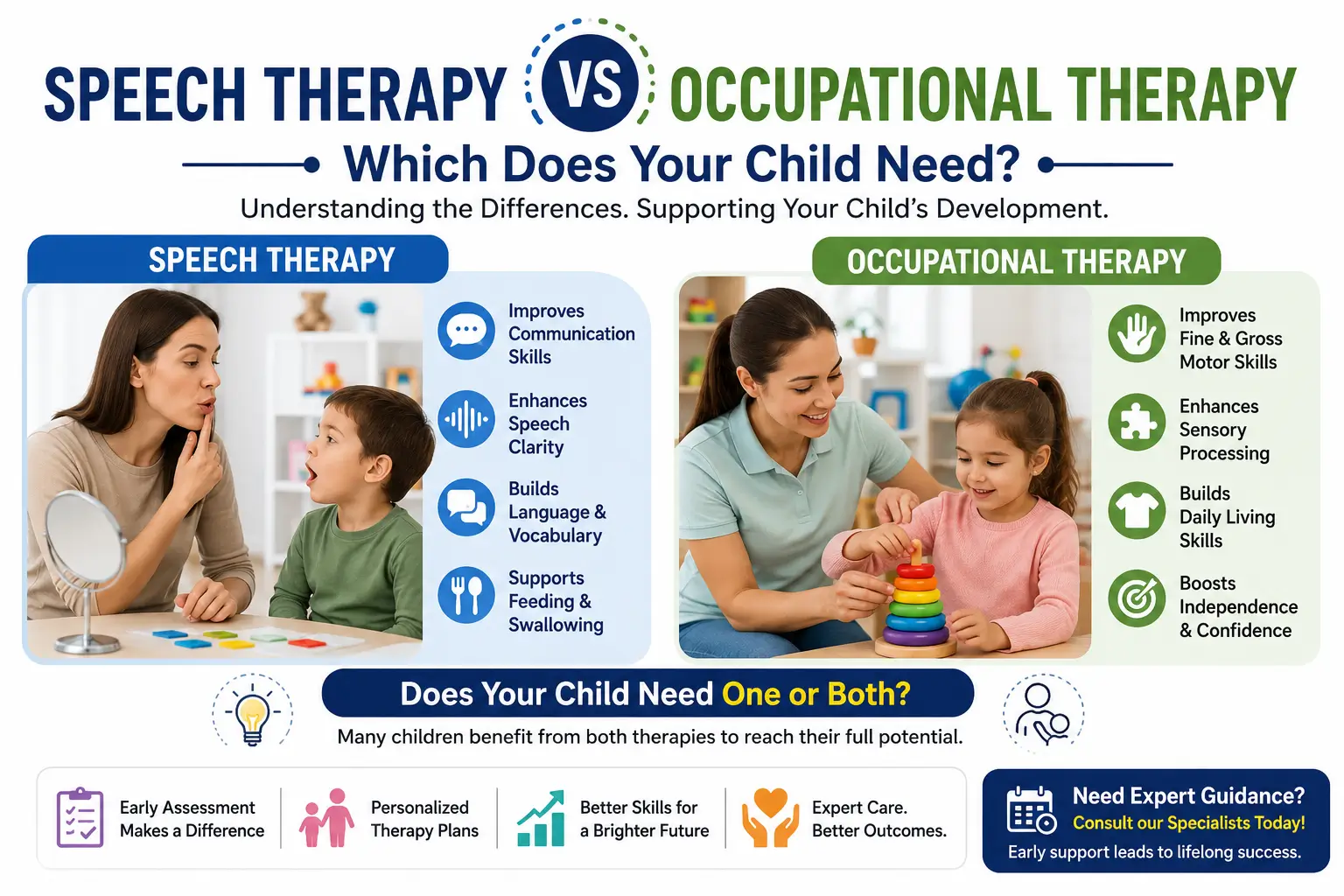
Speech therapy focuses on improving a child's ability to communicate effectively. A speech-language pathologist (SLP) helps children develop speech, language, social communication, and feeding skills.
Contrary to popular belief, speech therapy is not only for children who have difficulty talking. It addresses a wide range of communication and swallowing challenges.
Areas Addressed by Speech Therapy
Speech therapy may help children with:
Speech Delays
Children who are not speaking age-appropriate words or sentences may benefit from speech intervention.
Language Disorders
Language disorders can affect:
- Understanding language
- Following instructions
- Vocabulary development
- Sentence formation
- Storytelling skills
Articulation Problems
Some children struggle to pronounce sounds clearly, making speech difficult to understand.
Social Communication Difficulties
Children with autism spectrum disorder or social communication challenges may need help with:
- Making eye contact
- Taking turns in conversation
- Understanding social cues
- Expressing emotions appropriately
Feeding and Swallowing Issues
Speech therapists also assist children who experience difficulties with:
- Chewing food
- Swallowing safely
- Oral motor coordination
What Is Occupational Therapy?
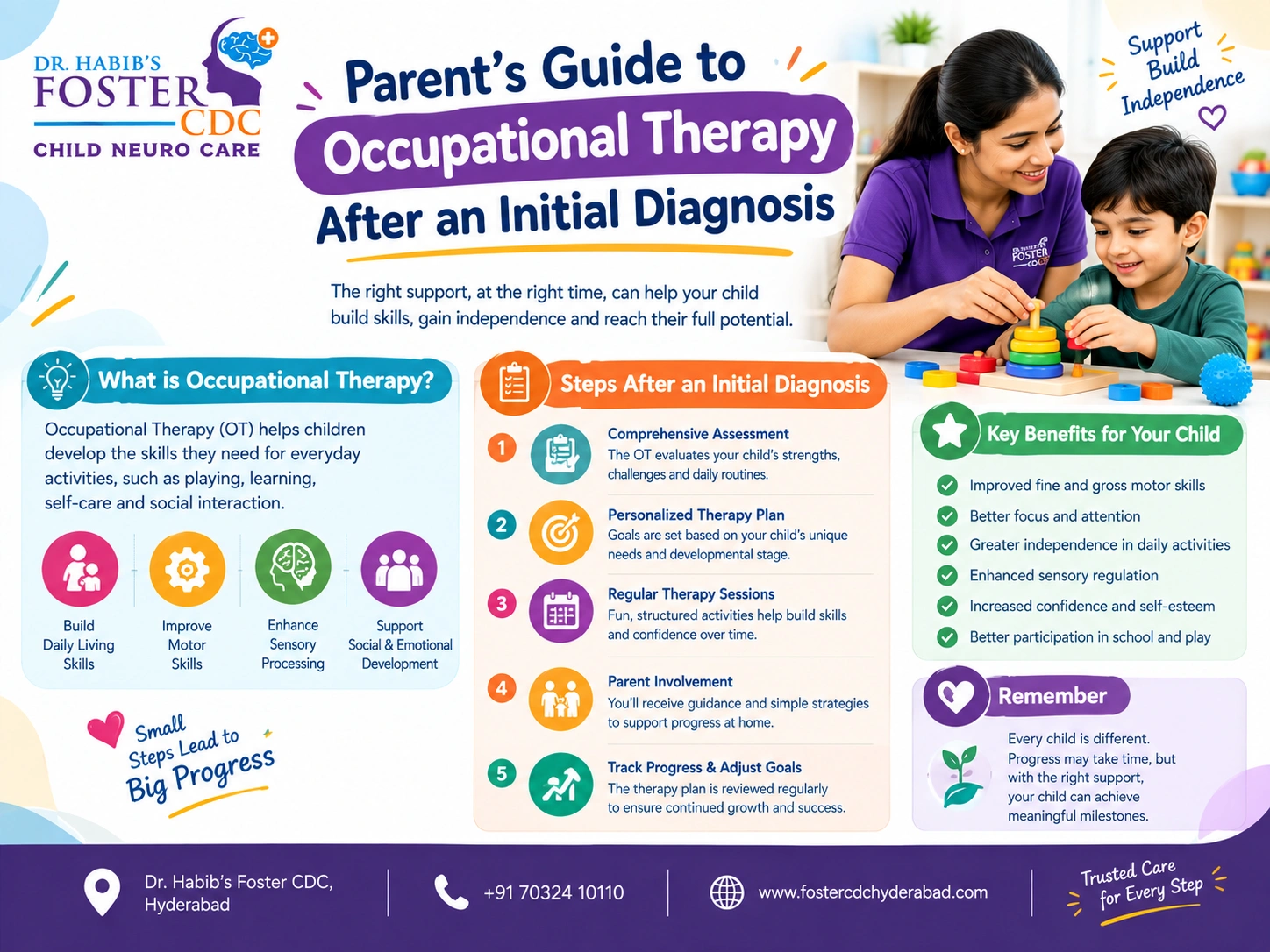
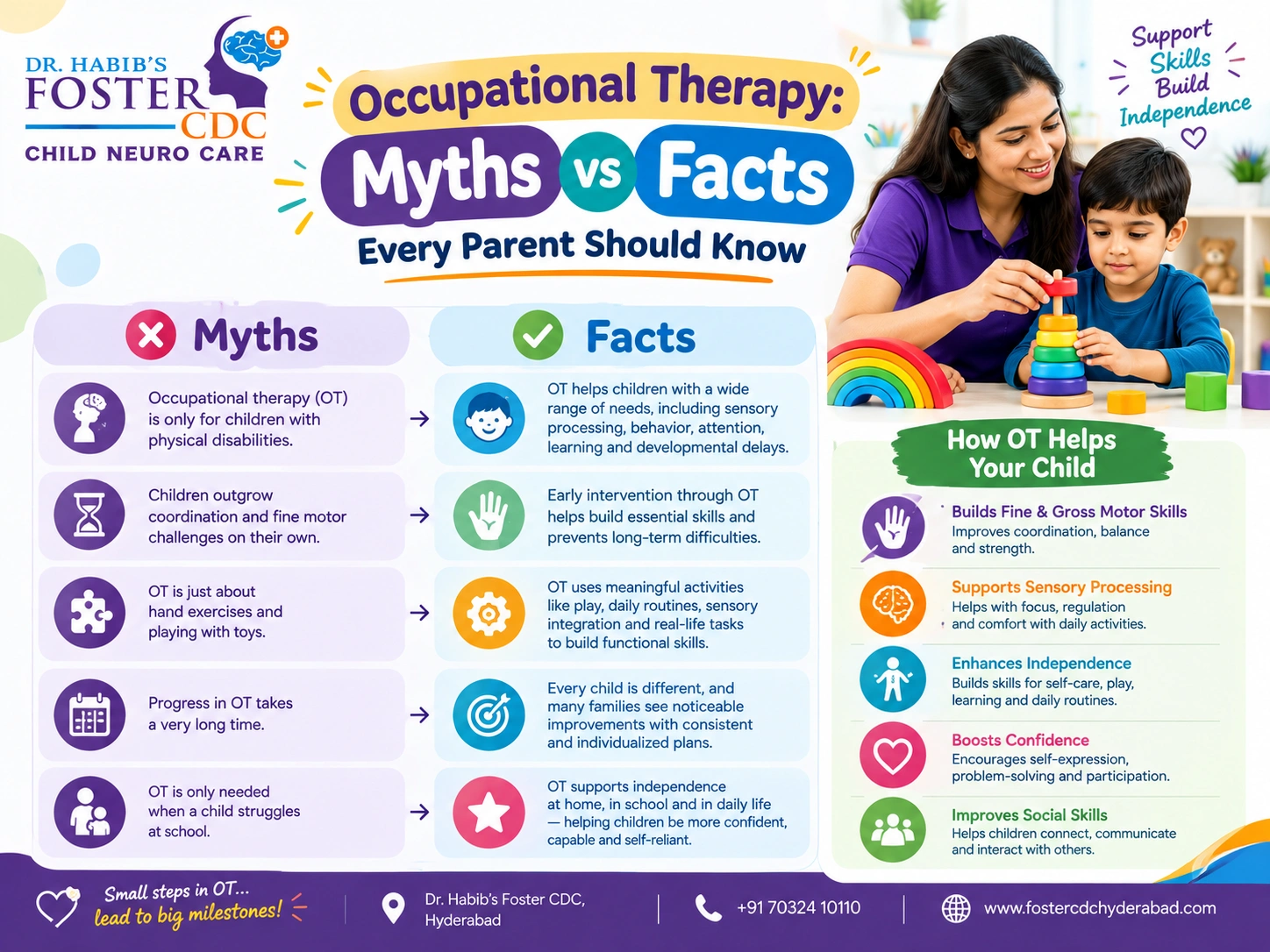
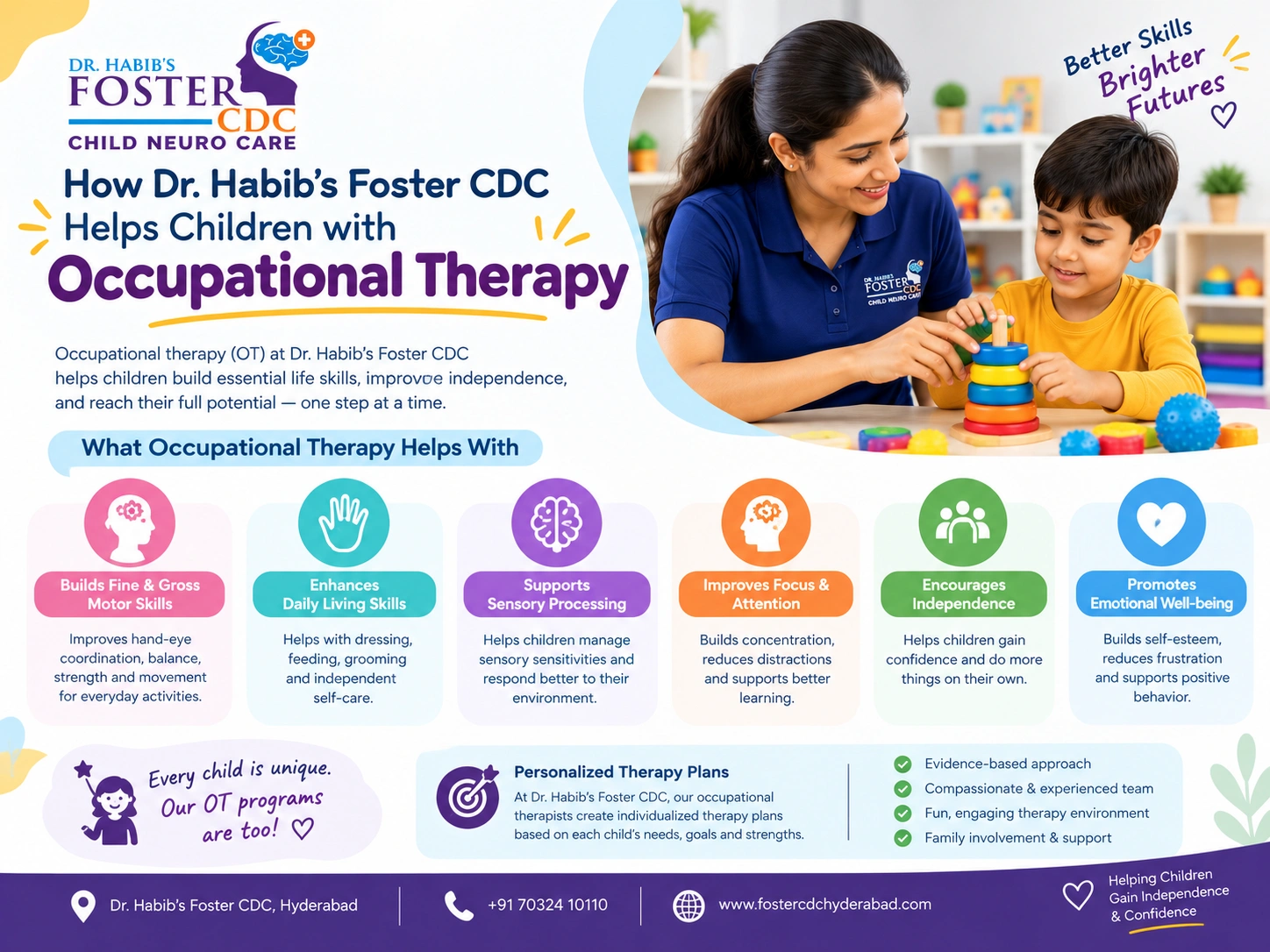
Occupational therapy focuses on helping children develop the skills needed for everyday activities and independence.
An occupational therapist works with children to improve physical, sensory, cognitive, and self-care abilities.
The goal is to help children participate successfully in home, school, and social environments.
Areas Addressed by Occupational Therapy
Occupational therapy may support children with:
Fine Motor Skill Delays
These skills involve small muscle movements needed for:
- Writing
- Drawing
- Buttoning clothes
- Using scissors
- Holding utensils
Sensory Processing Challenges
Some children may be overly sensitive or under-responsive to sensory input such as:
- Noise
- Touch
- Movement
- Light
- Textures
Occupational therapy helps children process sensory information more effectively.
Hand-Eye Coordination Difficulties
Children may struggle with tasks requiring coordination between vision and movement.
Self-Care Skills
Occupational therapists help children become more independent with:
- Dressing
- Eating
- Grooming
- Toileting
Attention and Focus
Children who have difficulty staying engaged in tasks may benefit from occupational therapy strategies.
Speech Therapy vs Occupational Therapy: Key Differences
Many parents confuse these therapies because they often work together. However, each focuses on different developmental areas.
| Speech Therapy | Occupational Therapy |
|---|---|
| Focuses on communication skills | Focuses on daily living skills |
| Improves speech and language | Improves motor and sensory skills |
| Helps with articulation and communication | Helps with self-care and coordination |
| Supports feeding and swallowing | Supports independence and functional activities |
| Conducted by speech-language pathologists | Conducted by occupational therapists |
Both therapies aim to improve a child's quality of life but address different developmental needs.
Signs Your Child May Need Speech Therapy
You may consider a speech evaluation if your child:
- Is not speaking expected words for their age
- Has difficulty understanding instructions
- Struggles to form sentences
- Is difficult for others to understand
- Frequently stutters
- Has trouble interacting socially
- Experiences feeding or swallowing issues
Early speech therapy can significantly improve communication skills and confidence.
Signs Your Child May Need Occupational Therapy
Occupational therapy may be beneficial if your child:
- Has difficulty holding a pencil
- Struggles with dressing independently
- Avoids certain textures or sounds
- Has poor balance or coordination
- Becomes overwhelmed in sensory-rich environments
- Has trouble focusing on activities
- Finds everyday tasks challenging
Occupational therapists help children build the skills needed for greater independence.
Conditions That May Require Speech Therapy
Several developmental and neurological conditions may benefit from speech therapy.
These include:
Autism Spectrum Disorder
Children with autism often need support with communication and social interaction.
Developmental Language Disorder
Language delays can affect both academic performance and social development.
Hearing Loss
Speech therapy helps children develop communication strategies.
Cerebral Palsy
Speech and oral motor difficulties are common in children with cerebral palsy.
Apraxia of Speech
This motor speech disorder affects a child's ability to coordinate speech movements.
Conditions That May Require Occupational Therapy
Occupational therapy supports children facing a variety of challenges.
Sensory Processing Disorder
Children may react strongly to sensory input or seek excessive stimulation.
ADHD
Occupational therapy can improve attention, organization, and self-regulation skills.
Autism Spectrum Disorder
Many children with autism benefit from sensory integration and daily living support.
Developmental Coordination Disorder
This condition affects motor planning and physical coordination.
Cerebral Palsy
Occupational therapy can improve mobility, fine motor skills, and independence.
Can a Child Need Both Speech Therapy and Occupational Therapy?
Absolutely.
Many children benefit from both therapies simultaneously because developmental challenges often overlap.
For example:
A child with autism may experience:
- Communication difficulties
- Sensory sensitivities
- Social interaction challenges
- Motor skill delays
In such cases, speech therapists and occupational therapists collaborate to create a comprehensive treatment plan.
Working together ensures that all aspects of development are addressed.
Benefits of Speech Therapy for Children
Speech therapy offers numerous advantages, including:
Improved Communication
Children learn to express their thoughts, feelings, and needs effectively.
Better Academic Performance
Strong language skills support reading, writing, and classroom participation.
Enhanced Social Skills
Improved communication often leads to stronger friendships and social confidence.
Greater Independence
Children become more capable of navigating daily interactions.
Benefits of Occupational Therapy for Children
Occupational therapy supports practical life skills that impact everyday functioning.
Increased Independence
Children become more confident in self-care activities.
Better Sensory Regulation
Improved sensory processing helps reduce stress and frustration.
Enhanced Motor Skills
Children develop stronger coordination and physical abilities.
Improved School Readiness
Fine motor and attention skills contribute to academic success.
How Are Children Evaluated?
A comprehensive assessment helps determine the most appropriate therapy.
Speech Therapy Evaluation May Include:
- Language assessment
- Speech sound evaluation
- Oral motor examination
- Social communication assessment
Occupational Therapy Evaluation May Include:
- Fine motor testing
- Sensory processing assessment
- Functional skills evaluation
- Observation of daily activities
The results guide individualized treatment plans tailored to each child's needs.
Choosing the Right Therapy for Your Child
If you're unsure whether your child needs speech therapy or occupational therapy, start with a professional developmental assessment.
Consider:
- What challenges your child is experiencing
- Whether communication or daily functioning is the primary concern
- Recommendations from pediatricians, teachers, or specialists
Remember, seeking support early is never a mistake.
The Importance of Early Intervention
Parents sometimes adopt a "wait and see" approach. While every child develops differently, persistent delays should not be ignored.
Early intervention can:
- Improve developmental outcomes
- Strengthen learning abilities
- Increase independence
- Enhance social participation
- Reduce future challenges
The earlier support begins, the greater the opportunity for progress.
Frequently Asked Questions (FAQs)
What is the difference between speech therapy and occupational therapy?
Speech therapy focuses on communication, language, speech, and feeding skills, while occupational therapy focuses on motor skills, sensory processing, and daily living activities.
Can my child receive both speech therapy and occupational therapy?
Yes. Many children benefit from both therapies when developmental challenges affect multiple areas.
At what age should a child start speech therapy?
Speech therapy can begin as early as infancy when developmental concerns are identified.
Does occupational therapy help children with autism?
Yes. Occupational therapy often helps children with autism improve sensory regulation, self-care skills, and daily functioning.
How long does therapy take to show results?
Progress varies based on the child's needs, consistency of therapy, and family involvement. Some children show improvements within weeks, while others require longer-term support.
Do I need a doctor's referral for therapy?
Requirements vary by location and provider. Many therapy centers offer direct evaluations, while some insurance plans may require a referral.
Conclusion
When comparing speech therapy vs occupational therapy, there is no one-size-fits-all answer. Speech therapy helps children communicate effectively, while occupational therapy focuses on developing the skills needed for everyday independence.
The most important step is understanding your child's unique strengths and challenges. With the right evaluation and early intervention, children can build confidence, improve essential skills, and reach their full potential.
Ready to Help Your Child Thrive?
If you're concerned about your child's communication, motor skills, sensory processing, or developmental progress, don't wait. Schedule a professional assessment today and discover whether speech therapy, occupational therapy, or a combination of both can support your child's growth. Early action can make a lifelong difference.
Other Blogs

Services
- Behavioural Therapy
- Speech Therapy
- Special Education
- Parent Training
- Psychotherapy & Counselling
- Yoga Therapy
- Postural & Mobility Therapy
- Early Intervention Services
- Cognitive Behavioural Therapy
- Occupational Therapy
- Group Teaching
- Teachers' Training
- Certified Courses
- Developmental Therapy
- Autism Therapy