
Early Signs of Developmental Delay in Children: A Parent's Checklist
Somewhere between the first smile and the first day of school, almost every parent has the same quiet thought: Is my child doing what other children their age are doing? Sometimes the thought comes from a cousin who is already talking in sentences. Sometimes it comes from a playgroup, a teacher's gentle remark, or just a feeling that won't go away.
If that feeling has brought you here, I want to start with something reassuring and something honest. The reassuring part: children really do develop at different speeds, and a late talker or a late walker is very often just that. The honest part: a parent's instinct is one of the most useful screening tools we have, and it deserves to be checked properly rather than brushed aside.
This checklist is meant to help you look at your child's development calmly and in an organised way, so you can decide whether it's time to book an assessment.
What "Developmental Delay" Actually Means
Developmental delay means a child is reaching milestones, such as sitting, walking, talking, playing, or learning self-care skills, noticeably later than most children of the same age. It can affect one area (for example, speech only) or several at once. When a young child shows significant delay in two or more areas, clinicians often use the term global developmental delay.
Two points matter a lot here. First, "delay" describes a pattern, not a cause, so it is the start of a conversation rather than a final label. Second, early identification makes a real difference. Bodies such as the World Health Organization and the American Academy of Pediatrics recommend regular developmental monitoring and formal screening during early childhood precisely because support offered early tends to work best, while the brain is at its most adaptable.
How to Use This Checklist
- Look at your child across settings: home, playgroup, school, with grandparents.
- Note examples, not just impressions. "Doesn't point to things he wants" is more useful than "seems behind."
- One item on its own is rarely meaningful. A cluster of items, or a pattern that persists over weeks and months, is what deserves attention.
- If your child has lost a skill they once had, at any age, don't wait. Speak to a doctor promptly.
- This list is a guide for noticing, not a diagnostic tool. Only a proper assessment can say what is going on.
The Checklist, Area by Area
Movement (Gross and Fine Motor)
- Not sitting without support by around 9 months, or not walking independently by around 18 months
- Persistent stiffness or floppiness, or a strong preference for using only one side of the body
- Difficulty picking up small objects, passing toys between hands, or feeding themselves as they get older
- Frequent falls or clumsiness well beyond what other children of the same age show
Speech and Language
- Little or no babbling by around 12 months
- Not saying any meaningful words by around 16 months, or no two-word combinations by around 24 months
- Not responding to their name or to familiar sounds and instructions
- Speech that is very hard for familiar people to understand well past the toddler years
Social and Emotional
- Limited eye contact, smiling, or back-and-forth interaction with caregivers
- Little interest in other children, or difficulty joining in simple play
- Not pointing, waving, or showing things to share interest
- Very intense distress with small changes, or difficulty calming even with comfort
Thinking and Learning (Cognitive)
- Little curiosity about toys or surroundings, or difficulty with simple pretend play for the age
- Trouble following one- or two-step instructions suited to the age
- Difficulty paying attention for even short, age-appropriate activities
- Slower than peers to learn everyday routines, shapes, colours, or early counting
Daily Living and Self-Care
- Marked difficulty with feeding, chewing, or accepting different food textures
- Not showing readiness for dressing, toileting, or simple self-care steps expected for their age
- Strong, persistent reactions to sounds, textures, or movement that interfere with daily routines
Red Flags That Should Never Wait
Please arrange an assessment promptly if you notice any of these:
- Loss of skills your child previously had, such as words, babbling, or social engagement
- No response to sounds, or concerns about hearing or vision
- Seizures or unusual repetitive movements
- A strong, persistent feeling from you or another caregiver that something is not right
Typical Variation or Worth an Assessment?
This is the question parents ask most. The table below gives a general sense of the difference. It is not a substitute for a professional opinion.
| Area | Often Within Typical Variation | Worth an Assessment |
|---|---|---|
| Walking | Starts a little earlier or later, then quickly catches up | Not walking independently by around 18 months, or very unusual movement patterns |
| Talking | Fewer words than a sibling did, but understands well and communicates with gestures | Few or no words, limited gestures, and difficulty understanding simple instructions |
| Social play | Prefers watching before joining in, warms up with time | Little interest in people, no shared attention, no back-and-forth |
| Attention | Short attention span for the age, improves with practice | Consistently unable to engage in short, age-appropriate activities |
| Skills over time | Steady, if slower, progress | Progress stalls, or skills are lost |
If your child's profile sits mostly in the right-hand column, or your concern keeps coming back, an assessment is the sensible next step.
Why Waiting Isn't Always Kind
"Let's wait and see" sounds gentle, and sometimes it's the right call. But where there is a genuine delay, waiting can mean missing the stretch of early childhood when the brain responds most readily to support. There's also a cost that doesn't show up on any milestone chart: months of worry for the family. A clear assessment, whatever it finds, replaces that uncertainty with a plan.
What Happens at a Developmental Assessment
At Dr. Habib's Foster CDC, an assessment is not a pass-or-fail test. It is a structured, child-friendly process that usually includes:
- A detailed conversation about your pregnancy, birth, health, and your child's milestones so far
- Observation of how your child plays, communicates, moves, and responds
- Age-appropriate developmental tools and, where needed, input from speech, occupational, or behaviour specialists
- A clear explanation of findings, strengths as well as concerns, and recommended next steps
Where support is needed, we build a personalised plan with measurable goals rather than a generic package. Our approach to this is described in more detail in personalized therapy plans for children, and if you're wondering how to make the first visit easier for a nervous child, see how to prepare your child for the first therapy session.
When One Area Is the Main Concern
Sometimes the checklist points mainly to one area. Depending on what you've noticed, these companion checklists may help:
- Mostly speech and language concerns: early signs checklist for speech therapy
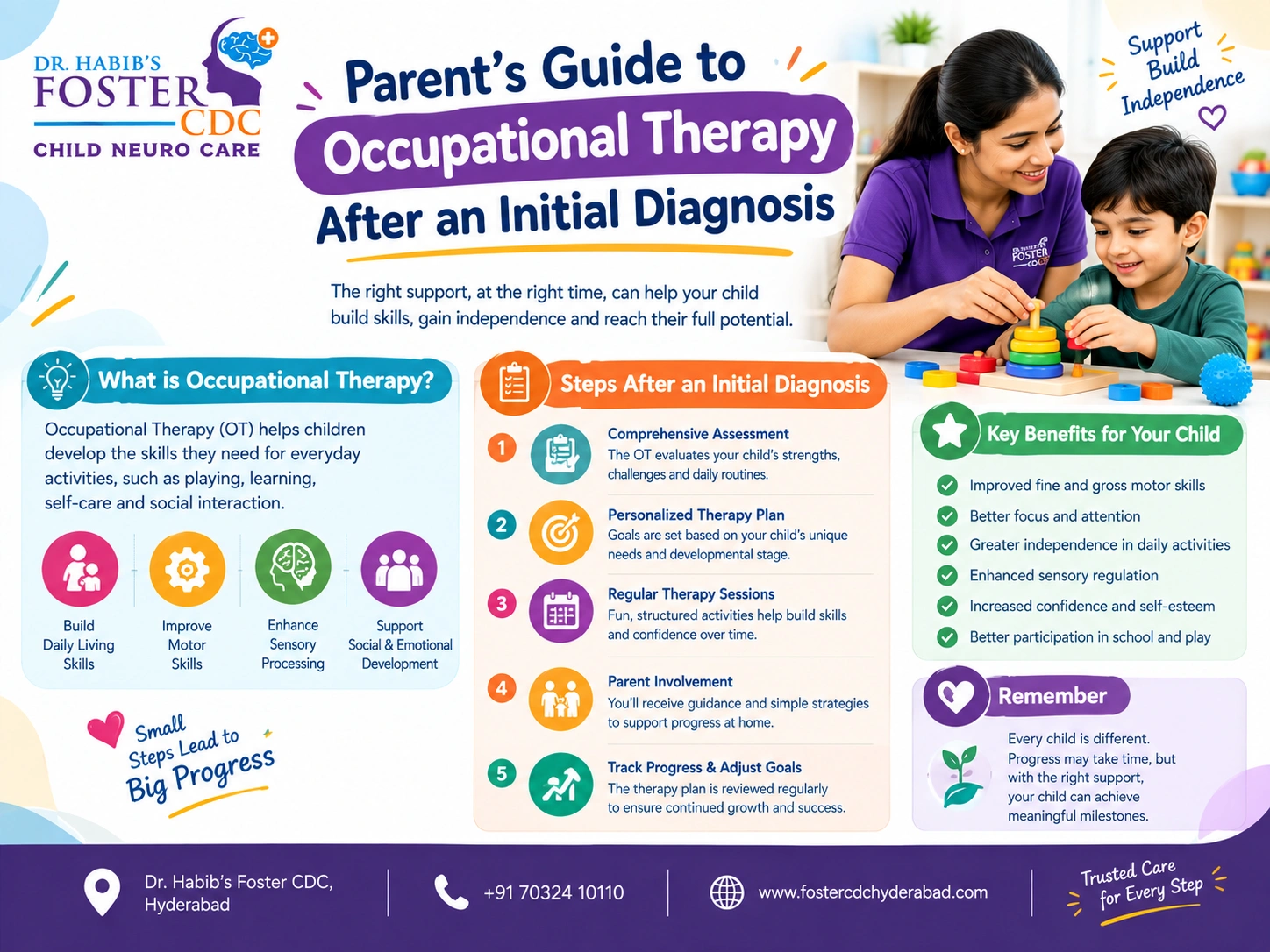
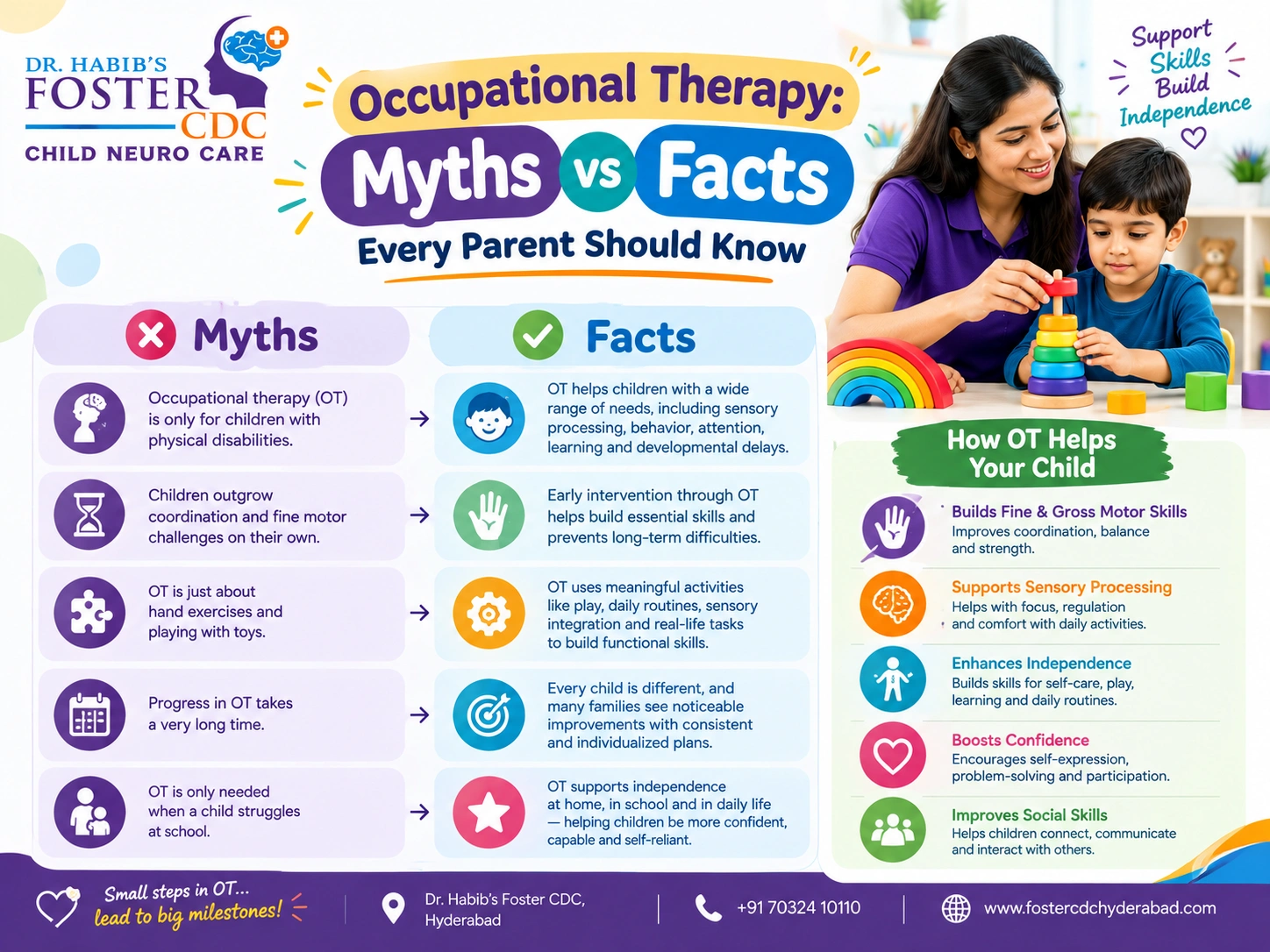
- Mostly movement, sensory, or hand-skill concerns: early signs checklist for occupational therapy
- Mostly social communication concerns: early signs of autism checklist
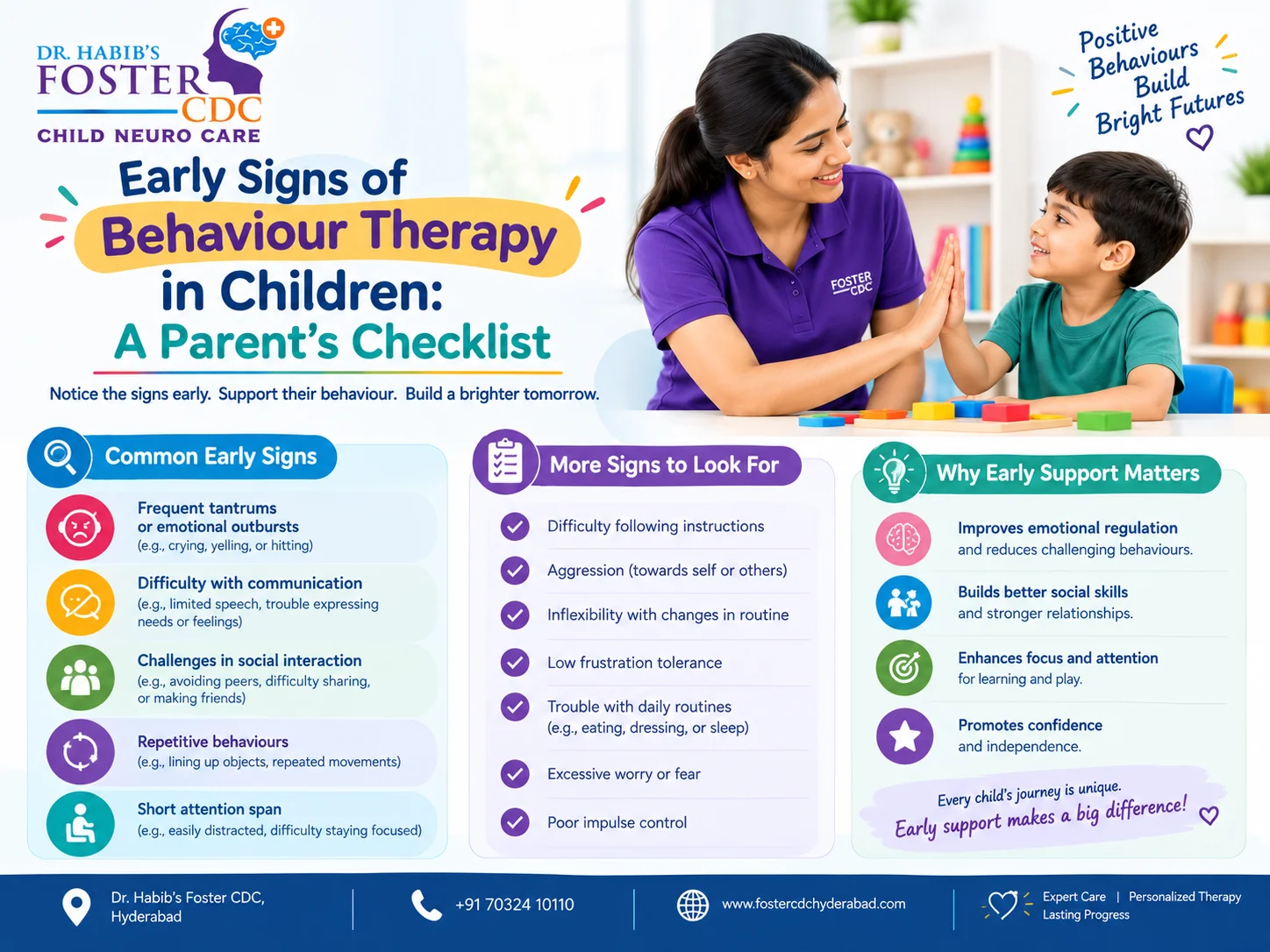
- Mostly emotional or behavioural concerns: early signs checklist for behaviour concerns
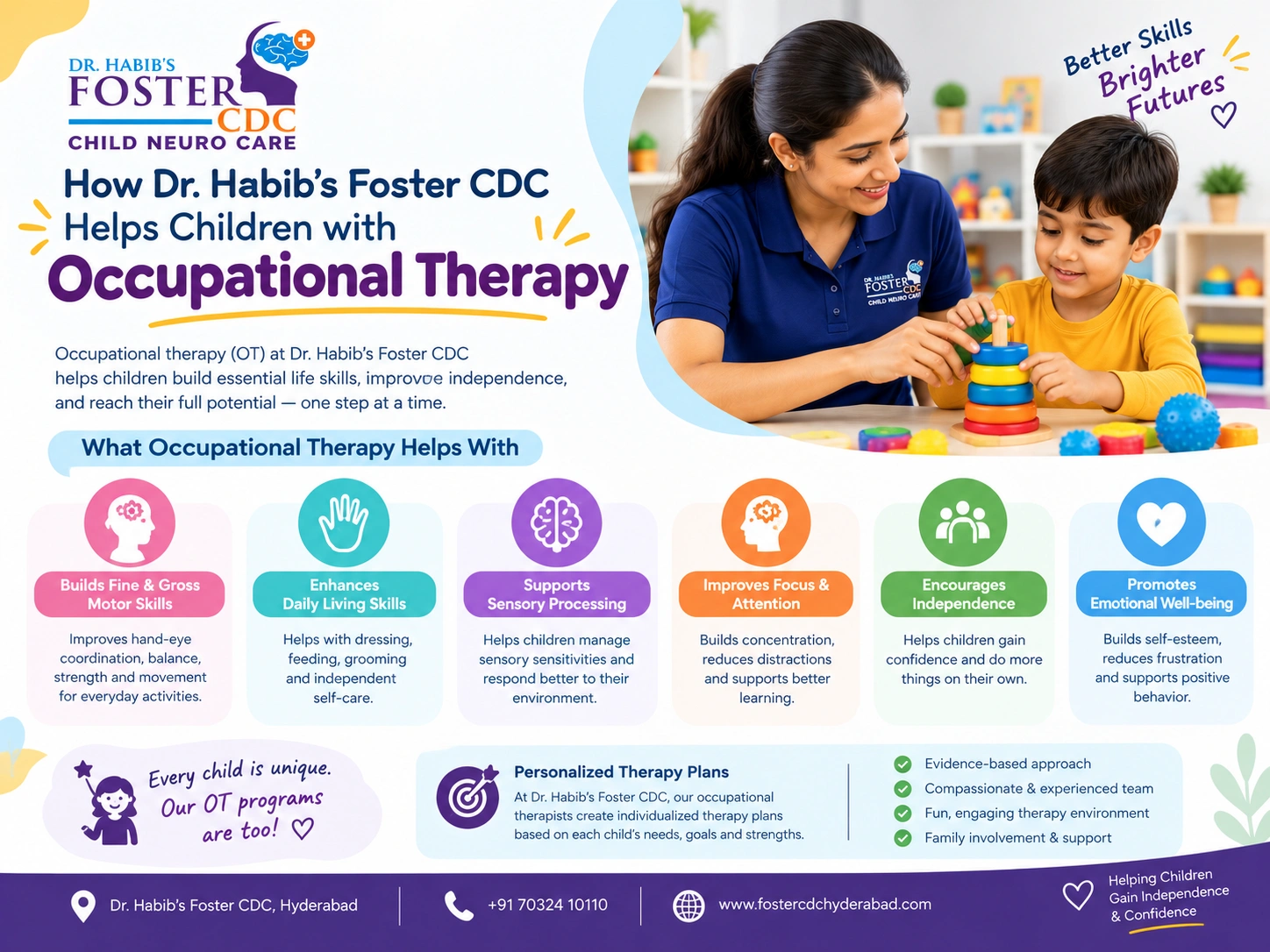
Because development in different areas is closely linked, it's common for a child to benefit from more than one kind of support, and a coordinated team makes that far easier for a family to manage. Our speech therapy services in Hyderabad and occupational therapy services work together with developmental assessment for exactly this reason.
A Note for Parents Who Feel Guilty
If reading a checklist like this stirs up guilt, please set it down. Developmental delay is not caused by something you did or didn't do. Noticing, asking, and seeking an opinion is what a thoughtful parent does, and it is the most helpful thing you can do for your child right now.
Final Thoughts
Development isn't a race, but it is a conversation between your child and the world, and sometimes a child needs a little extra support to join in. If several items here sound familiar, or if your instinct keeps nudging you, trust it enough to get it checked. Clarity, in either direction, is worth having.
Ready to find out? Book an assessment with Dr. Habib's Foster CDC and get a clear, caring picture of your child's development and what comes next.
Frequently Asked Questions
1. At what age can developmental delay be identified? Concerns can often be noticed in infancy, and developmental screening is recommended at regular intervals throughout early childhood. There's no minimum age for an assessment if you are worried.
2. Is a late talker always showing developmental delay? No. Some children are simply late talkers who catch up on their own. It becomes more of a concern when late talking comes with limited gestures, difficulty understanding, or other delays, which is why an assessment is useful.
3. What is the difference between developmental delay and global developmental delay? Developmental delay can affect a single area, such as speech. Global developmental delay is the term used when a young child shows significant delay in two or more areas of development.
4. Will my child outgrow a developmental delay? Some children do catch up, especially with early support, while others continue to need support over time. An assessment helps show which is more likely and what will help most.
5. Do I need a doctor's referral before booking an assessment? Usually not. Parents can ask for a developmental assessment directly if they have concerns about their child's progress.
6. What kind of therapy might my child need if a delay is confirmed? That depends on the areas affected. It may include speech, occupational, or behaviour therapy, or a combination, built around your child's individual profile and reviewed regularly.
Dr. Habib G Pathan is a Developmental Pediatrician at Dr. Habib's Foster CDC, Hyderabad, specializing in early childhood developmental assessment and intervention.
Other Blogs


Services
- Behavioural Therapy
- Speech Therapy
- Special Education
- Parent Training
- Psychotherapy & Counselling
- Yoga Therapy
- Postural & Mobility Therapy
- Early Intervention Services
- Cognitive Behavioural Therapy
- Occupational Therapy
- Group Teaching
- Teachers' Training
- Certified Courses
- Developmental Therapy
- Autism Therapy