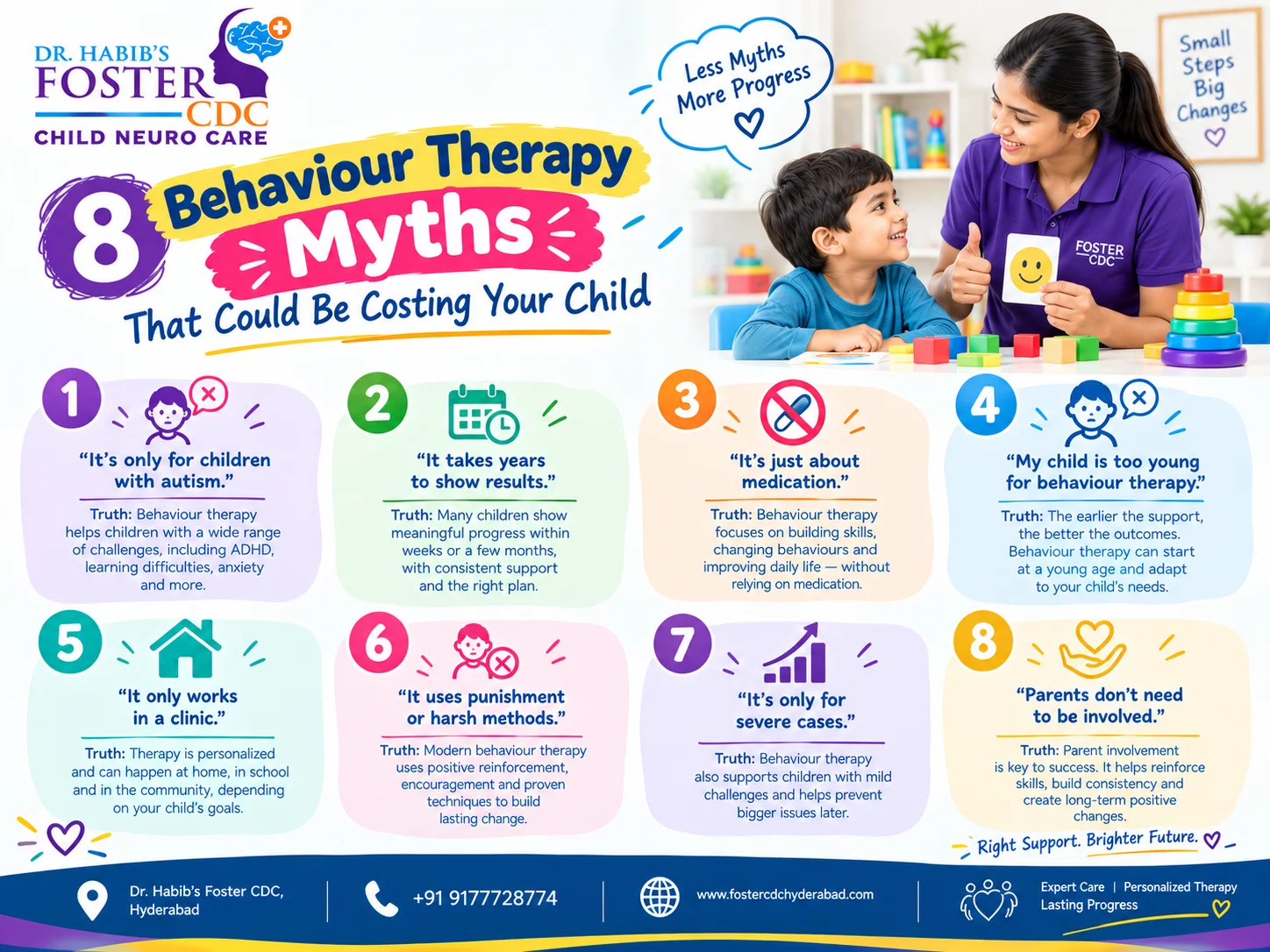
8 Behaviour Therapy Myths That Could Be Costing Your Child
By the time most parents start seriously comparing behaviour therapy centres, they've already absorbed a fair amount of secondhand opinion — from relatives who think "a firm hand" is all that's needed, from forums full of conflicting advice, and sometimes from providers themselves who oversimplify things to make a sale. Before you finalize who you're trusting with your child's care, it's worth clearing up the misconceptions that tend to shape — and sometimes derail — that decision.
I've pulled together the myths I hear most often at this exact stage of the process, with the facts that should actually guide your comparison.
Myth 1: "Behaviour Therapy Is Basically Just Strict Discipline"
Fact: Behaviour therapy and discipline share surface similarities but work very differently underneath.
Everyday discipline tends to be reactive — addressing a behaviour after it's already happened, often inconsistently across caregivers and moods. Behaviour therapy, by contrast, is built on a structured assessment of why a behaviour is occurring (what triggers it, what reinforces it) and teaches the child a more effective alternative, applied consistently across settings and tracked with objective data. The American Academy of Pediatrics and World Health Organization both frame effective behavioural intervention around this kind of structured, individualized, consistently applied approach — not stricter enforcement of the same reactive strategies families have often already tried.
Myth 2: "Behaviour Therapy Is Only for Children with Autism"
Fact: Behaviour therapy supports a wide range of children, with and without an autism diagnosis.
While Applied Behaviour Analysis (ABA) is a well-established and widely used approach for autism, behaviour therapy as a field also helps children with ADHD, anxiety, defiance, emotional regulation difficulties, and social skill challenges — often with no autism diagnosis present at all. If your child is struggling with frequent meltdowns, difficulty following instructions, or peer conflict, that alone is reason enough to consider an evaluation, regardless of any other diagnosis.
Myth 3: "If I Just Parent More Consistently, We Won't Need Therapy"
Fact: Consistent parenting matters enormously, but it isn't always sufficient on its own for significant behavioural difficulties.
This myth carries real weight because consistency genuinely does help with ordinary behavioural bumps — and most families manage most of them without professional support. But when a behaviour is significant, persistent across settings, and not responding to well-intentioned, consistent parenting strategies you've already tried, that's usually a sign the underlying driver needs professional identification, not just more willpower from parents. Behaviour therapy doesn't replace good parenting; it gives you and your child additional, tailored tools that general parenting advice can't provide.
Myth 4: "ABA and Behaviour Therapy Are the Same Thing"
Fact: ABA is one specific, well-researched approach within the much broader field of behaviour therapy.
This distinction matters when you're comparing centres, because a provider offering "behaviour therapy" might be using ABA, Parent-Child Interaction Therapy (PCIT), Cognitive Behavioural Therapy (CBT), social skills training, or some combination — and the right fit depends on your child's specific profile and age, not a one-size-fits-all label.
When comparing centres, ask directly which specific approach they use and why it's suited to your child — a provider who can't explain this is likely offering a generic package rather than an individualized plan.
Myth 5: "My Child Will Grow Out of It"
Fact: Some behaviours are genuinely age-typical and resolve naturally; others don't, and waiting can mean missing the window when intervention works best.
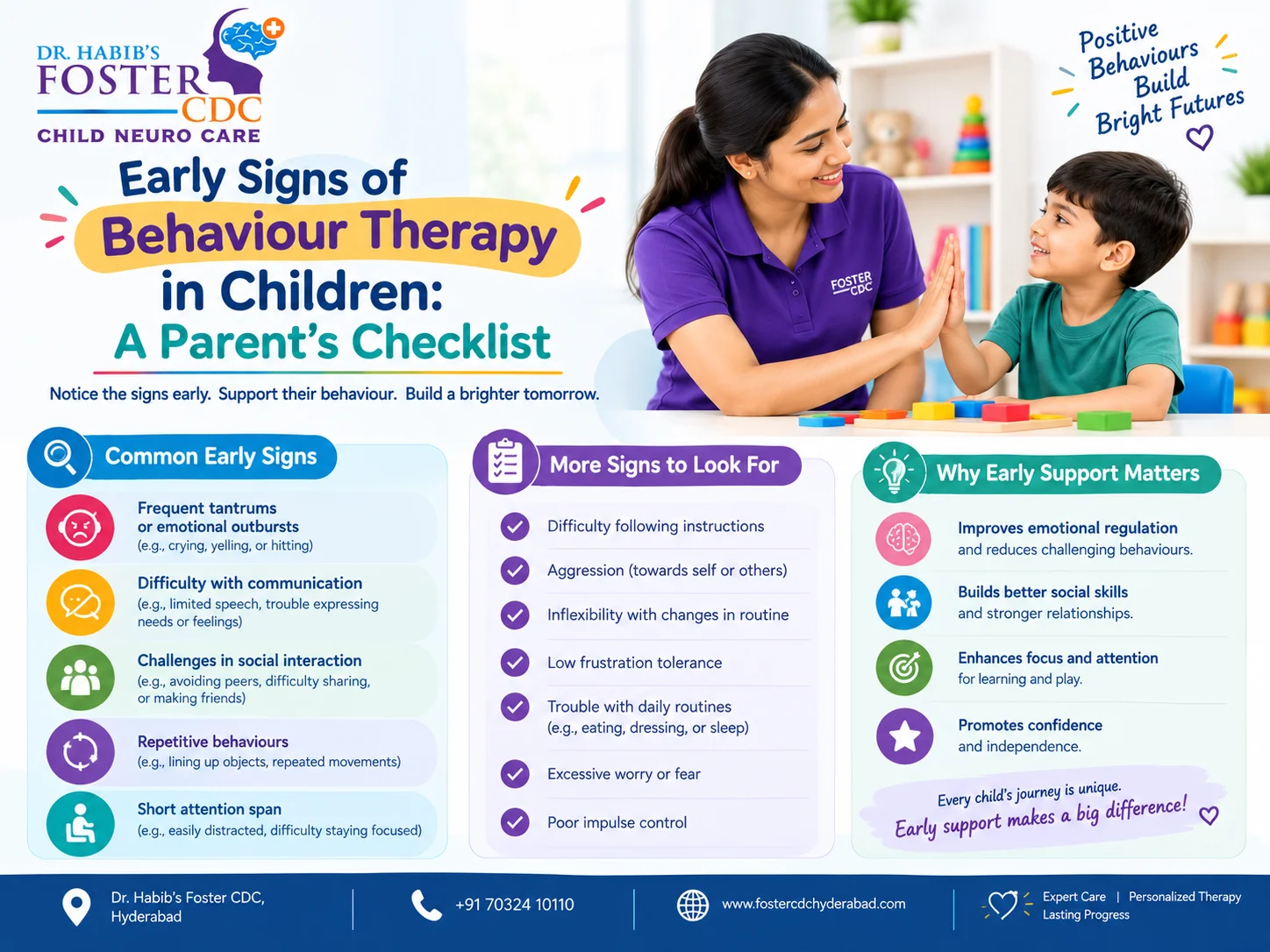
The challenge is telling the difference without a professional assessment. A good rule of thumb: if a behaviour is consistent across multiple settings (home, school, with different caregivers), significant enough to interfere with daily functioning, and not easing with the strategies you've already tried consistently, it's worth an evaluation rather than an indefinite wait — our early signs checklist can help you weigh this more concretely. Developmental guidance consistently points to earlier identification and intervention as more effective than a "wait and see" approach, particularly in the early childhood years when the brain is most responsive to structured intervention.
Myth 6: "Behaviour Therapy Sessions Are Just Playtime, So They Can't Be Doing Much"
Fact: Sessions often look playful because play and structured interaction are the most effective ways young children actually learn and generalize new skills.
A session that looks like a game of turn-taking, a structured snack routine, or guided play is, in most cases, deliberately designed around specific behavioural targets — following a two-step instruction, tolerating a transition, initiating interaction with a peer. The "playfulness" is the delivery method, not a sign that nothing clinical is happening underneath.
Myth 7: "Once We Start Therapy, It Will Never End"
Fact: Reputable behaviour therapy programs are goal-based, with progress reviewed regularly and plans adjusted or concluded as goals are met.
At Foster CDC, every program includes specific, measurable goals reviewed every 4–8 weeks. Therapy is stepped down, modified, or concluded based on actual progress data — never kept running indefinitely by default. Some children with more complex or longstanding needs do benefit from longer-term, periodically reviewed support, but that's a decision based on the child's individual profile, not an assumption built into every program.
Myth 8: "A More Expensive Centre Must Offer Better Behaviour Therapy"
Fact: Cost doesn't reliably correlate with quality — the structure of the program is a far better indicator.
When comparing centres, price is a reasonable practical factor, but it shouldn't be your primary signal of quality. Instead, look for the things that actually predict good outcomes: a genuine assessment before treatment starts, specific and measurable goals, regular progress reviews, active parent training, and coordination with other specialists (like speech-language therapy or occupational therapy) when relevant. A well-structured, moderately priced program will typically outperform an expensive one that skips these fundamentals.
What This Means When You're Comparing Centres
Armed with these facts, here's a practical approach: ask every centre you're considering how they assess before treatment starts, which specific approach they'll use and why, how often goals are reviewed, and how parents are involved. A centre that answers clearly and specifically is operating from the facts above. A centre that leans on vague reassurance or pressure tactics is leaning on the myths.
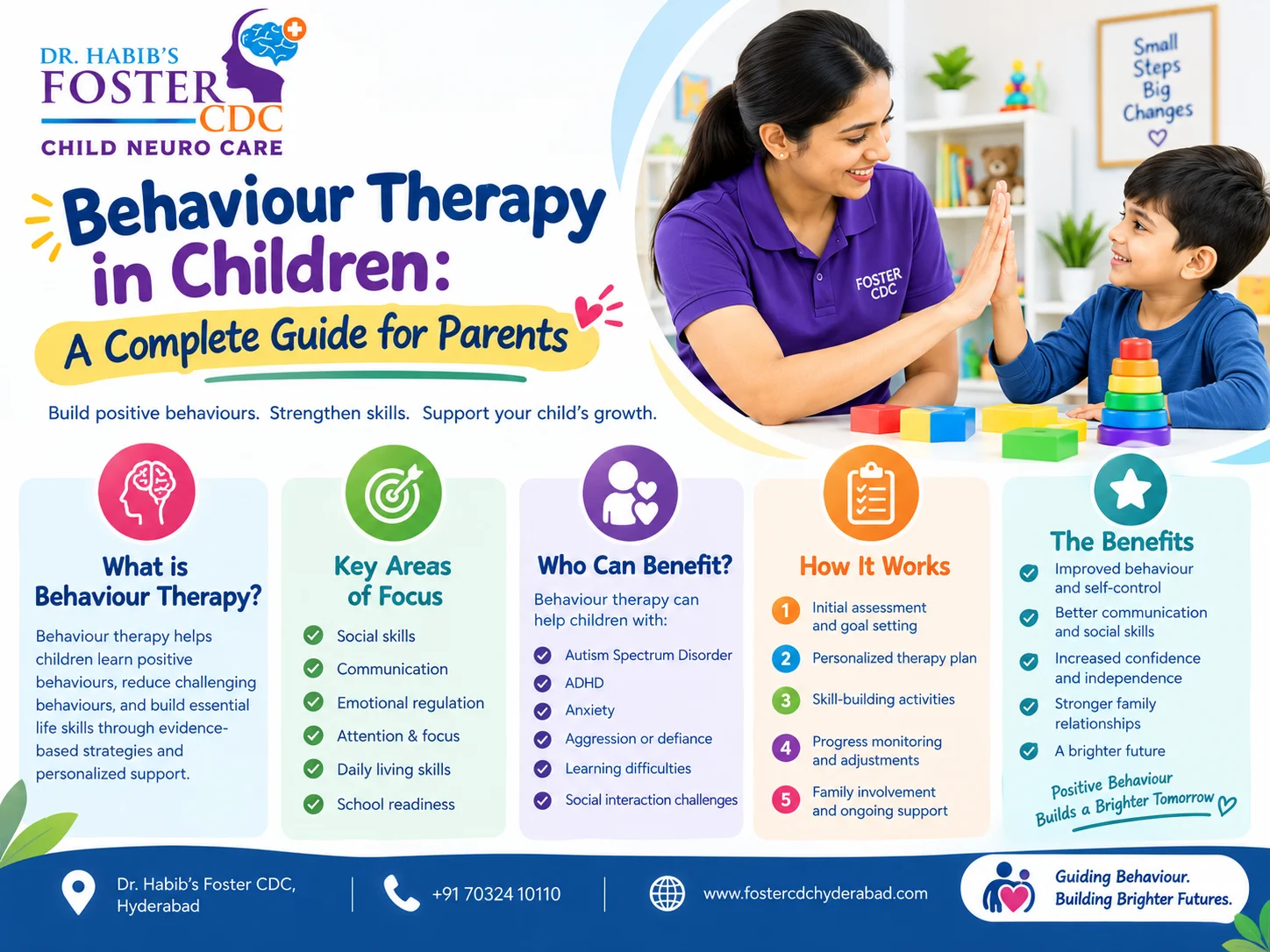
If you'd like a fuller picture of the different behaviour therapy approaches available before you finalize a comparison, our complete guide to behaviour therapy breaks down ABA, CBT, PCIT, and other methods in more depth, and our treatment options overview walks through the types of providers available across Hyderabad.
How Foster CDC Approaches Behaviour Therapy
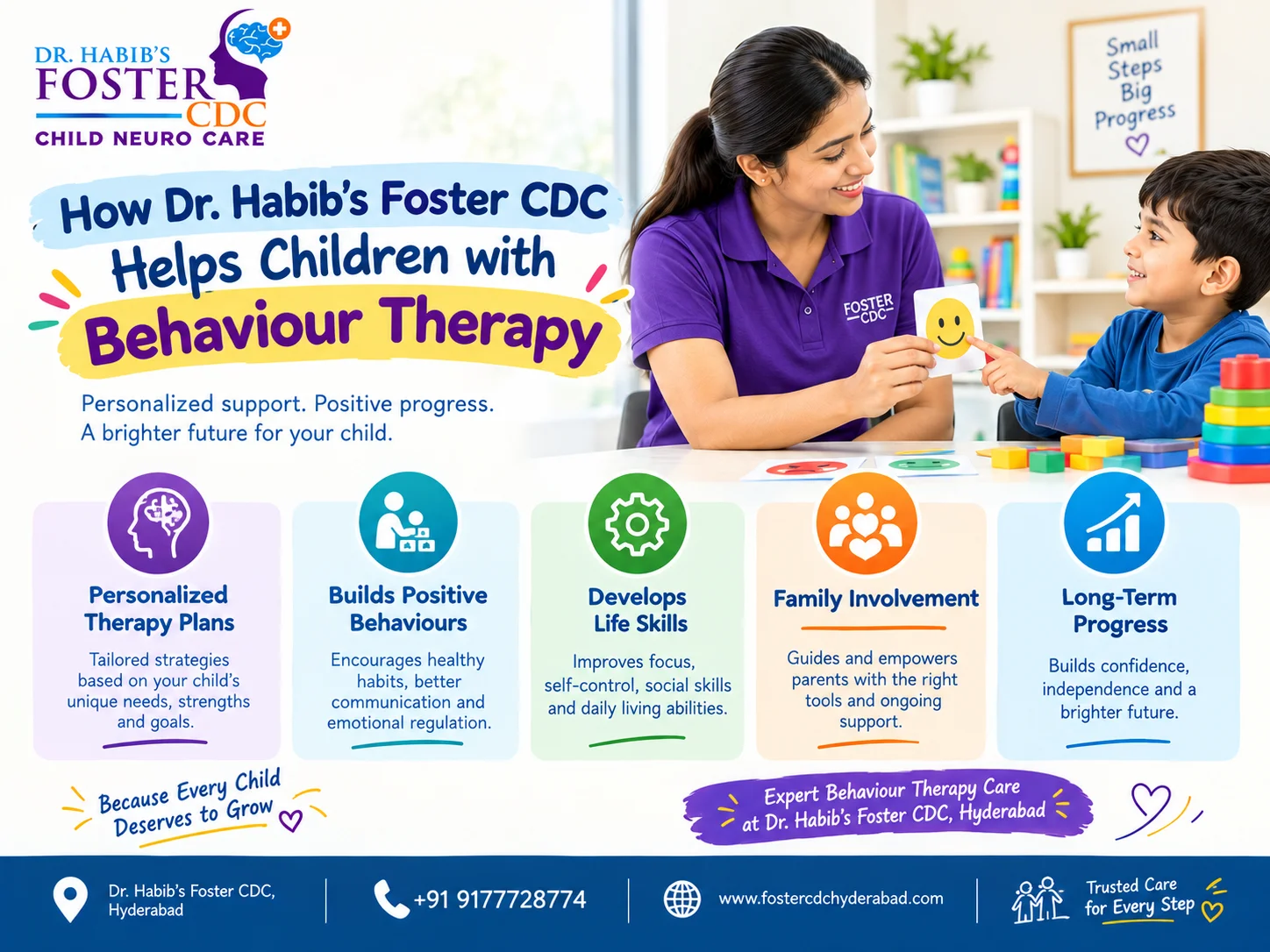
At Dr. Habib's Foster CDC, every behaviour therapy program starts with a comprehensive, individualized assessment — never a generic package. From there, we build a plan drawing on the approach best suited to your child's specific profile, with clear, measurable goals reviewed every few months and shared transparently with you. Parent training is built into our process from day one, and our behaviour-focused team coordinates directly with our speech-language and occupational therapy colleagues whenever a child's needs overlap across areas. For a closer look at our exact process, see how Foster CDC helps children with behaviour therapy.
Final Thoughts
The myths surrounding behaviour therapy tend to either overstate what a centre can promise or understate what structured, professional support can actually achieve. Neither extreme serves your child well. Go into your comparisons with the facts above, ask direct questions, and choose the centre whose answers — not just their reassurances — hold up.
Ready to see what a properly assessed, individualized plan looks like? Book an assessment with Dr. Habib's Foster CDC and move forward with clarity instead of secondhand advice.
Frequently Asked Questions
1. Is behaviour therapy the same as "ABA therapy"? No — ABA is one specific approach within the broader field of behaviour therapy; other approaches like CBT, PCIT, and social skills training are also part of this field and may suit different children better.
2. Does my child need an autism diagnosis to qualify for behaviour therapy? No. Behaviour therapy supports children with ADHD, anxiety, defiance, and general behavioural or emotional regulation difficulties, with or without an autism diagnosis.
3. How do I know if a centre's behaviour therapy program is individualized or generic? Ask specifically how they assess before starting treatment, what approach they use and why it fits your child, and how often goals are reviewed — vague or generic answers are a sign of a one-size-fits-all program.
4. Is a more expensive behaviour therapy program always better? Not necessarily. Program structure — assessment quality, individualized goals, parent involvement, and progress tracking — is a far more reliable indicator of quality than price alone.
5. Will behaviour therapy continue indefinitely once it starts? No, in a well-structured program. Goals are reviewed regularly, and therapy is adjusted, stepped down, or concluded based on actual progress, though some children with complex needs may benefit from longer-term, periodically reviewed support.
6. Can behaviour therapy replace good parenting, or does it work alongside it? It works alongside it. Behaviour therapy gives parents additional, tailored tools and strategies — it doesn't replace consistent, supportive parenting, but builds on it.
Dr. Habib G Pathan is a Developmental Pediatrician at Dr. Habib's Foster CDC, Hyderabad, specializing in early childhood developmental assessment and intervention.
Other Blogs







Services
- Behavioural Therapy
- Speech Therapy
- Special Education
- Parent Training
- Psychotherapy & Counselling
- Yoga Therapy
- Postural & Mobility Therapy
- Early Intervention Services
- Cognitive Behavioural Therapy
- Occupational Therapy
- Group Teaching
- Teachers' Training
- Certified Courses
- Developmental Therapy
- Autism Therapy