
Developmental Delay in Children: Signs, Causes, Tests and Therapy Explained
Developmental delay means a child is reaching milestones, such as sitting, walking, talking, playing or self-care, later than most children of the same age. It can affect one area or several. It is common, often responds well to early support, and is best understood through a proper developmental assessment rather than guesswork.
Key Facts at a Glance
- What it is: A pattern of slower-than-expected progress in one or more areas of development.
- Global developmental delay: The term used when a young child shows significant delay in two or more areas.
- Common causes: Premature birth, genetic conditions, birth complications, infections, hearing or vision problems, and nutritional or environmental factors. In many children, no single cause is found.
- Who can assess it: A developmental pediatrician, working with speech, occupational and behaviour specialists.
- Best time to act: As early as concerns appear. Early support tends to work best, though help is useful at any age.
- Where to get help in Hyderabad: Dr. Habib's Foster CDC, with centres at Toli Chowki, Malakpet and Suncity.
If you've searched for this topic, you probably noticed something small and then couldn't stop thinking about it. Maybe your toddler isn't using words the way a friend's child does. Maybe a doctor or teacher used the phrase "developmental delay" and moved on before you could ask what it meant.
This guide is for that moment. It answers the questions parents ask us most, in plain language, and it is organised so you can jump straight to the one you need.
What Is Developmental Delay?
Developmental delay is when a child does not reach expected milestones within the usual age range. Milestones are the skills most children pick up in a predictable order: lifting the head, sitting, crawling, walking, babbling, speaking, playing with others, feeding themselves, and learning routines.
Children vary a great deal, so a single late milestone is rarely a concern. What clinicians look for is a pattern: skills arriving consistently late, progress that seems to stall, or a gap that keeps widening over time.
The World Health Organization and the American Academy of Pediatrics both recommend regular developmental monitoring and screening in early childhood, because noticing a pattern early gives a child more time to benefit from support.
What Are the Main Areas of Development?
Development is usually grouped into five areas. A delay can show up in one or several.
| Area | What It Covers | Example of a Delay |
|---|---|---|
| Gross motor | Large movements: sitting, crawling, walking, jumping | Not walking independently by around 18 months |
| Fine motor | Small movements: grasping, drawing, buttoning | Difficulty holding a spoon or crayon for the age |
| Speech and language | Understanding and using words and gestures | Very few words, or no two-word phrases by around 2 years |
| Social and emotional | Interaction, play, managing feelings | Little interest in people or shared play |
| Cognitive | Thinking, attention, problem-solving, learning | Difficulty following simple instructions suited to the age |
What Is Global Developmental Delay?
Global developmental delay (GDD) is the term used when a young child, generally under five years old, has significant delay in two or more of these areas at the same time. For example, a child who is late to walk, late to talk and slow to play with others may be described this way.
GDD is a description, not a final diagnosis. It tells the care team that a closer look is needed to understand why, and to plan support. Some children's profiles later become clearer, for example as a specific condition or as an overall learning difficulty. Others catch up substantially with early help.
Developmental Delay vs Late Bloomer vs Developmental Disorder
Parents often hear these terms used loosely. Here is how they differ.
| Term | What It Usually Means | What Happens Next |
|---|---|---|
| Late bloomer | Reaches milestones a little late but catches up without special support | Monitoring at regular check-ups |
| Developmental delay | Noticeably behind age expectations in one or more areas | Assessment and, where needed, therapy |
| Global developmental delay | Significant delay in two or more areas in a young child | Detailed assessment to look for causes and plan support |
| Developmental disorder or disability | A diagnosed, usually longer-lasting condition affecting development | Ongoing, individualised support and regular review |
Telling a late bloomer from a child with a genuine delay is hard at home, which is exactly why assessment is useful. It gives you an answer rather than a guess.
What Are the Early Signs of Developmental Delay?
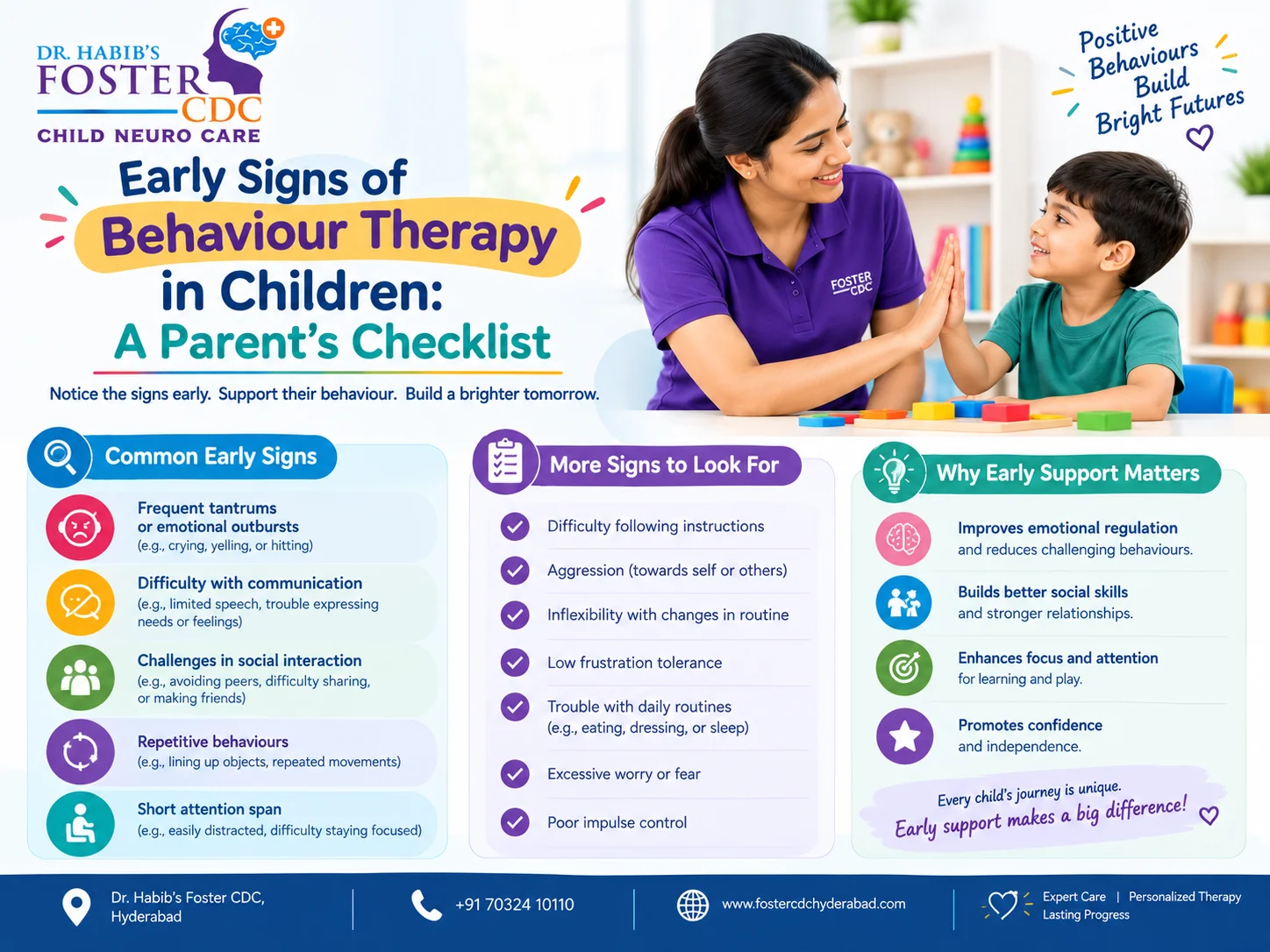
Common early signs include not babbling by around 12 months, not walking by around 18 months, few or no words by around 2 years, limited eye contact or interest in people, and difficulty following simple instructions. Loss of a skill the child already had is always a reason to seek help promptly.
These ages are general guide points, not strict cut-offs. For a fuller, area-by-area list, see our early signs of developmental delay checklist. If your concern is mostly about one area, these may help too: speech, movement and sensory skills, social communication and behaviour.
What Causes Developmental Delay?
There is rarely one simple cause, and often none is found. Factors that can contribute include:
- Birth-related: Premature birth, low birth weight, or complications around delivery
- Genetic or chromosomal conditions: Such as Down syndrome or other inherited conditions
- Health conditions: Infections affecting the brain, seizures, or long-term illness
- Sensory problems: Undetected hearing or vision difficulties, which can quietly affect speech and learning
- Nutrition and environment: Significant nutritional deficiencies, exposure to toxins such as lead, or very limited stimulation
- Unknown: In many children, the cause cannot be identified, and that does not change how well support can work
Please hear this clearly: developmental delay is not caused by something you did or didn't do as a parent. Looking for answers is not blame, and the search for a cause matters mainly because it can guide treatment.
How Is Developmental Delay Diagnosed?
A developmental assessment is a structured, child-friendly process, not a pass-or-fail exam. It usually includes:
- A detailed history: Pregnancy, birth, health, family history, and your child's milestones so far
- Observation: How your child plays, communicates, moves and responds
- Standardised developmental tools: Age-appropriate measures that compare your child's skills across the main areas
- Hearing and vision checks: To rule out sensory causes
- Further tests, if needed: Such as blood tests or other investigations, guided by the clinical picture
- A clear explanation: Strengths as well as concerns, and recommended next steps
Where an assessment shows that support would help, the findings become the basis of a personalised plan. You can read more about how that works in our guide to personalized therapy plans for children.
What Treatment and Therapy Options Are There?
Support is matched to the areas affected, and many children benefit from more than one therapy working together.
| Therapy | Helps With | Typical Focus |
|---|---|---|
| Speech and language therapy | Late talking, unclear speech, understanding language | Communication, vocabulary, speech sounds, feeding skills |
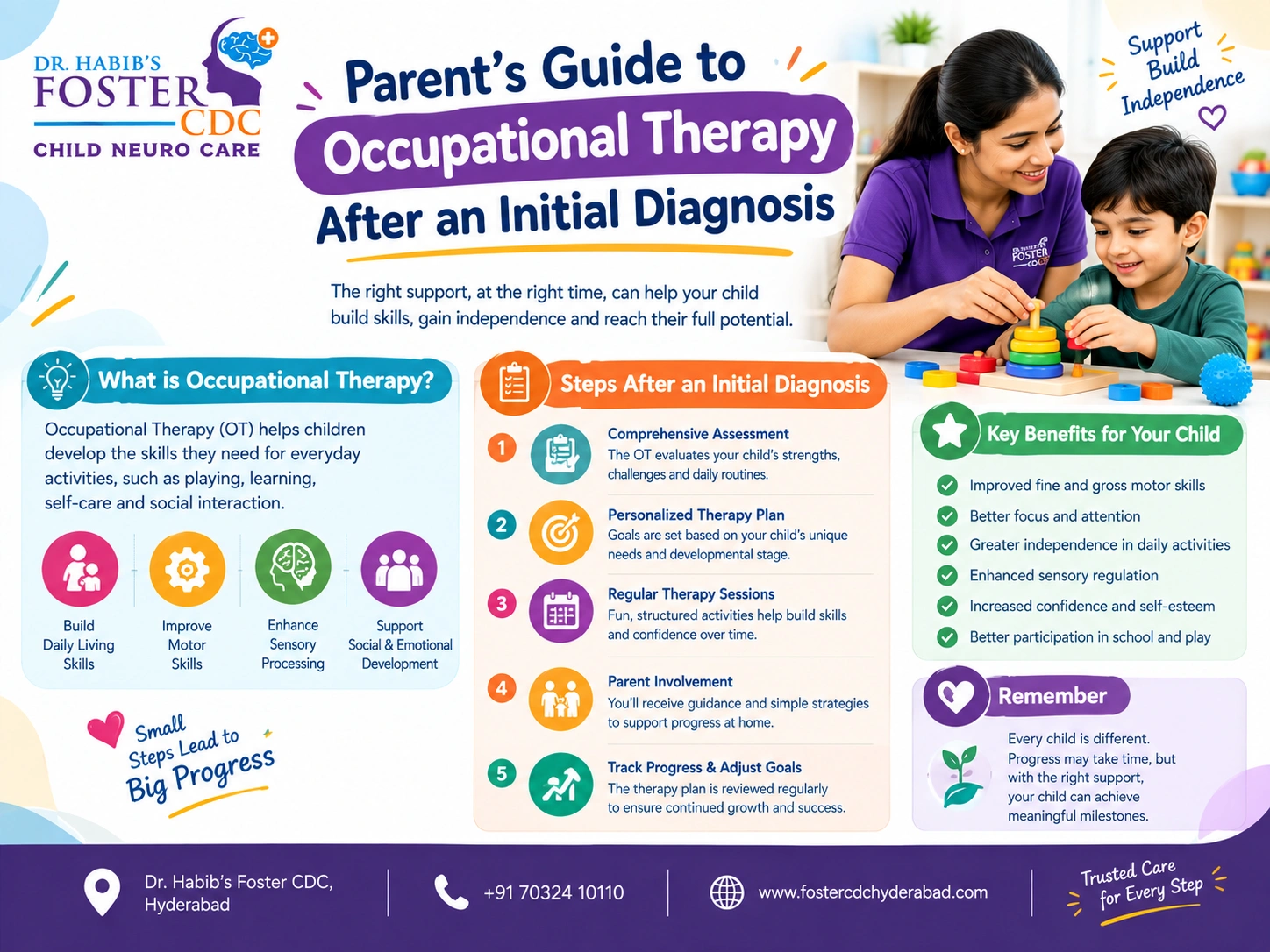
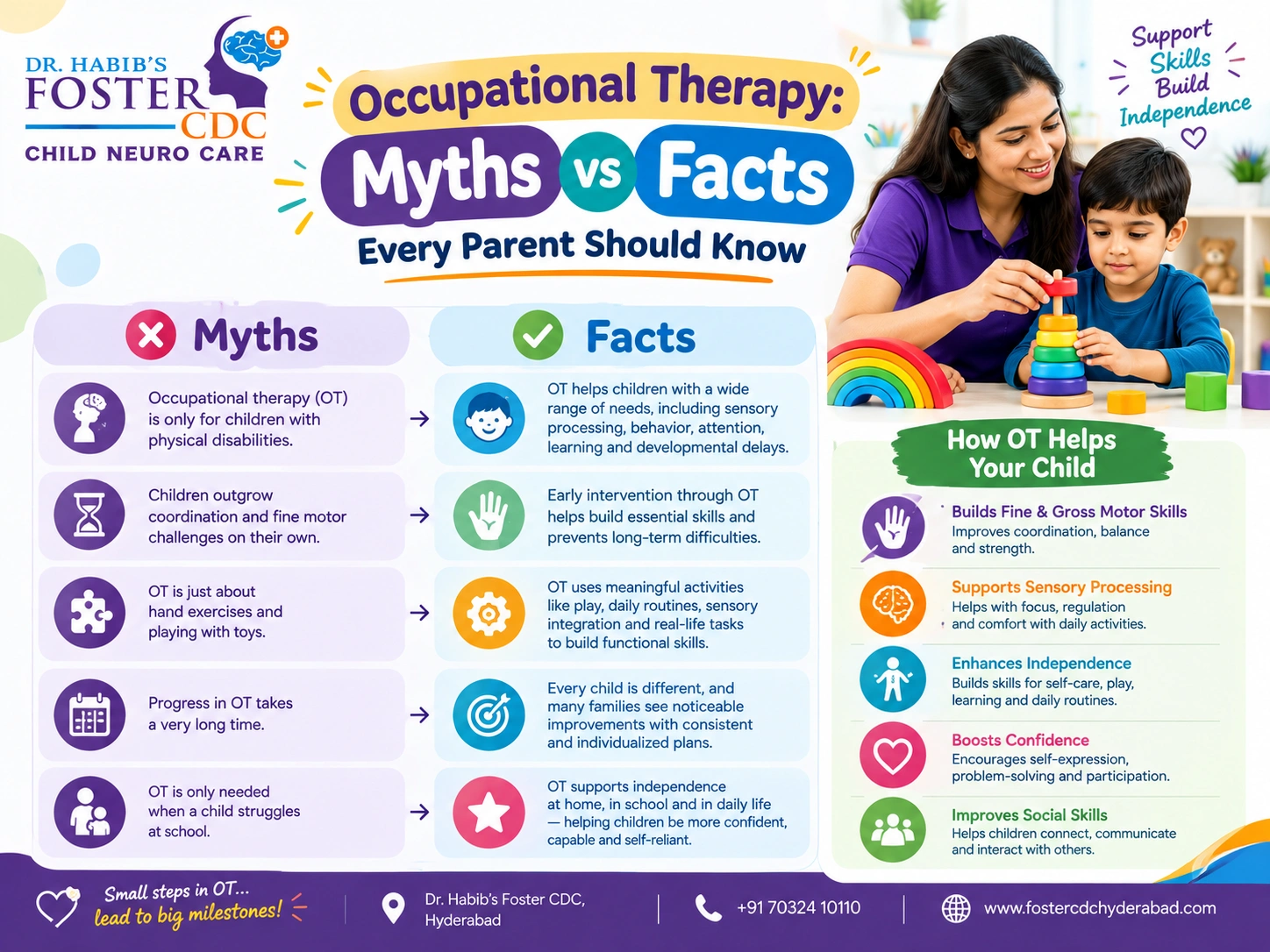
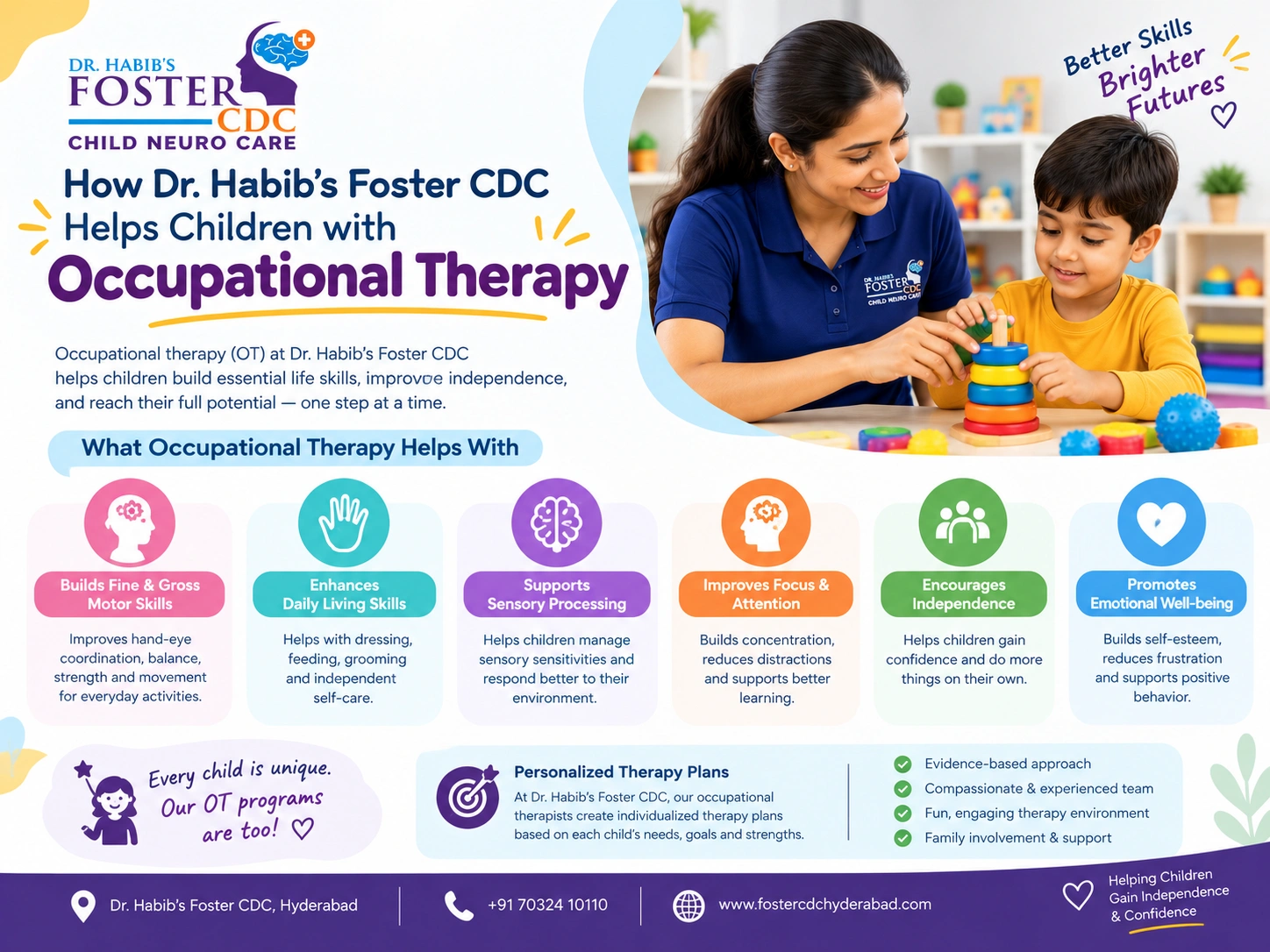
| Occupational therapy | Fine motor, sensory processing, self-care | Hand skills, daily routines, sensory regulation, play |
| Physiotherapy and mobility support | Late sitting or walking, posture, muscle tone | Strength, balance, movement patterns |
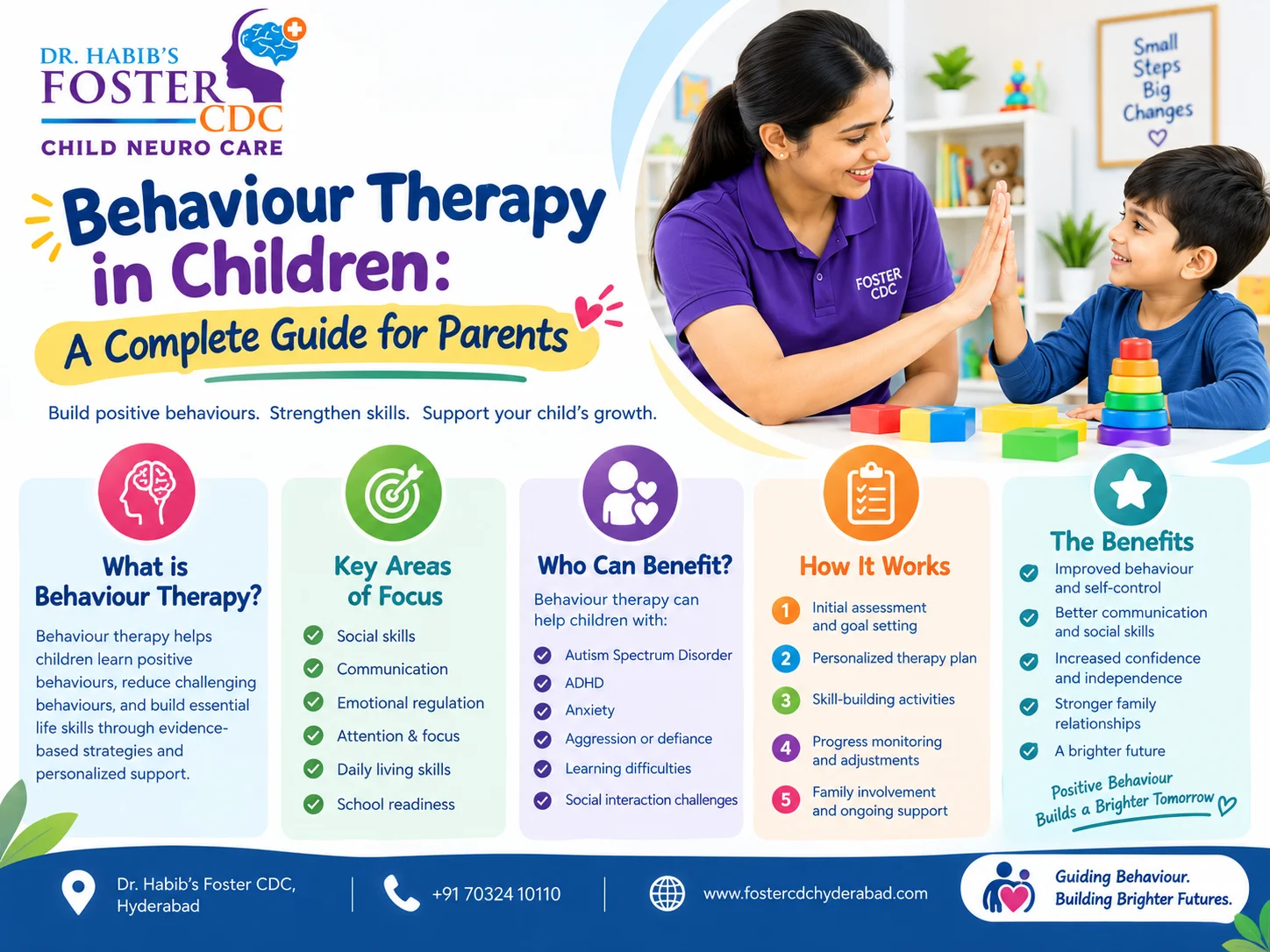
| Behaviour therapy | Meltdowns, attention, following instructions, social skills | Structured skill-building and parent coaching |
| Special education and early intervention | Learning readiness, cognitive skills | Individual learning goals, school preparation |
Good programs share three features: they start from a real assessment, they set clear goals that are reviewed regularly, and they train parents to continue the work at home. Consistent practice in everyday routines often matters as much as time spent in sessions.
Can a Child Catch Up After Developmental Delay?
Some children do, especially when the delay is mild and support starts early. Others continue to need support over a longer period, and many make steady, meaningful progress even when full catching up isn't the outcome. A fair summary is that early, consistent support improves a child's chances in nearly all cases, and a good team will be honest with you about what progress to expect rather than promising a fixed result.
What You Can Do at Home Right Now
You don't need special equipment to support your child while you arrange an assessment.
- Talk through the day. Describe what you're doing as you do it, and pause to give your child a chance to respond.
- Play on the floor together. Follow your child's lead, take turns, and keep it short and enjoyable.
- Use simple routines. Predictable mealtimes, bath time and bedtime help children learn what comes next.
- Limit passive screen time and swap some of it for songs, books and hands-on play.
- Celebrate small steps. A new sound, a new gesture or one more bite of a new food is progress.
What Should You Do Next? A Simple Plan
- Write down what you've noticed. Short, dated examples are more useful than general impressions.
- Check hearing and vision. These are quick to test and easy to overlook.
- Ask for a developmental assessment. You don't need to wait for a teacher or relative to agree with you.
- Share the findings with the people around your child, such as grandparents, school staff and regular caregivers.
- Start support promptly, and ask how progress will be measured.
If your child is nervous about visits, our guide to preparing your child for their first therapy session can help make it easier.
Developmental Therapy at Foster CDC, Hyderabad
Dr. Habib's Foster CDC is a child development centre in Hyderabad offering developmental assessment alongside speech, occupational, behaviour and special education support under one roof, with centres at Toli Chowki, Malakpet and Suncity. Each child begins with a comprehensive assessment, and the plan that follows is built around that child's strengths and needs, with goals reviewed regularly and shared with parents. Parents are treated as partners and trained in strategies they can use at home.
For related conditions, you may also find our guides on autism in children and behaviour therapy in children helpful.
Final Thoughts
A developmental delay is a starting point for understanding your child better, not a verdict on their future. The most helpful step is also the simplest: get a clear assessment, ask questions, and begin support while your child is at their most adaptable. Whatever the findings, you'll leave with a plan instead of a worry.
Ready for answers? Book an assessment with Dr. Habib's Foster CDC and take the first step with a team that will walk the journey with you.
Frequently Asked Questions
What is developmental delay in children?
Developmental delay means a child is reaching milestones such as sitting, walking, talking or playing later than most children of the same age. It can affect one area or several, and it is best confirmed through a developmental assessment.
What is the difference between developmental delay and global developmental delay?
Developmental delay can involve a single area, such as speech. Global developmental delay means a young child has significant delay in two or more areas of development at the same time.
At what age can developmental delay be identified?
Concerns can appear in infancy, and developmental screening is recommended at regular intervals in early childhood. There is no minimum age for an assessment if you are worried.
Is a late talker always developmentally delayed?
No. Some children are simply late talkers who catch up. It is more of a concern when late talking comes with limited gestures, trouble understanding, or delays in other areas.
What causes developmental delay?
Causes include premature birth, genetic conditions, birth complications, infections, hearing or vision problems and nutritional or environmental factors. In many children, no cause is found.
Can developmental delay be cured?
Delay is not something to "cure" in the usual sense, but many children make significant progress with early, consistent support, and some catch up fully. A good team will give you an honest view of what to expect.
Which doctor should I see for developmental delay?
A developmental pediatrician is usually the right starting point, often working with speech, occupational and behaviour therapists.
Do I need a referral for a developmental assessment in Hyderabad?
Usually not. Parents can ask for an assessment directly at a child development centre if they have concerns about their child's progress.
Dr. Habib G Pathan is a Developmental Pediatrician at Dr. Habib's Foster CDC, Hyderabad, specializing in early childhood developmental assessment and intervention. This article is for general information and is not a substitute for an individual medical assessment.
Other Blogs

Services
- Behavioural Therapy
- Speech Therapy
- Special Education
- Parent Training
- Psychotherapy & Counselling
- Yoga Therapy
- Postural & Mobility Therapy
- Early Intervention Services
- Cognitive Behavioural Therapy
- Occupational Therapy
- Group Teaching
- Teachers' Training
- Certified Courses
- Developmental Therapy
- Autism Therapy