
Early Intervention Myths vs Facts: 8 Things New Parents Hear (and What Is True)
Dr. Habib's Foster CDC, Hyderabad Last updated: November 2026
Most myths about early intervention are about what it is (drills, a cure, only for autism, only for private centres) and who it is for (too young, a label for life). The facts are simpler. Early intervention is play-based, family-involved support that starts when a concern appears. It builds a child's skills, it does not cure autism, and there are options beyond private centres.
Someone has told you to "give him time." Someone else has said early intervention means forty hours a week at a table. A website promised it would make autism go away. You are tired, you are worried, and every voice sounds certain. (These are illustrations, not real quotes.)
This guide takes eight myths about early intervention and answers each one in the same two parts: the fact, and what you can do. Two very common myths, "he will grow out of it" and "wait for a diagnosis first", are covered in our guide to developmental delay myths, so we do not repeat them here. If you are still deciding whether to act, start with our guide on early signs a child needs early intervention.
Myth 1: "Early intervention is only for autism"
The fact: It supports children with delays in many areas, with or without autism. According to our early intervention services page, programs work on behaviour and self-regulation, emotional and social development, cognitive skills (language and speech, numeracy, reading and writing, and problem-solving), and physical development.
What you can do: Describe what you see, not a label. A developmental assessment will show which areas need support.
Myth 2: "If we start early enough, the autism will go away"
The fact: Early intervention supports a child's skills and everyday life. It is not a cure. WHO says timely access to early evidence-based psychosocial interventions can improve a child's ability to communicate and interact socially. The American Academy of Pediatrics (AAP) autism report describes a growing evidence base for behavioural and other interventions that address specific skills and symptoms. Neither source promises that autism will disappear. Our complete guide to early intervention explains what the research supports.
What you can do: Be cautious of any program that promises a cure or a fixed outcome. For more on autism, see our post on autism myths vs facts.
Myth 3: "My child is too young for therapy"
The fact: Support can begin in infancy. Our developmental therapy page says developmental therapy can begin in infancy, and our special education page describes early intervention programs for babies and toddlers. The AAP recommends developmental screening at 9, 18 and 30 months and autism screening at 18 and 24 months, and the Indian Academy of Pediatrics (IAP) advises starting intervention soon after a delay is recognised. The American Speech-Language-Hearing Association (ASHA) notes that the earlier a possible delay or disorder is addressed, the better.
What you can do: If you are worried, ask for an assessment now. Starting too early is not a recognised problem. An assessment that finds nothing is a good result.
Myth 4: "It means long hours of drills at a table"
The fact: For young children, early intervention is mostly play and daily routines. Our special education page says early intervention programs help babies and toddlers learn to walk, talk and play, and that the team trains caregivers and families. The World Health Organization's 2020 guideline on early childhood development recommends supporting responsive caregiving and early learning, which happen through warm, playful interaction.
What you can do: Ask how activities fit into your child's day, such as mealtimes, bath time and floor play.
Myth 5: "The experts do the work, and parents just bring the child"
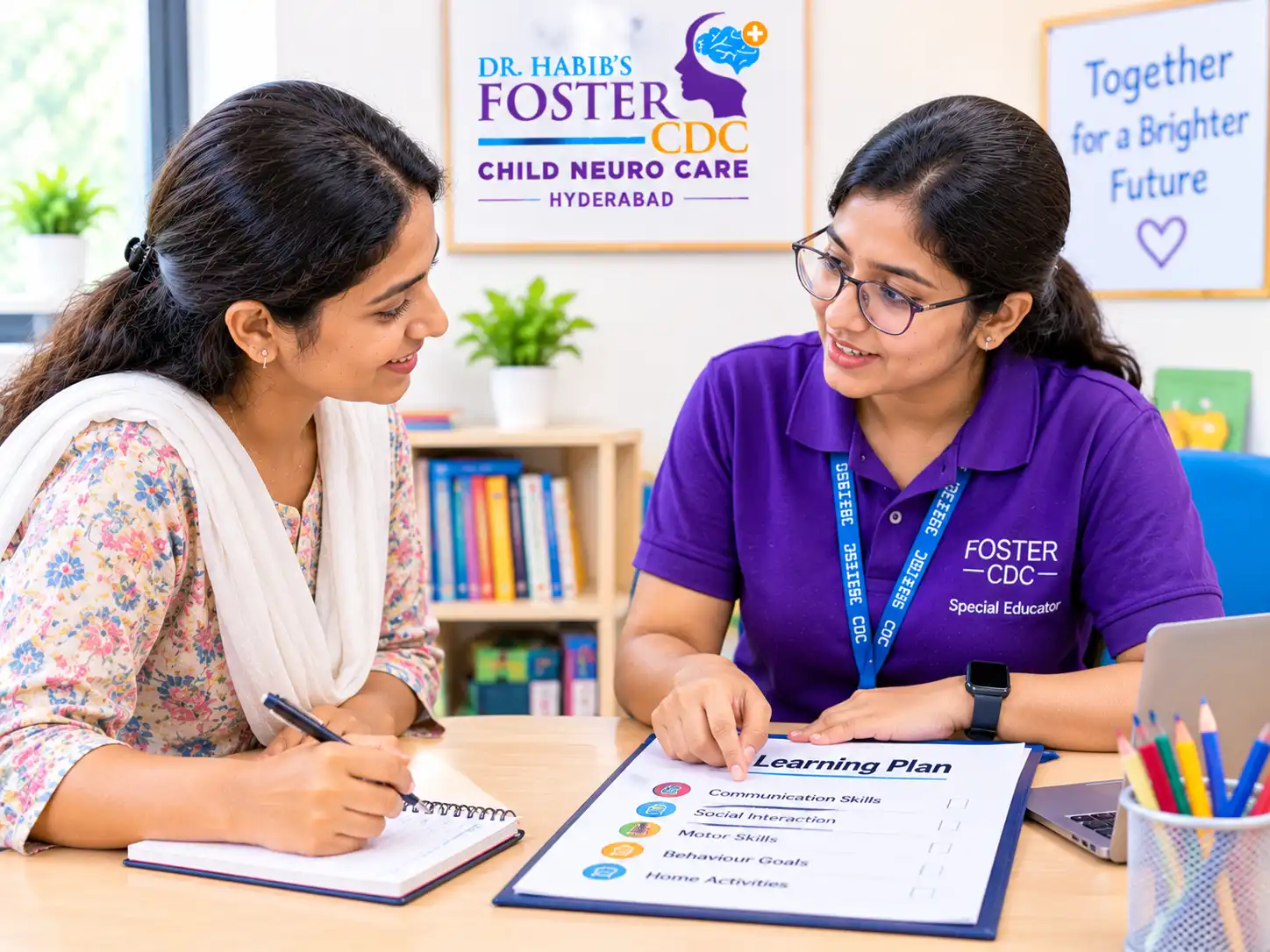
The fact: Parents are part of the intervention. According to our early signs of autism checklist, parents are involved at every stage of goal-setting and progress review. WHO's Caregiver Skills Training program teaches parents strategies for communication, play and daily routines, and a study of the program in urban India reported better communication, social skills and daily living skills in children and lower stress for parents.
What you can do: Ask what you will be shown to practise at home. Our parent training service covers this.
Myth 6: "More hours is always better"
The fact: Guidelines describe individualised plans, not a fixed number of hours for every child. The IAP guideline on developmental delay describes goals set for the individual child and reviewed over time. How much support a child needs depends on the assessment, the child's needs and the family.
What you can do: Be careful with fixed hour promises made before an assessment. Ask for the plan, the goals and the review date in writing.
Myth 7: "It is only available at expensive private centres"
The fact: There are several routes. India's RBSK program sets up District Early Intervention Centres at district hospitals for children from birth to 6 years. Hospital clinics offer medical work-up, and child development centres offer regular therapy. Costs, waiting times and services vary, so confirm them directly. Our guide to developmental delay treatment in Hyderabad explains each route.
What you can do: Ask your pediatrician or the district health office what is available near you, and compare more than one option.
Myth 8: "An assessment will label my child for life"
The fact: An assessment describes your child's strengths and needs today. The IAP guideline treats global developmental delay as a working label that is reviewed over time, and notes that some children later receive a different or more specific diagnosis, while others make enough progress that the picture changes. Our developmental therapy page says the assessment uses a standardized tool to set a baseline for measuring progress.
What you can do: Ask for the findings in plain words, including strengths, and keep a copy. Our guide to developmental delay after diagnosis shows how to use the report.
If You Are Ready to Take the Next Step
At Dr. Habib's Foster CDC, our early intervention page describes early, effective support for children, and our overview describes it for children from birth to 6 years. To see how plans are built and reviewed, read how Foster CDC helps children with developmental delay.
We have centres at Toli Chowki, Malakpet and Suncity in Hyderabad. Our centres page has the details.
If you would like an individual assessment, book an appointment with Dr. Habib's Foster CDC. You can also call +91 9391138499.
Final Thoughts
Myths grow where information is thin. You do not need to know everything about early intervention to start. You need an assessment, a plan you understand, and a team that answers your questions plainly. Everything else can be learned along the way.
Frequently Asked Questions
Is early intervention only for autism?
No. It supports children with delays in speech, movement, learning, social skills and behaviour, with or without autism.
Does early intervention cure autism?
No. It supports a child's communication, social and daily living skills, and helps families. It is not a cure.
Is my child too young for therapy?
No. Support can begin in infancy, and guidelines advise starting soon after a delay is recognised.
Does early intervention mean long hours at a table?
For young children it is mostly play and daily routines, with parents trained to continue the work at home.
Do I need a diagnosis before starting?
Not to ask for an assessment or to begin support. For more, see our guide to developmental delay myths.
Is early intervention only available at private centres?
No. Options include government early intervention services at district hospitals, hospital clinics and child development centres. Costs and availability vary, so confirm directly.
Will an assessment label my child for life?
No. An assessment describes strengths and needs today. Labels such as global developmental delay are working labels that are reviewed over time.
Where can I get an early intervention assessment in Hyderabad?
Dr. Habib's Foster CDC offers assessment at its centres in Toli Chowki, Malakpet and Suncity. Government services and hospital clinics are other options.
Dr. Habib G Pathan is a Developmental Pediatrician at Dr. Habib's Foster CDC, Hyderabad. This article is for general information and does not replace an individual assessment. Please consult a qualified professional about your child's development.
Other Blogs









Services
- Behavioural Therapy
- Speech Therapy
- Special Education
- Parent Training
- Psychotherapy & Counselling
- Yoga Therapy
- Postural & Mobility Therapy
- Early Intervention Services
- Cognitive Behavioural Therapy
- Occupational Therapy
- Group Teaching
- Teachers' Training
- Certified Courses
- Developmental Therapy
- Autism Therapy