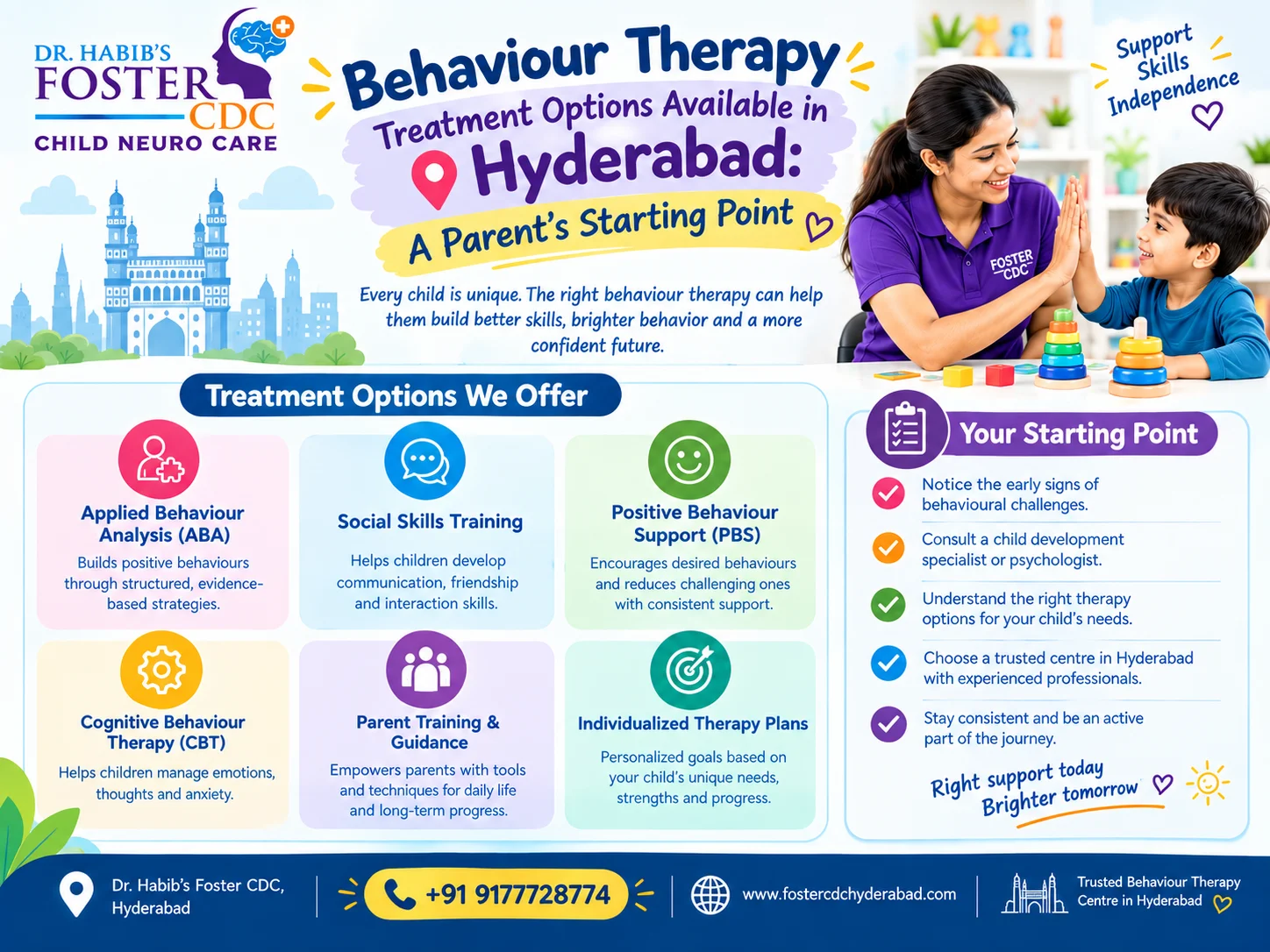
Behaviour Therapy Treatment Options Available in Hyderabad: A Parent's Starting Point
If you've landed here, chances are someone — a pediatrician, a teacher, your own gut feeling — has mentioned that your child's behaviour might benefit from some kind of professional support, and you're not entirely sure where to even start. That's a completely normal place to be. Most parents I meet at this stage haven't heard the term "behaviour therapy" more than once or twice before, and the options out there — clinics, hospitals, special education centres, therapists offering home visits — can feel like a maze with no map.
This article is that map. It walks through what behaviour therapy actually involves, the different kinds of providers available in Hyderabad, and how to think about choosing between them — written for someone who's just starting to look into this, not someone who already knows the jargon.
First, What Is Behaviour Therapy?
Behaviour therapy is a structured, evidence-based approach that helps children build skills, manage emotions, and reduce behaviours that interfere with learning, safety, or relationships — things like frequent meltdowns, difficulty following instructions, trouble with peers, or intense resistance to everyday routines. It isn't about punishment or "strict parenting." It's about understanding why a behaviour is happening and teaching the child a more effective way to handle the same situation.
Both the World Health Organization and the American Academy of Pediatrics point to the same core message for parents in your position: developmental and behavioural concerns respond best to early, structured support, and starting sooner rather than later consistently leads to better outcomes. You don't need to have all the answers today — you just need to know where to start looking, which is exactly what this guide covers.
The Types of Behaviour Therapy Providers in Hyderabad
Hyderabad has a genuinely wide range of options for families, which is good news — but it also means comparing apples to oranges if you don't know what each type of provider actually offers. Here's a breakdown.
| Provider Type | What They Typically Offer | Best Suited For | Things to Keep in Mind |
|---|---|---|---|
| Government hospitals & medical colleges | Developmental assessments, referrals, some therapy services | Families seeking low-cost initial evaluation | Longer wait times, limited individualized therapy slots |
| Private pediatric/developmental clinics | Comprehensive assessment plus ongoing individualized therapy | Families wanting a coordinated, structured treatment plan | Costs vary; worth comparing assessment depth, not just price |
| Dedicated child development centres | Multidisciplinary teams (behaviour, speech, OT) under one roof | Children needing coordinated, cross-disciplinary support | Look for centres where teams actually communicate with each other |
| Special education schools/centres | Behaviour support integrated into an educational setting | School-age children needing academic and behavioural support together | May be less intensive than clinical ABA-based programs |
| Independent therapists (home-based) | One-on-one sessions, often flexible scheduling | Families wanting convenience or a child who struggles in clinical settings | Verify credentials and experience directly, since oversight varies |
| Online/teletherapy providers | Remote consultation and parent coaching | Families in outlying areas, or as a supplement to in-person care | Best used alongside, not instead of, in-person assessment for younger children |
None of these is automatically "the best" option — the right fit depends on your child's specific needs, your location within the city, your schedule, and frankly, your budget. What matters most, regardless of which type of provider you choose, is that the process starts with a genuine assessment rather than a generic program sold to every family that walks in.
What a Reputable Provider Should Offer, Regardless of Setting
Wherever you end up, here's a simple checklist worth applying to any provider you're considering in Hyderabad:
- A real assessment before treatment starts — not a one-size-fits-all package offered on the first visit
- Clear, written goals specific to your child, not vague language like "improve behaviour"
- Regular progress reviews, typically every 4–8 weeks, with results shared with you directly
- Parent involvement built into the program, since home consistency is one of the strongest predictors of progress
- Transparent coordination with other specialists your child may need (speech therapy, occupational therapy, pediatric care)
- Willingness to answer your questions directly, without pressure to commit to long-term packages before an assessment has even happened
If a provider can't clearly explain their assessment process or dodges specific questions about how progress will be tracked, that's worth noting before you commit.
What the First Visit Usually Looks Like
For a worried first-time parent, not knowing what to expect is often the biggest source of anxiety — more than the actual concern about your child's behaviour. Here's a realistic picture of a first visit at a reputable centre:
- An intake conversation, where you describe what you've observed, when it started, and in which settings it happens
- Structured observation of your child, either through play, structured tasks, or both
- Developmental history review, covering milestones, medical history, and relevant family context
- A discussion of next steps, which may include further assessment sessions, a referral to a related specialist, or the start of a treatment plan
A first visit is rarely the moment therapy "begins" in the full sense — it's the beginning of understanding your child's specific profile, which is what makes everything that follows actually effective rather than generic.
How Foster CDC Fits Into the Picture
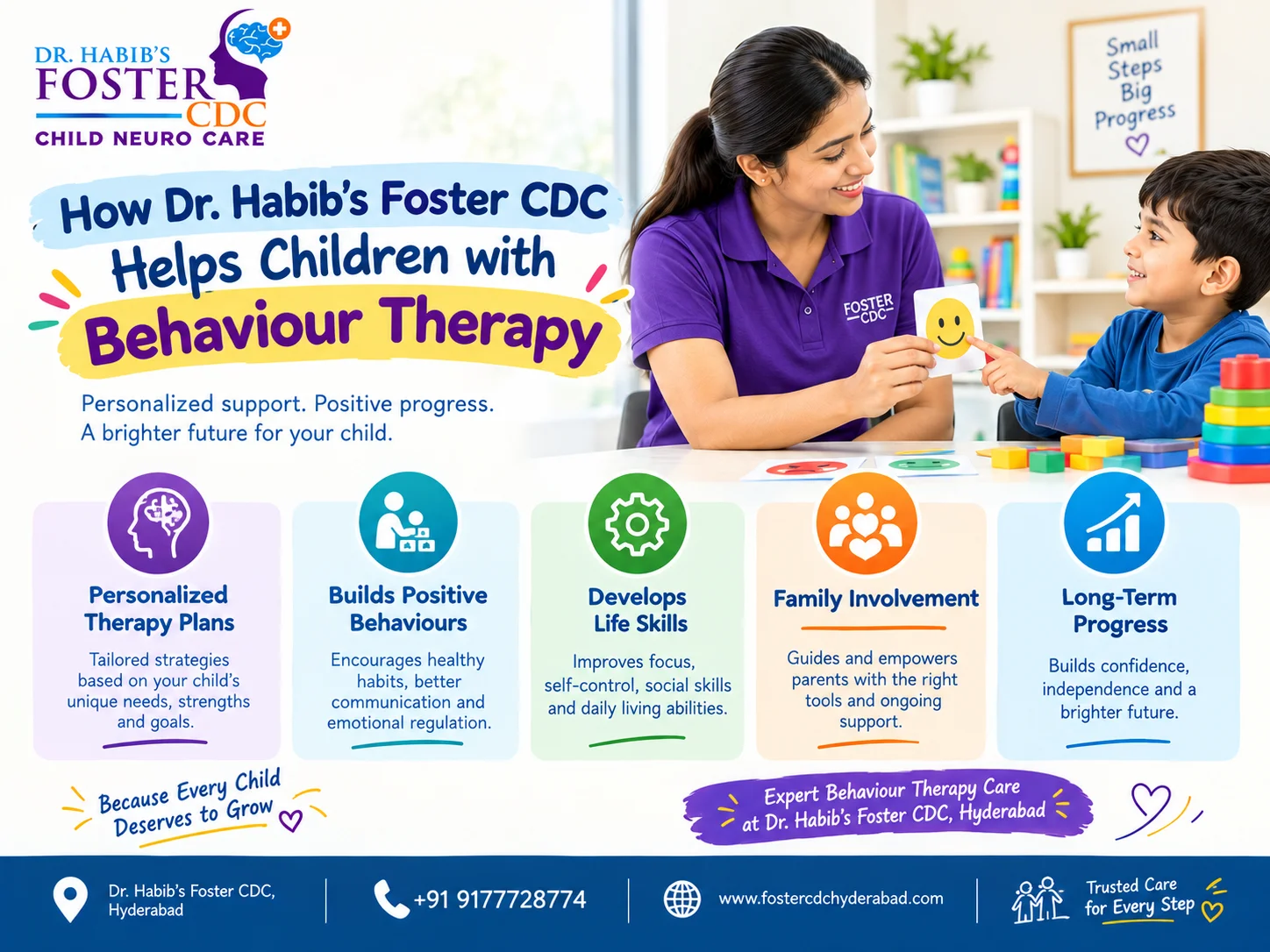
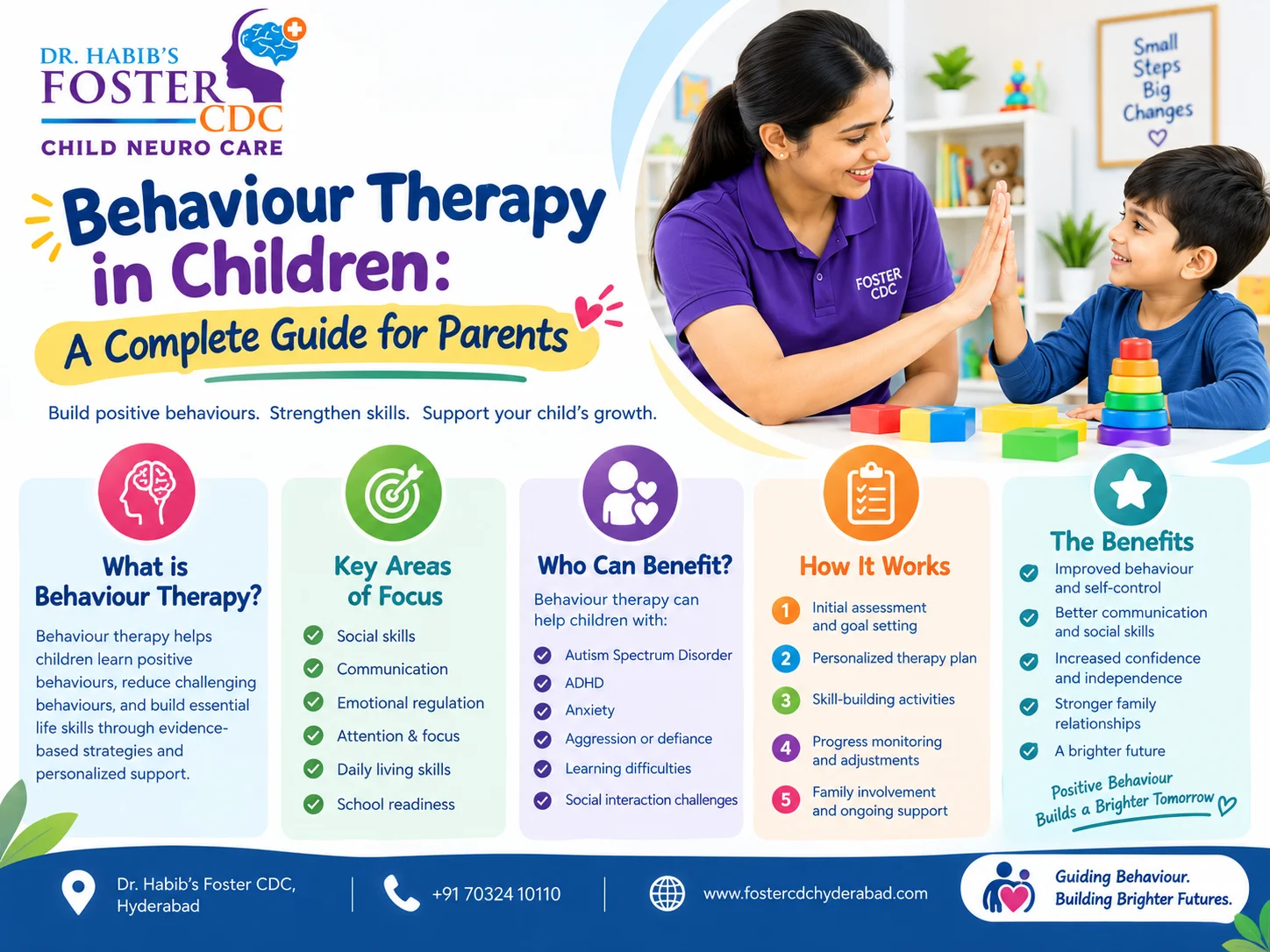
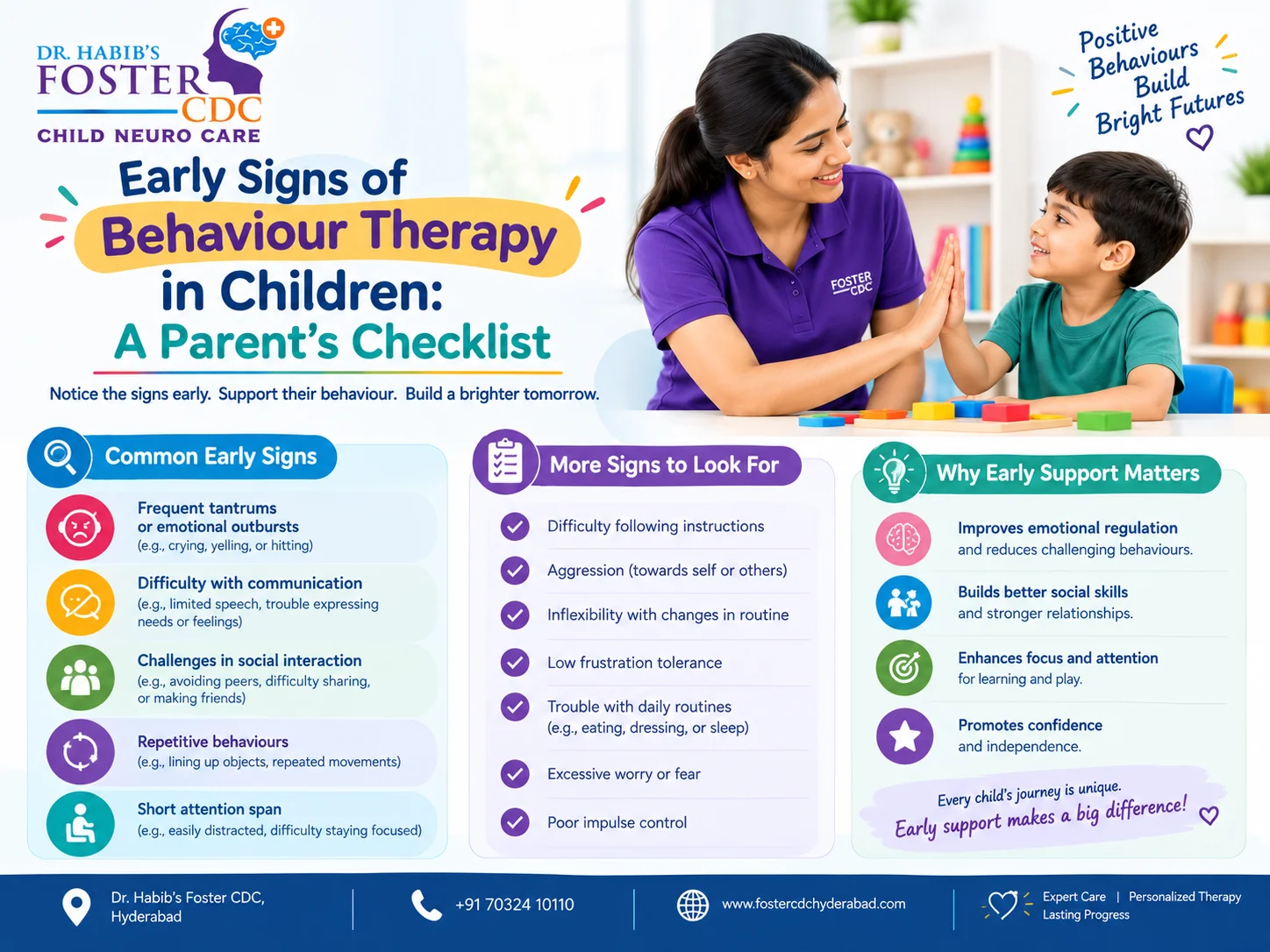
At Dr. Habib's Foster CDC, we operate as a dedicated child development centre, which means your child's behaviour therapy doesn't happen in isolation — our team includes specialists in speech-language therapy and occupational therapy working alongside behaviour-focused clinicians, so if your child's needs extend beyond behaviour alone, that coordination happens under one roof rather than across separate, disconnected providers. Every family starts with a comprehensive developmental assessment, and from there we build an individualized plan — often drawing on ABA-informed strategies — with clear goals and regular progress reviews shared directly with you. If you're still working out whether what you're seeing in your child is worth a professional look, our early signs checklist is a good next read, and our complete guide to behaviour therapy walks through the different treatment approaches in more depth once you're ready to compare options.
A Few Honest Words for Worried Parents
If you're reading this at the start of a worrying week, I want to say something plainly: seeking an assessment doesn't mean something is definitely wrong with your child, and it isn't a decision you need to make alone or quickly. It's simply the most reliable way to get clarity — whether that clarity is "this is a normal developmental stage" or "here's a structured plan that will genuinely help." Either answer is worth having, and neither is something to feel guilty about pursuing.
Final Thoughts
Hyderabad has more behaviour therapy options for children than most parents realize when they first start looking — the real work is matching the right type of provider to your specific child, not finding a single "best" answer that applies to everyone. Start with a genuine assessment, ask direct questions about goals and progress tracking, and trust your own observations of your child alongside the professional guidance you receive.
If you're ready to take that first step, book an assessment with Dr. Habib's Foster CDC and get a clear, professional picture of what support could look like for your child.
Frequently Asked Questions
1. Where should a worried parent in Hyderabad start looking for behaviour therapy? Start with a developmental assessment at a dedicated child development centre or pediatric clinic — this gives you a clear picture of your child's needs before you compare specific treatment approaches or providers.
2. Is government hospital care or private clinic care better for behaviour therapy? It depends on your priorities — government hospitals often offer lower-cost initial evaluation with longer wait times, while private clinics and child development centres typically offer faster access to comprehensive, ongoing individualized therapy.
3. Do I need a doctor's referral to see a behaviour therapist in Hyderabad? Not usually. Most dedicated child development centres, including Foster CDC, accept direct inquiries from parents without requiring a prior referral.
4. How much does behaviour therapy typically cost in Hyderabad? Costs vary widely depending on the provider type, session frequency, and intensity of the program — it's worth comparing the depth of assessment and ongoing support offered, not price alone, when evaluating options.
5. Can online or teletherapy replace in-person behaviour therapy? For young children, in-person assessment and therapy are generally recommended, though teletherapy can be a useful supplement, particularly for parent coaching or families in areas with limited local access.
6. What should I bring to a first behaviour therapy consultation? Bring any notes on specific behaviours you've observed (when, where, how often), relevant medical or developmental history, and any feedback you've received from teachers or other caregivers — concrete observations are far more useful than general impressions.
Dr. Habib G Pathan is a Developmental Pediatrician at Dr. Habib's Foster CDC, Hyderabad, specializing in early childhood developmental assessment and intervention.
Other Blogs




Services
- Behavioural Therapy
- Speech Therapy
- Special Education
- Parent Training
- Psychotherapy & Counselling
- Yoga Therapy
- Postural & Mobility Therapy
- Early Intervention Services
- Cognitive Behavioural Therapy
- Occupational Therapy
- Group Teaching
- Teachers' Training
- Certified Courses
- Developmental Therapy
- Autism Therapy