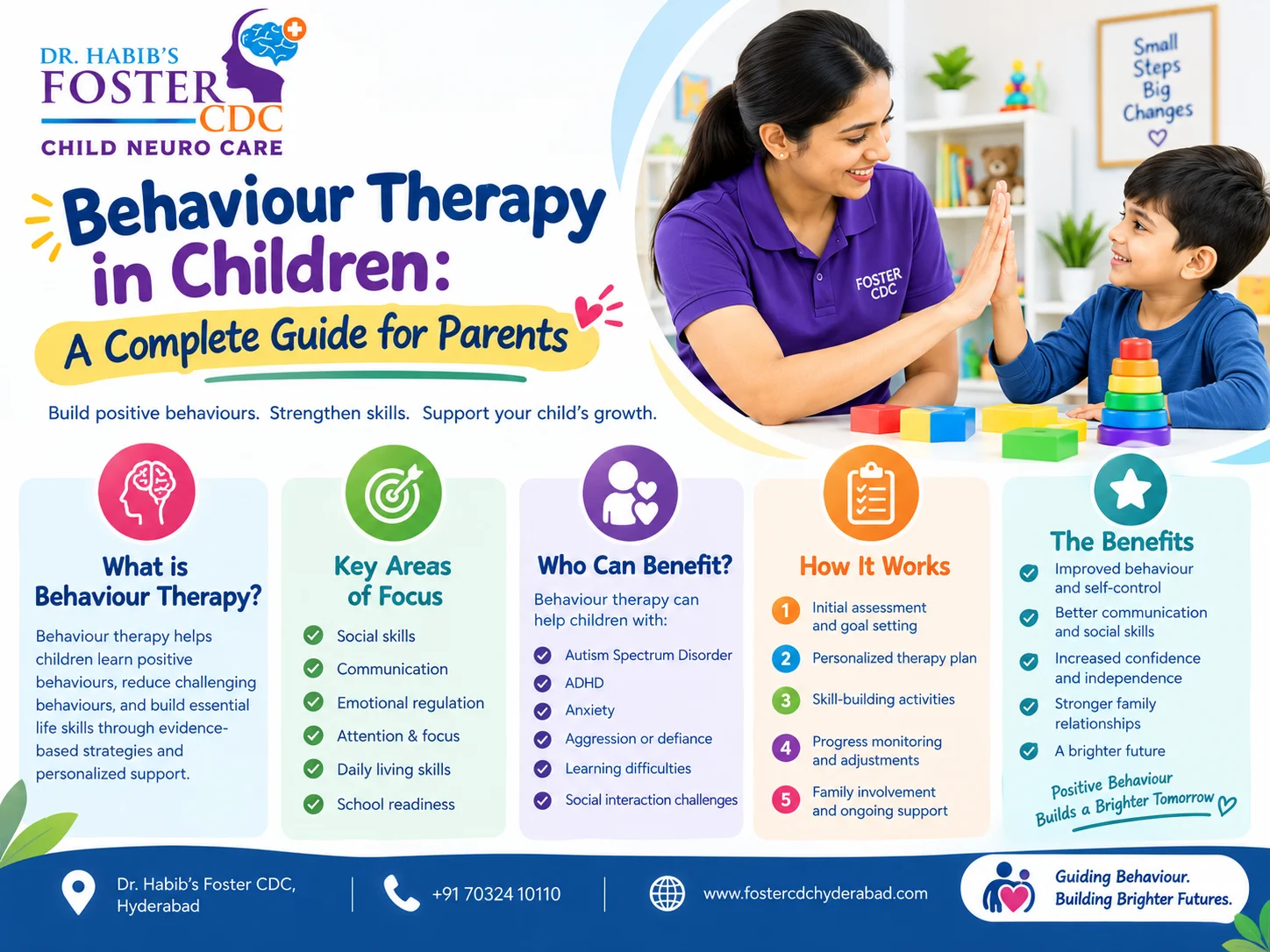
Behaviour Therapy in Children: A Complete Guide for Parents
If you've been circling this topic for a while — reading articles at midnight, comparing notes with other parents, maybe already sitting through one or two consultations — you probably don't need convincing that behaviour therapy is worth looking into. What you need is a clear, honest, complete picture: what behaviour therapy actually is, what the different approaches involve, what a real program looks like week to week, and how to know if it's working. That's what this guide is for.
I've written this the way I'd explain it to a parent already several steps into the process — someone who's past the "is this normal?" stage and into the "okay, what exactly am I signing up for?" stage.
What Behaviour Therapy Is, in Plain Terms
Behaviour therapy is a structured, evidence-based approach to helping children build skills, manage emotions, and reduce behaviours that get in the way of learning, safety, or relationships. It isn't a single technique — it's a broad field that includes several distinct approaches, each suited to slightly different needs. What unites them is a focus on understanding why a behaviour happens and teaching a more effective alternative, rather than simply trying to suppress a behaviour through punishment or reward alone.
Both the World Health Organization and the American Academy of Pediatrics have long emphasized that behavioural and developmental concerns respond best to early, structured, family-involved intervention — and that outcomes improve substantially the earlier support begins. If you're at the point of comparing approaches rather than deciding whether to seek help at all, you're already ahead in that respect.
The Main Types of Behaviour Therapy
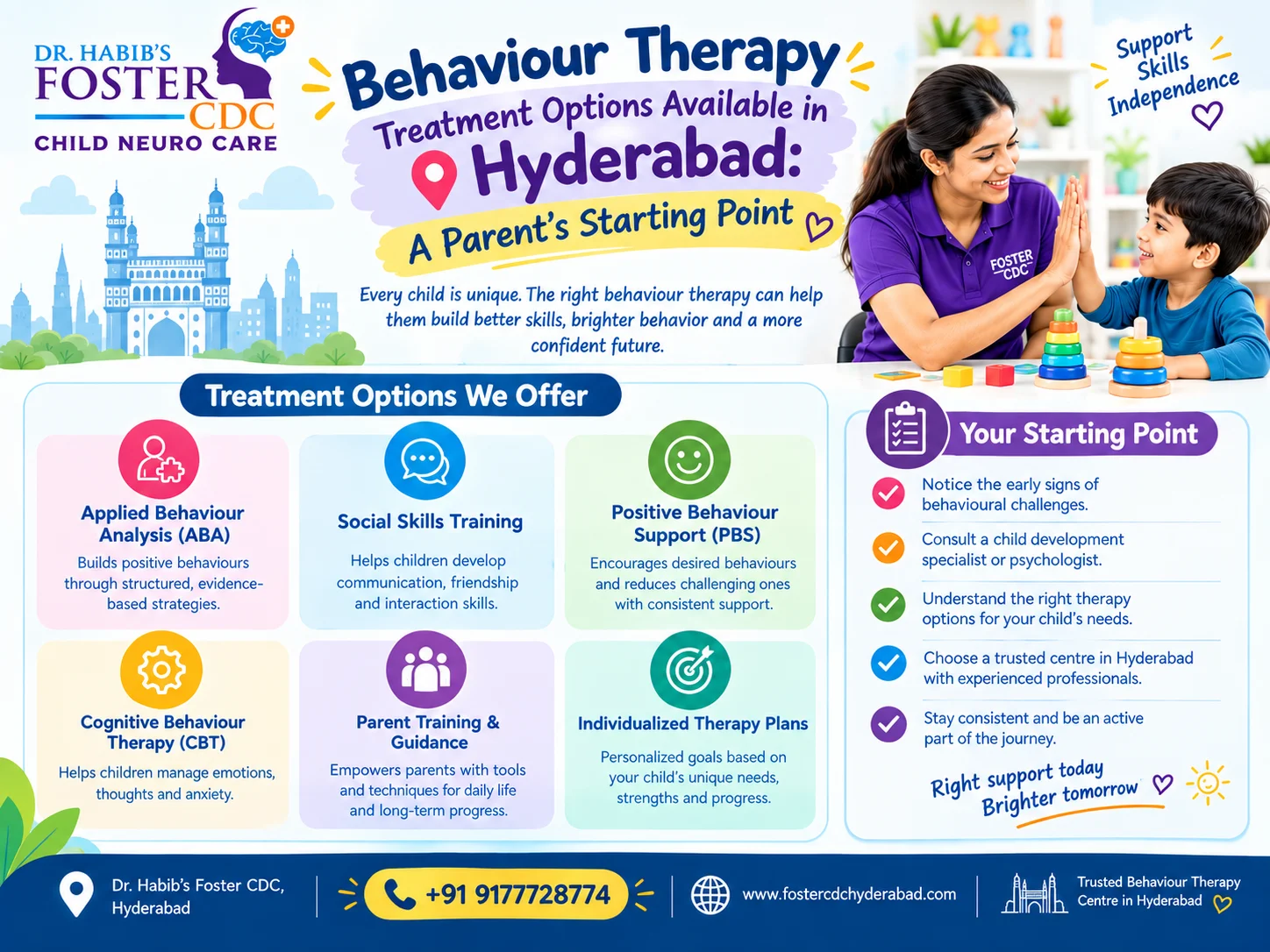
Parents are often surprised to learn "behaviour therapy" isn't one single method — it's a category. Here's an honest breakdown of what you're likely to encounter.
No single approach is universally "best" — the right one depends on your child's age, specific challenges, and what's actually driving the behaviour. This is exactly why a proper assessment (not a generic package) needs to come before a treatment plan, not after it.
How an Assessment Leads to a Treatment Plan
A good behaviour therapy program doesn't start with a technique — it starts with understanding. At Foster CDC, an assessment typically involves:
Structured observation of the child across relevant settings where possible, since behaviour often looks different at home versus school versus with different caregivers
Functional behaviour analysis — identifying what happens right before and right after a behaviour, which usually reveals why it's occurring (attention-seeking, escape from a task, sensory need, communication gap)
Parent and teacher interviews, since the adults around a child often notice patterns the child can't yet describe themselves
Developmental history review, to understand whether the behaviour connects to a broader developmental profile
From this, a therapist builds specific, measurable goals — not vague aspirations like "better behaviour," but concrete targets like "follows a two-step instruction without prompting in 8 out of 10 attempts" or "transitions between activities without escalation." If a centre proposes a treatment plan before doing this kind of structured assessment, that's worth questioning.
What a Typical Program Looks Like
Frequency and duration. Depending on the approach and the child's needs, sessions can range from once-weekly (common with CBT or social skills training) to several times a week (more typical with intensive ABA programs for significant delays). Session length is usually 45–60 minutes for individual work, sometimes longer for intensive models.
What actually happens in sessions. Much of behaviour therapy at this age looks like structured play, guided practice, or real-time coaching — deliberately, because children learn behavioural and emotional regulation skills far more effectively through applied, engaging practice than through explanation alone.
Parent involvement. This is one of the strongest predictors of how well behaviour therapy works, and it's not optional in an effective program. Parents are trained in the same strategies therapists use, so that consistency carries over into daily routines — mealtimes, bedtime, transitions — rather than staying confined to the therapy room.
Progress tracking. Behaviour therapy is unusually well-suited to objective measurement, since target behaviours (frequency of meltdowns, successful transitions, instruction-following) can be tracked directly. A good program reviews this data regularly — typically every 4–8 weeks — and adjusts the plan accordingly.
Behaviour Therapy Compared to "Just Discipline"
A question I hear often, especially from grandparents or extended family: "Isn't this just what good parenting is supposed to do anyway?" It's a fair question, and the honest answer is that behaviour therapy and everyday discipline share some DNA, but differ in important ways.
This doesn't mean everyday parenting approaches are wrong — most families manage most behavioural bumps without ever needing formal therapy. Behaviour therapy becomes relevant specifically when consistent, well-intentioned parenting strategies aren't producing change, or when a behaviour is significant enough that a more structured, professionally guided approach gives a much better chance of real progress.
How Long Does Behaviour Therapy Usually Take?
This is genuinely one of the hardest questions to answer honestly, because it depends heavily on the specific behaviour, its underlying cause, and how consistently strategies are applied both in sessions and at home. Some families see meaningful change in targeted behaviours within a few months. Children with more complex or long-standing patterns — particularly where autism, ADHD, or significant developmental delay is also present — often benefit from longer-term, periodically reviewed support. What matters more than a fixed timeline is whether progress is being measured and the plan adjusted accordingly, rather than therapy continuing indefinitely without clear goals.
How Foster CDC Structures Behaviour Therapy Programs
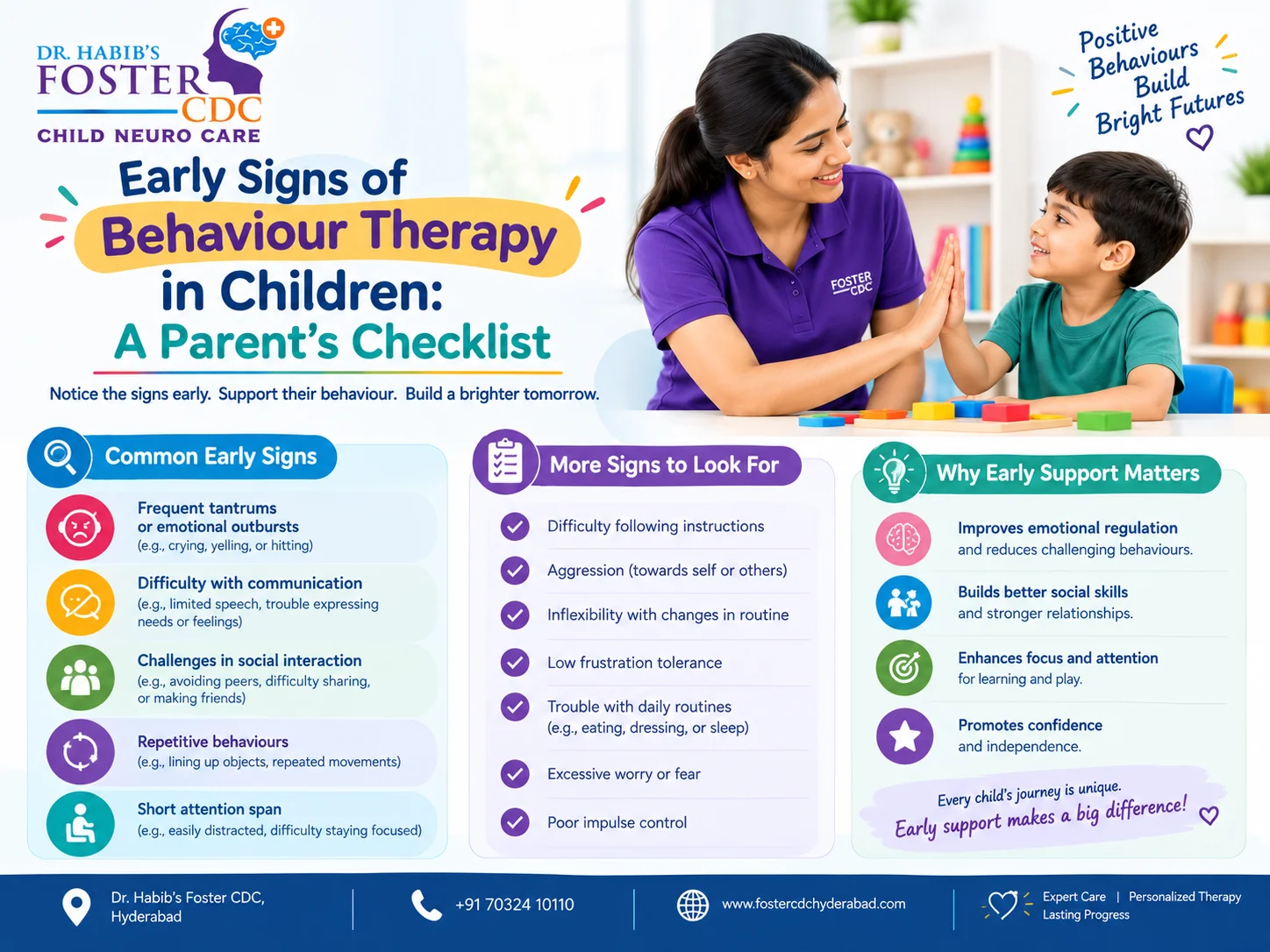
At Dr. Habib's Foster CDC, every behaviour therapy program begins with the structured assessment process described above — never a generic plan applied regardless of the child's specific profile. Depending on what the assessment reveals, we draw on ABA-informed strategies, parent-child interaction coaching, and social skills training, often in combination, and always with clear, measurable goals reviewed on a regular schedule. Because behavioural concerns rarely exist in isolation, our team coordinates closely with speech-language and occupational therapy colleagues when a child's profile calls for it, so support stays integrated rather than siloed. If you're earlier in the process and still trying to work out whether your child's behaviour warrants an evaluation at all, our early signs checklist is a useful starting point; if you want a closer look at how our approach works in practice, see our overview of behavioral therapy for children.
Final Thoughts
Behaviour therapy works best when it's built around your specific child rather than applied as a one-size-fits-all program — and understanding the landscape of approaches, what a real program looks like, and how progress gets measured puts you in a much stronger position to evaluate what you're being offered, wherever you choose to pursue it.
Ready to move forward? Book an assessment with Dr. Habib's Foster CDC and get a clear, individualized plan built around your child's actual needs.
Frequently Asked Questions
1. What's the difference between ABA and other forms of behaviour therapy? ABA is a specific, intensive, systematically reinforced approach often used for autism and significant developmental delays, while other approaches like CBT or PCIT are typically better suited to different age groups or concerns — the right fit depends on the child's specific profile.
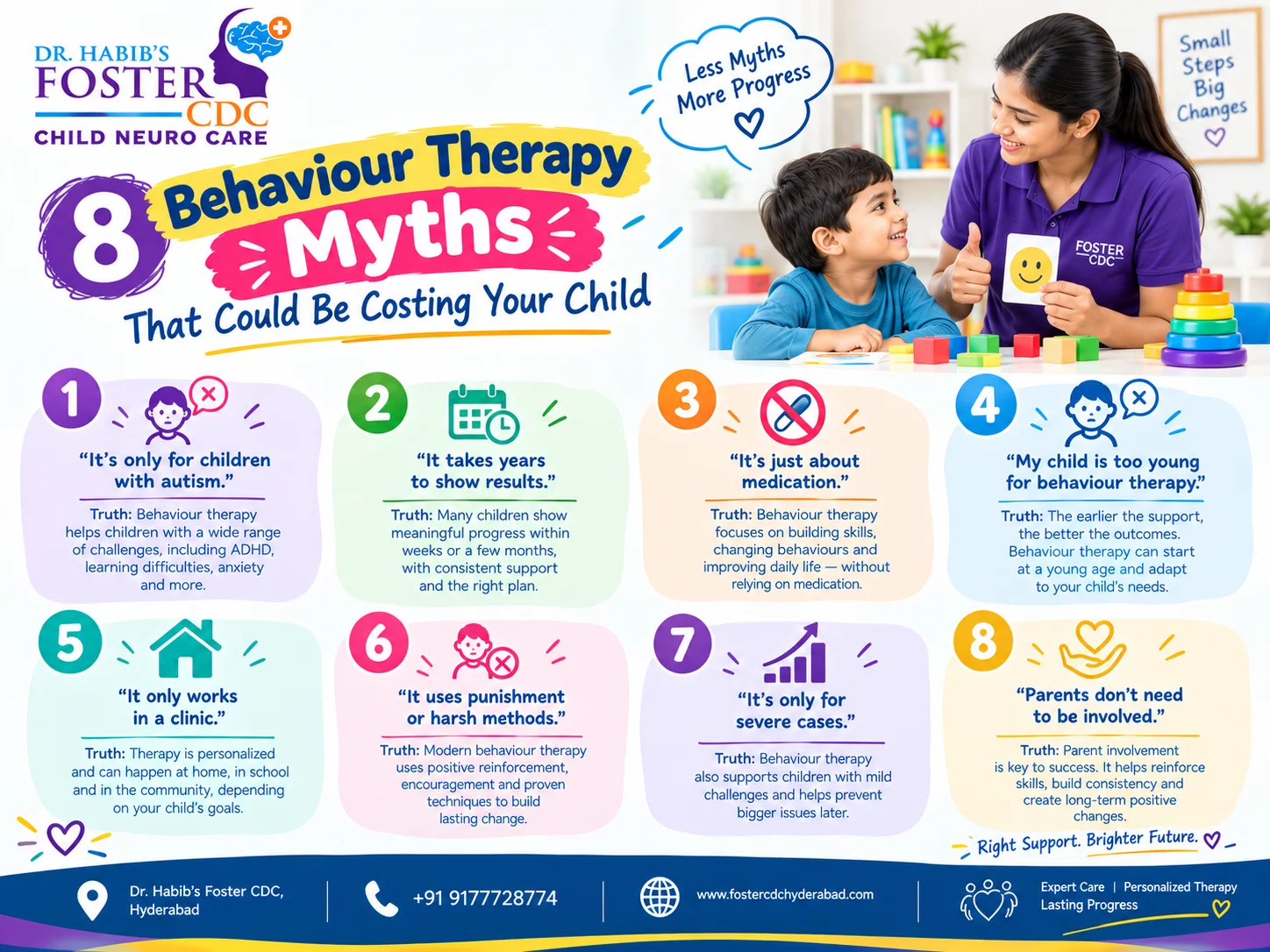
2. Can behaviour therapy help with ADHD, or is it only for autism? Behaviour therapy is widely used for ADHD, anxiety, defiance, and general behavioural difficulties — it is not limited to autism, and many children without any autism diagnosis benefit significantly from it.
3. How involved do parents need to be in the process? Very involved — parent training and home carryover are consistently linked to better outcomes, so most effective programs actively coach parents rather than treating therapy as something that happens only in sessions.
4. Is behaviour therapy only for younger children? No. While early intervention tends to produce the strongest results, behaviour therapy remains effective for school-age children and adolescents, particularly approaches like CBT and social skills training.
5. How do I know if a behaviour therapy program is actually working? Ask for objective tracking of specific target behaviours and regular progress reviews — a program that can't show measurable change over a reasonable period is worth re-evaluating.
6. Does my child need a formal diagnosis before starting behaviour therapy? No. Many children begin behaviour therapy based on a functional assessment of their specific challenges, with or without a formal diagnosis already in place.
Dr. Habib G Pathan is a Developmental Pediatrician at Dr. Habib's Foster CDC, Hyderabad, specializing in early childhood developmental assessment and intervention.
Other Blogs


Services
- Behavioural Therapy
- Speech Therapy
- Special Education
- Parent Training
- Psychotherapy & Counselling
- Yoga Therapy
- Postural & Mobility Therapy
- Early Intervention Services
- Cognitive Behavioural Therapy
- Occupational Therapy
- Group Teaching
- Teachers' Training
- Certified Courses
- Developmental Therapy
- Autism Therapy