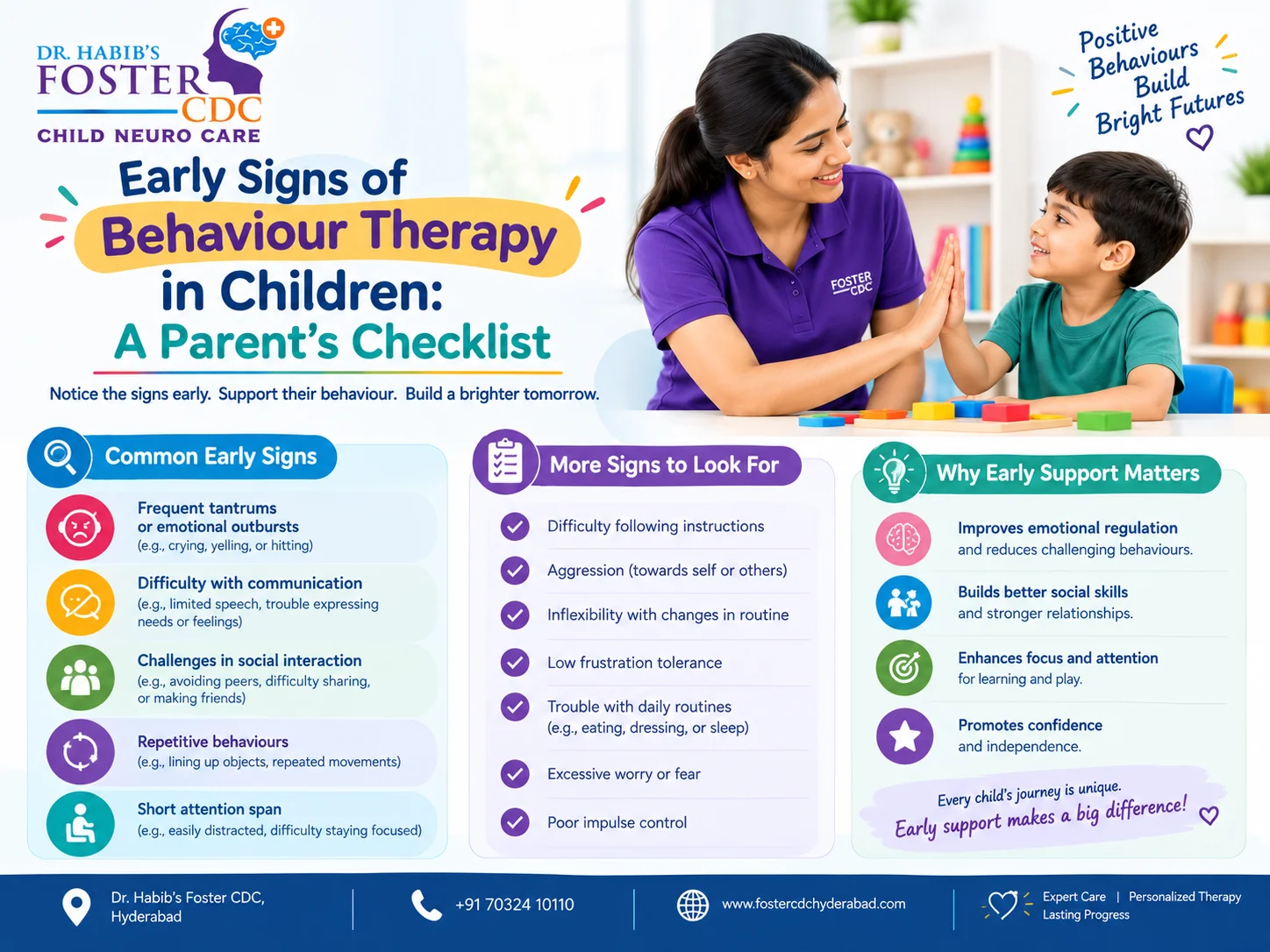
Early Signs of Behaviour Therapy in Children: A Parent's Checklist
Every child has meltdowns. Every child ignores an instruction now and then, refuses to share a toy, or has a day where nothing seems to go right. That's childhood, not a red flag. But there's a point — often hard to pin down from the inside of a busy household or a full classroom — where "typical" behaviour tips into something that's actually holding a child back. This checklist is meant to help you tell the difference, without the guilt-tripping or the panic that so much online advice seems to carry.
I wrote this after one too many conversations at Foster CDC that started the same way: "I don't know if this is a problem or if I'm just being a difficult parent." You're not being difficult. You're paying attention, and that's exactly the right instinct. If you'd like the broader picture of what behaviour therapy involves before working through this checklist, that's a good place to start.
What "Behaviour Therapy" Actually Means
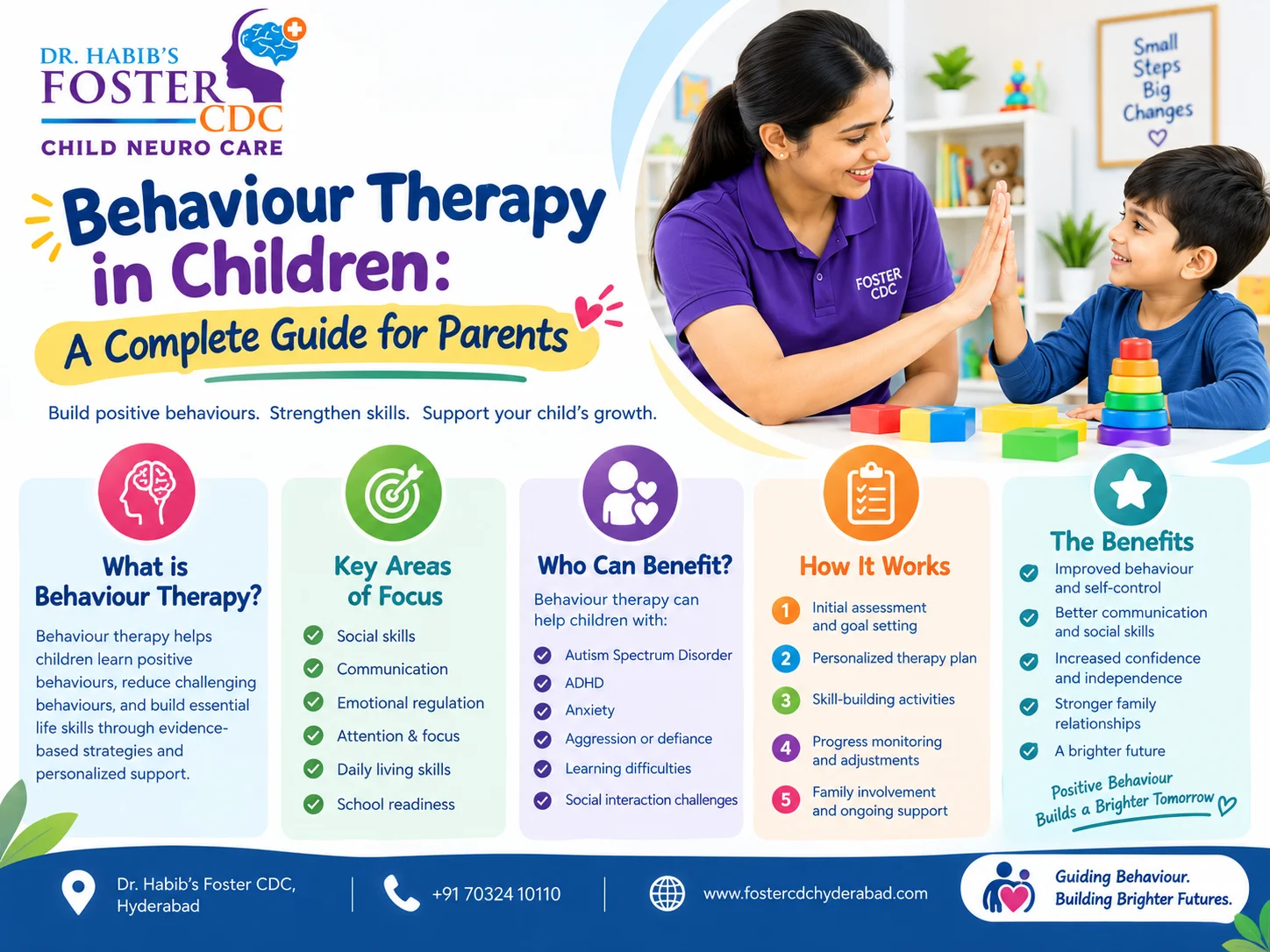
Behaviour therapy is an umbrella term for structured, evidence-based approaches — including Applied Behaviour Analysis (ABA) — that help children build skills, reduce behaviours that interfere with learning or safety, and manage emotions more effectively. It isn't about "fixing" a child or forcing compliance. For a deeper look at how this works in practice, see our guide on behavioral therapy for children. Done well, it's about understanding why a behaviour is happening and teaching a more workable alternative.
Organizations like the American Academy of Pediatrics and the World Health Organization consistently point to the same finding: the earlier a behavioural concern is identified and addressed, the more effectively it responds to intervention, and the less it tends to compound into secondary difficulties like school refusal, social isolation, or family stress. That's really the whole reason a checklist like this exists — not to label your child, but to help you act at the right time instead of waiting it out.
The Parent's Checklist: Signs Worth Paying Attention To
Go through this list honestly. A single item here and there is normal childhood variation. Several items together, happening consistently across settings (home, school, with different caregivers), is what shifts this from "phase" to "worth assessing." (Some behavioural signs also overlap with autism — if that's a possibility for your child, our early signs of autism checklist is worth reviewing alongside this one.)
Emotional Regulation
Meltdowns that are frequent, intense, and disproportionate to the trigger, well past the age when tantrums typically ease (roughly 4+)
Difficulty calming down even with comfort or reassurance
Extreme reactions to small changes in routine or environment
Frequent aggression (hitting, biting, throwing) as a first response to frustration, rather than an occasional lapse
Attention and Impulse Control
Consistent difficulty following simple instructions, even one-step ones
Acting without pausing to think, in ways that put the child or others at risk
Struggling to wait turns, stay seated, or complete short tasks appropriate for their age
Behaviour that's noticeably more difficult to manage than same-age peers, reported independently by more than one adult
Social Behaviour
Difficulty engaging in back-and-forth play with peers
Frequent conflict with other children that doesn't resolve with typical guidance
Limited response to social cues (not noticing when a peer is upset, for instance)
Withdrawal from group activities the child previously enjoyed
Defiance and Compliance
Persistent refusal of everyday requests (getting dressed, transitions, mealtime) well beyond typical toddler negotiation
Behaviour that escalates rather than settles with consistent, calm parenting approaches you've already tried
Patterns that seem to worsen over time rather than improve with maturity
Daily Functioning
Behavioural difficulties that are affecting school participation, friendships, or family routines
Teachers or caregivers independently raising similar concerns
The behaviour is a source of ongoing stress for the child themselves, not just the adults around them
If your child's profile checks several boxes here — and especially if a teacher, grandparent, or another caregiver has independently mentioned similar concerns — that consistency across settings is one of the most reliable signals that a professional evaluation is worth pursuing.
Typical Behaviour vs. Signs Worth an Evaluation
This is the distinction parents ask about most, so here's a side-by-side comparison to make it more concrete.
The single most useful question to ask yourself isn't "is this behaviour annoying?" — nearly all challenging behaviour is annoying in the moment. It's "is this behaviour consistent, cross-setting, and interfering with my child's ability to function and connect with others?" That's the line that separates ordinary parenting challenges from something worth a professional look.
Why Early Identification Matters So Much Here
Behavioural patterns, more than almost any other developmental area, tend to become more entrenched the longer they go unaddressed — not because the child is being "difficult on purpose," but because the brain reinforces whatever pattern gets repeated most often. A child who learns that a meltdown reliably ends an unwanted task, for instance, will keep using that strategy simply because it works, not out of manipulation.
This is exactly why early behaviour therapy isn't about punishment or "toughening up" a child. It's about interrupting an unhelpful reinforcement pattern early, before it becomes the child's default coping strategy, and replacing it with skills that serve them far better — at school, with friends, and at home.
What Happens If You Bring This Checklist to an Assessment?
A behaviour therapy assessment at Foster CDC doesn't start with assumptions. It starts with structured observation — across settings where possible, drawing on your reports, teacher input, and direct interaction with your child — to understand the function behind the behaviours you're seeing. From there, we build an individualized plan, often incorporating ABA-informed strategies, that targets specific, measurable goals: following a two-step instruction independently, tolerating a transition without escalation, initiating play with a peer. Progress is reviewed regularly, and parents are trained directly in the strategies that work best for their child, because consistency between the clinic and home is what actually drives lasting change.
Behaviour therapy is often most effective alongside other developmental supports. If your child also shows delays in communication, our team frequently coordinates with speech-language services; if sensory sensitivities are part of the picture, occupational therapy support often runs in parallel too. A good assessment looks at the whole child, not just the behaviour in isolation.
A Note for Teachers and Caregivers
If you're a teacher or caregiver reading this rather than a parent, you're often the first to notice patterns a parent might not see as clearly — a child's behaviour can look very different at home versus in a group setting with peers and structured demands. Raising a specific, factual observation ("he has difficulty transitioning between activities most days" rather than "he's disruptive") is one of the most helpful things you can do, since it gives parents something concrete to bring to an assessment rather than a vague impression to worry over.
Final Thoughts
Nobody wants to over-label a normal, spirited child — and nobody wants to dismiss a genuine, persistent struggle as "just a phase" either. This checklist exists to help you find that middle ground with more confidence. If several of these signs sound familiar and they're showing up consistently across settings, that's reason enough to seek a proper evaluation — not because something is definitely wrong, but because clarity, either way, is worth having.
If this checklist sounds like your child, book an assessment with Dr. Habib's Foster CDC and get a clear, professional picture of what's going on and what support could look like.
Frequently Asked Questions
1. At what age can behaviour therapy start?
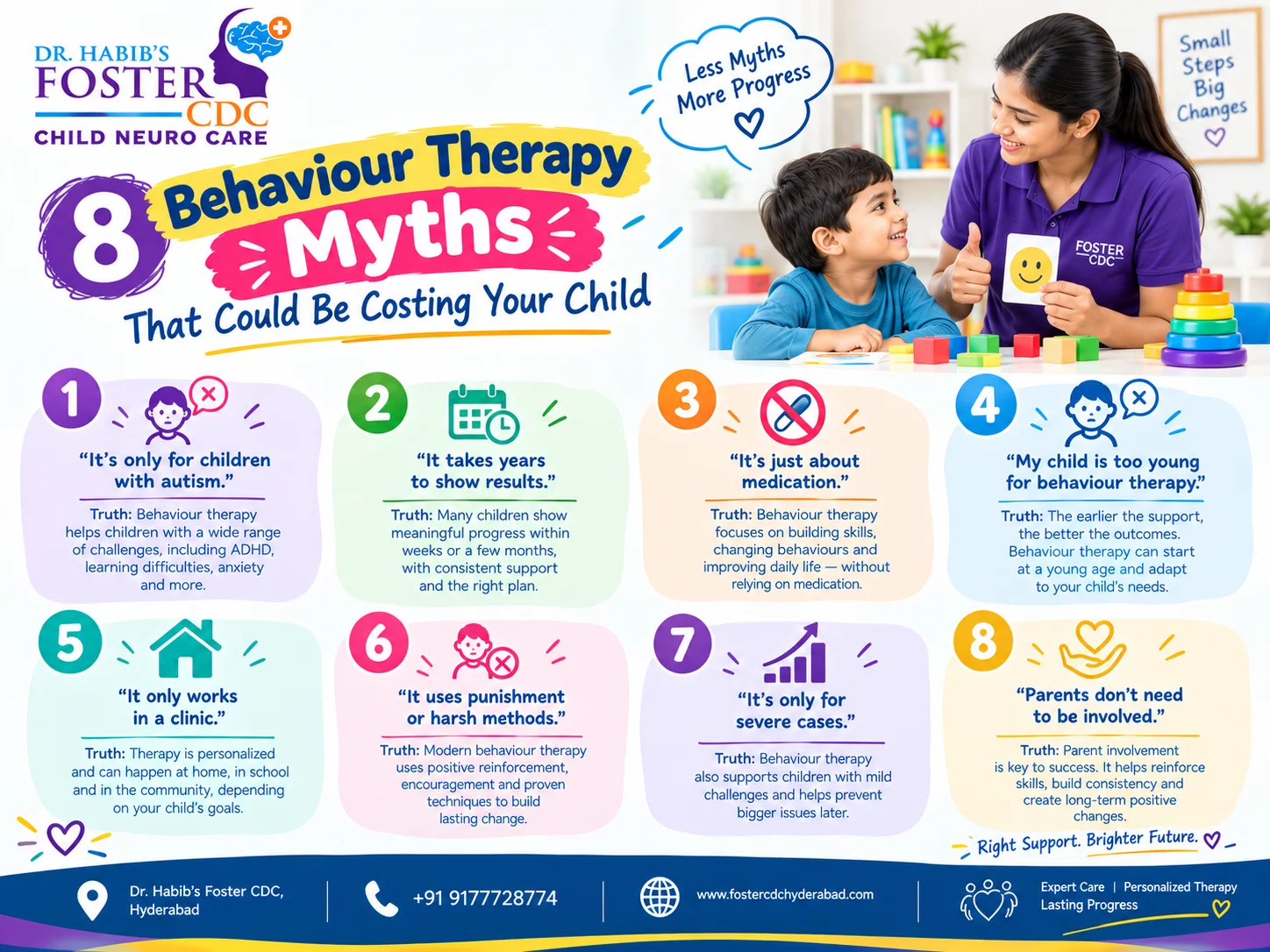
Behaviour therapy can begin as early as toddlerhood if concerns are identified, and remains effective through school age and adolescence — there's no strict age cutoff.
2. Does my child need a diagnosis like autism or ADHD before starting behaviour therapy?
No. Many children receive behaviour therapy for functional challenges — emotional regulation, defiance, social skills — without any formal diagnosis in place.
3. Is ABA therapy the same as behaviour therapy?
ABA (Applied Behaviour Analysis) is one specific, well-researched approach within the broader field of behaviour therapy, not a separate or unrelated treatment.
4. How can I tell if my child's behaviour is a "phase" or something more?
Consistency across settings is the key indicator — if the same concerning patterns show up at home, at school, and with different caregivers, and they're not easing with typical guidance, it's worth a professional evaluation.
5. Will behaviour therapy involve punishment or strict discipline?
No. Modern, evidence-based behaviour therapy focuses on understanding the function of a behaviour and teaching more effective alternatives — not punishment-based compliance.
6. How long does behaviour therapy typically take to show results?
This varies by child and the specific goals involved, but most families begin to see measurable progress on targeted behaviours within a few months of consistent therapy and home carryover.
Dr. Habib G Pathan is a Developmental Pediatrician at Dr. Habib's Foster CDC, Hyderabad, specializing in early childhood developmental assessment and intervention.
Other Blogs




Services
- Behavioural Therapy
- Speech Therapy
- Special Education
- Parent Training
- Psychotherapy & Counselling
- Yoga Therapy
- Postural & Mobility Therapy
- Early Intervention Services
- Cognitive Behavioural Therapy
- Occupational Therapy
- Group Teaching
- Teachers' Training
- Certified Courses
- Developmental Therapy
- Autism Therapy