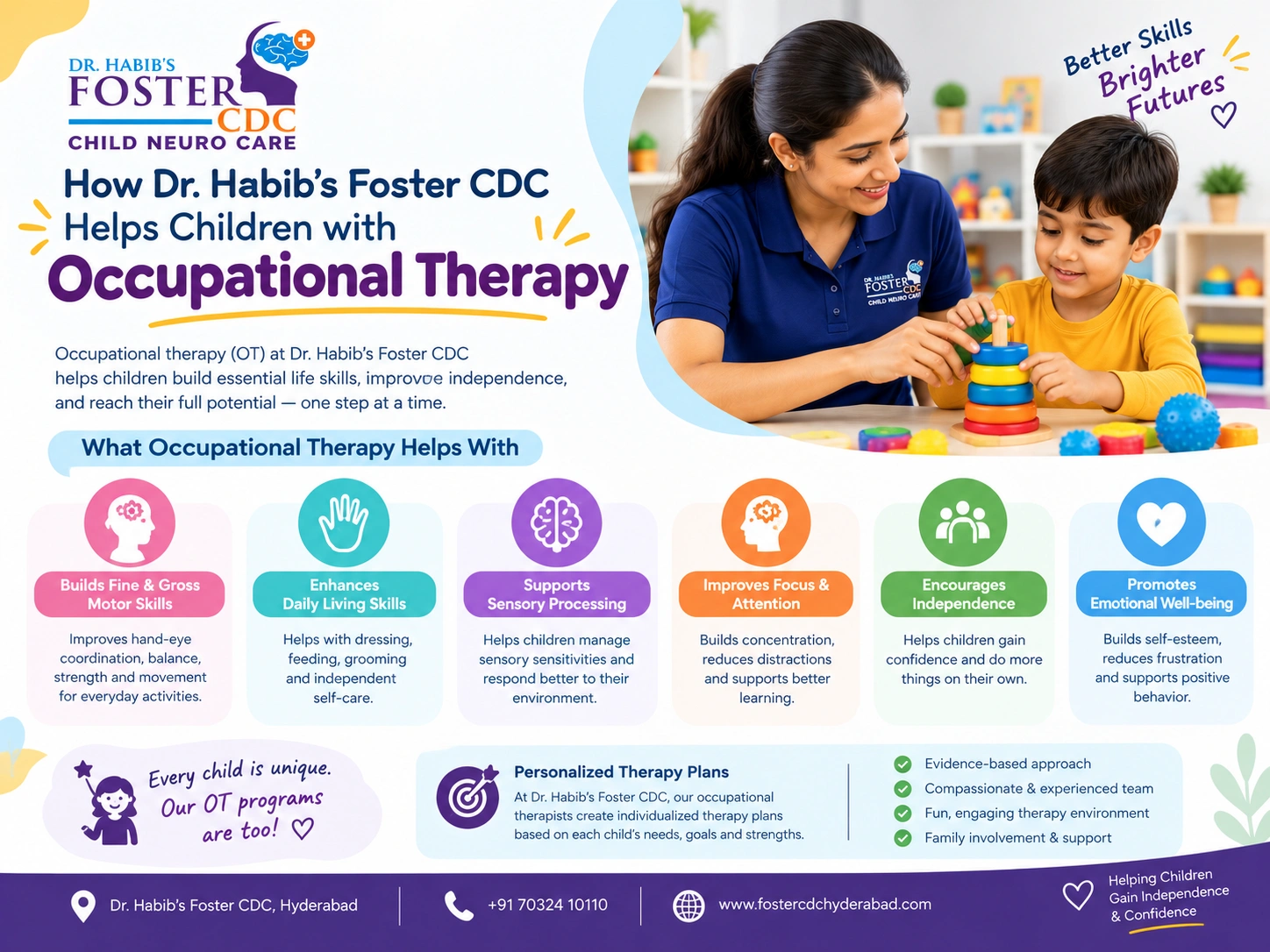
How Dr. Habib's Foster CDC Helps Children with Occupational Therapy
Dr. Habib's Foster CDC helps children with occupational therapy needs through a full developmental evaluation followed by a personalised therapy plan — combining fine motor training, sensory integration, and self-care coaching, delivered by trained specialists across its Toli Chowki, Malakpet, and Suncity centres in Hyderabad.
Why Early Occupational Therapy Matters
If you're noticing your child struggle with a pencil grip, react strongly to certain textures or sounds, or fall behind on everyday tasks like dressing or feeding themselves, it's natural to wonder whether it's just a phase or something worth looking into. Sensory processing differences alone are fairly common — roughly 1 in 6 children experience some degree of difficulty processing sensory input, which can show up in handwriting, mealtimes, or how easily they make friends. Guidance from pediatric bodies like the American Academy of Pediatrics (AAP) consistently frames early developmental screening — rather than a "wait and see" approach — as the more effective path when a delay is suspected, and the World Health Organization (WHO) similarly treats the first few years of life as a critical window where early support tends to produce better long-term outcomes.
Research also points to timing specifically: children who start occupational therapy before age five are more likely to catch up to developmental milestones than those who begin later. That's the thinking behind how Foster CDC approaches OT — start with a real evaluation, build a plan around the individual child, and involve parents throughout, rather than offering the same set of exercises to every child.
The Foster CDC Approach, Step by Step
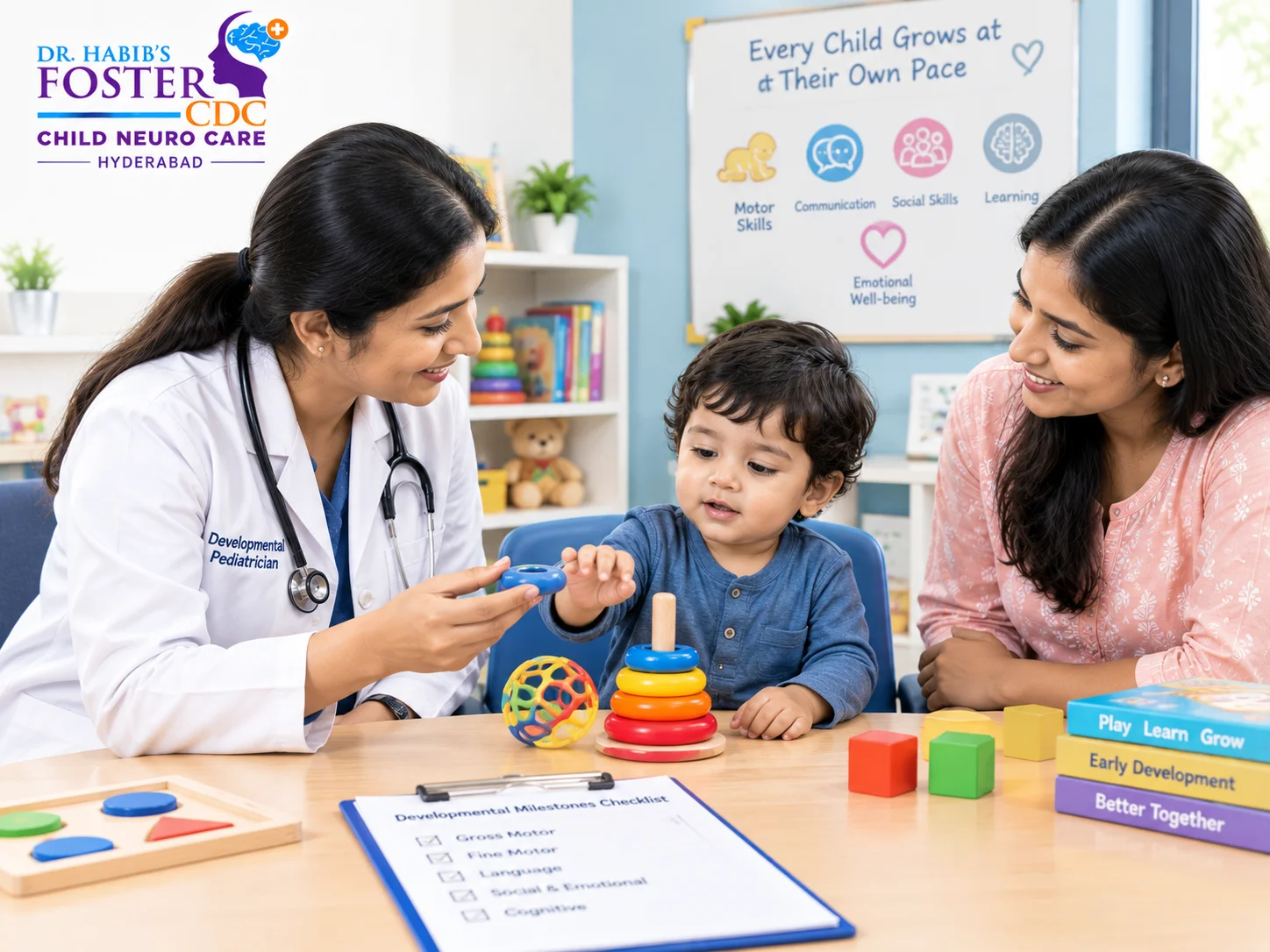
Comprehensive Evaluation — An occupational therapist assesses fine motor, gross motor, sensory processing, visual-motor, and self-care skills, often through hands-on tasks like drawing, building, or dressing exercises, with parents present throughout.
Personalised Therapy Plan — Based on the evaluation, the team sets specific, measurable goals targeting the child's actual gaps — not a generic worksheet handed to every family.
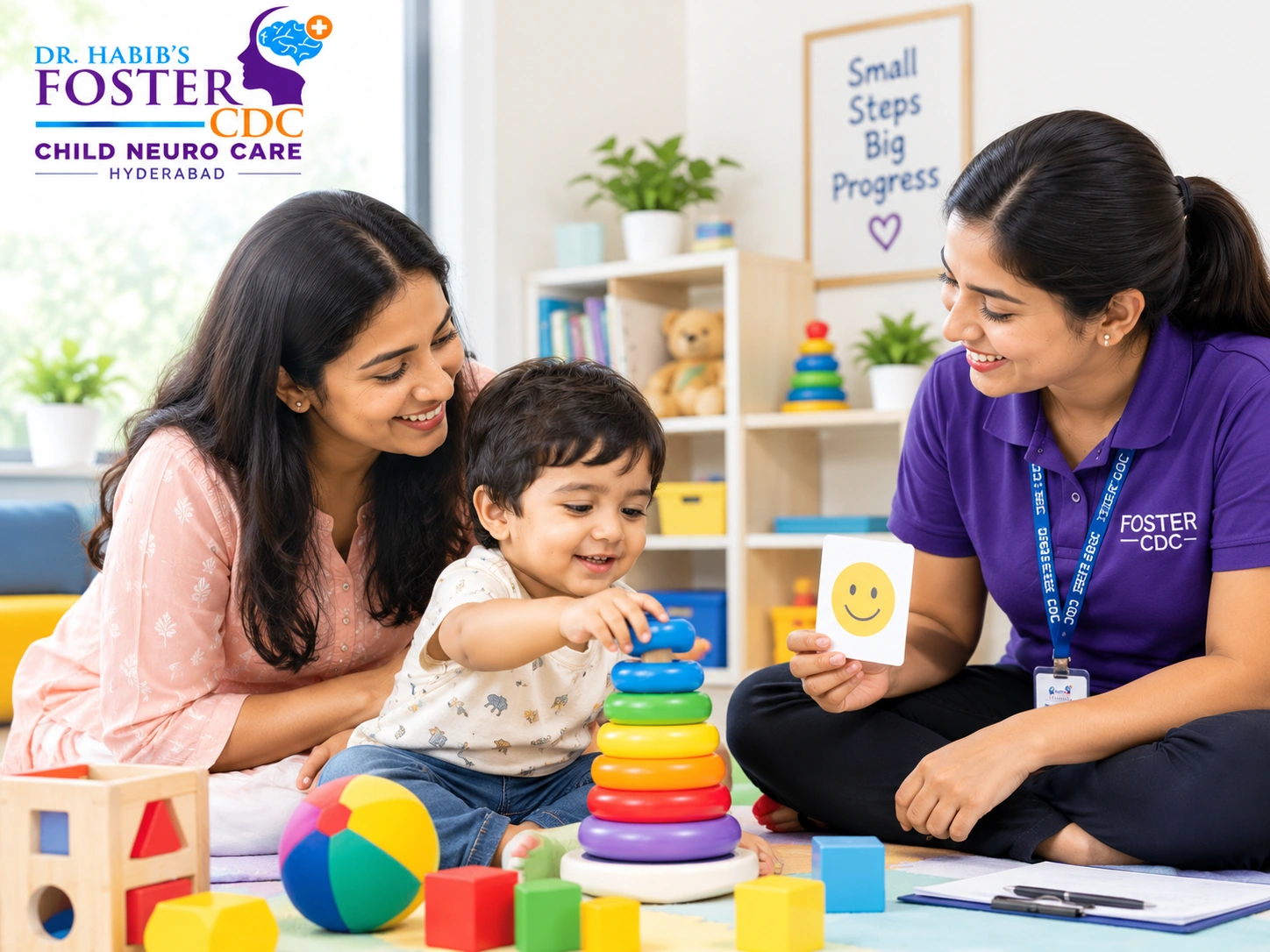
Structured Therapy Sessions — Children work through consistent, goal-tracked activities suited to their individual plan.
Parent & Caregiver Coaching — Parents (and teachers, where relevant) are shown how to reinforce strategies at home and in the classroom, since consistency across environments has a direct bearing on progress.
Ongoing Review — Goals and techniques are reassessed periodically as the child's skills develop.
Types of Occupational Therapy Techniques Used at Foster CDC
Not every child needs every technique — the initial evaluation determines which combination fits the child's specific profile.
Meet the Team
Foster CDC's clinical team includes Dr. Habib G. Pathan alongside Dr. Zafar Sultana, Dr. Sadiya Akhter, and Dr. Arun Kumar, spanning developmental pediatrics, occupational therapy, speech-language therapy, and special education — allowing most of a child's care to be coordinated within a single centre rather than fragmented across multiple providers. Where a child's needs connect to speech delays, behavioural challenges, or a broader autism spectrum profile, care is coordinated across specialists rather than treated as a separate track.
Why Families Choose Foster CDC for Occupational Therapy
Three accessible centres across Hyderabad — Toli Chowki, Malakpet, and Suncity (Bandlaguda Jagir)
Evaluation-led, individualised OT plans — not generic activity sheets
One coordinated team, so occupational therapy connects with speech, behavioural, or developmental support if a child needs it
Active parent and teacher involvement built into every stage
Ongoing progress review as the child's skills grow
Frequently Asked Questions
Why does my child show signs of needing occupational therapy? Signs can include difficulty with fine motor tasks, sensory sensitivities, clumsiness, or struggles with self-care skills like dressing or feeding. A comprehensive evaluation is the only reliable way to understand what's behind them.
At what age should I be concerned about my child's motor or sensory development? If a child is noticeably behind peers in fine or gross motor tasks, or shows strong distress over ordinary sensory input past the toddler years, it's worth having an evaluation.
Do you diagnose developmental delays, or only provide occupational therapy? Foster CDC's specialists conduct evaluations that identify the nature of a child's fine motor, sensory, or self-care delay and then provide the full range of follow-up therapy.
How long does occupational therapy typically take to show results? This varies by child, the nature of the delay, and consistency of practice at home — plans are reviewed periodically rather than fixed to one timeline.
Can I choose which Foster CDC centre my child attends? Yes — families can choose the Toli Chowki, Malakpet, or Suncity centre based on convenience.
Is parent involvement really necessary in occupational therapy? Yes. Reinforcing strategies at home between sessions is one of the strongest predictors of steady progress.
Does Foster CDC coordinate occupational therapy with other specialists? Yes — where a child's needs overlap with speech, behavioural, or developmental concerns, care is coordinated within the same centre.
How do I know if my child needs occupational therapy or a broader developmental evaluation? The initial evaluation helps determine whether the concern is isolated to motor, sensory, or self-care skills, or connects to a broader developmental picture that may need additional support.
What happens in the first occupational therapy evaluation visit? An occupational therapist observes the child completing fine motor, sensory, and self-care tasks and discusses next steps with the family. (See our guide on preparing your child for their first therapy session for what to expect.)
How do I book an occupational therapy assessment? You can book an assessment directly through Foster CDC's website or by contacting your nearest centre.
Book an Occupational Therapy Assessment
Every child's needs look different — the first step is a proper evaluation. Book an assessment with Dr. Habib's Foster CDC today.
Other Blogs
Services
- Behavioural Therapy
- Speech Therapy
- Special Education
- Parent Training
- Psychotherapy & Counselling
- Yoga Therapy
- Postural & Mobility Therapy
- Early Intervention Services
- Cognitive Behavioural Therapy
- Occupational Therapy
- Group Teaching
- Teachers' Training
- Certified Courses
- Developmental Therapy
- Autism Therapy