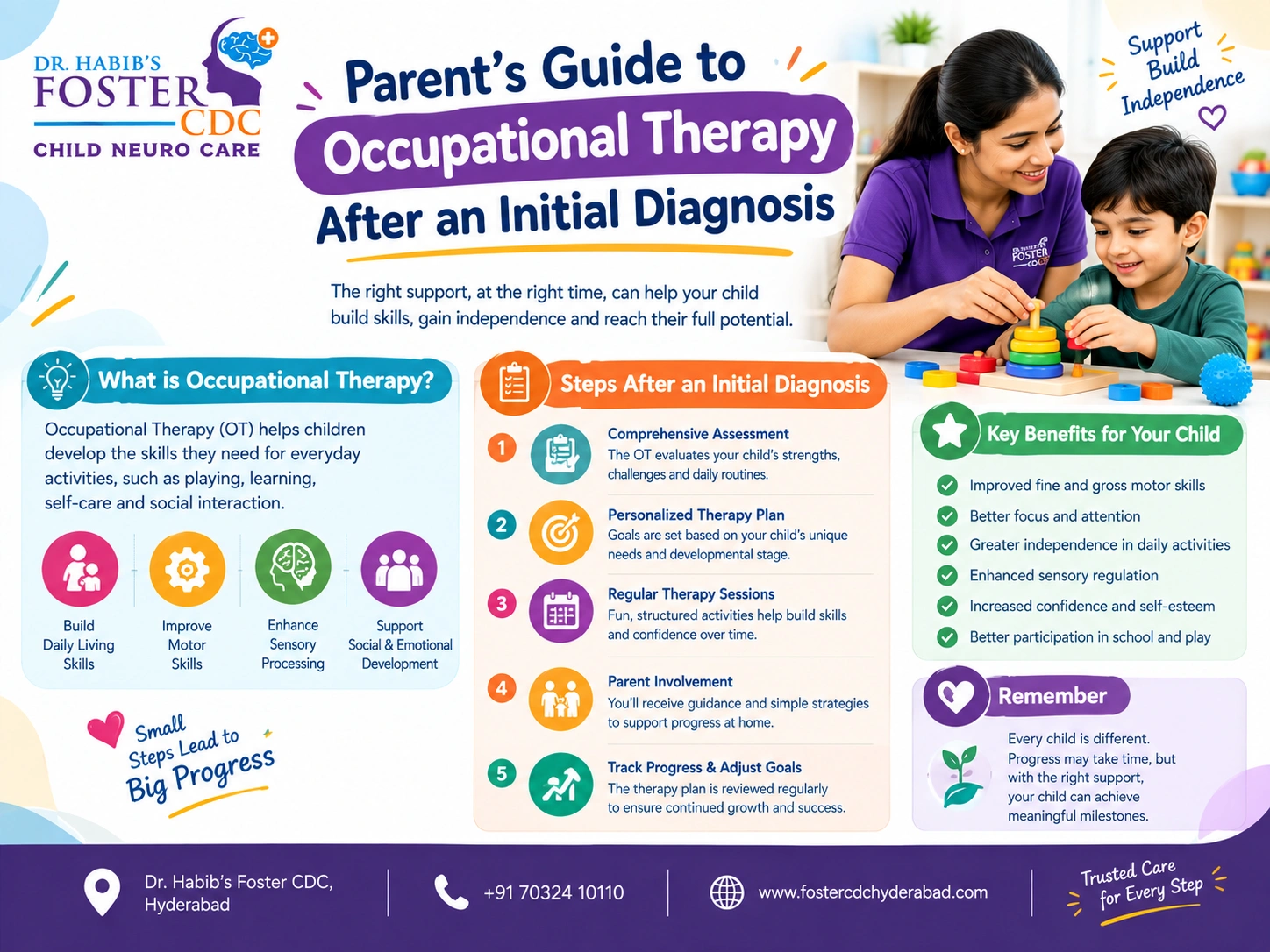
Parent's Guide to Occupational Therapy After an Initial Diagnosis
There's a particular kind of quiet that settles in after a diagnosis appointment. You've finally got a name for what you've been noticing — a developmental delay, sensory processing disorder, autism, ADHD, or a motor coordination difficulty — and for a moment there's almost relief in having an answer. Then, almost immediately, a new kind of overwhelm sets in: okay, now what?
If you're reading this shortly after receiving a diagnosis for your child, I want to start by saying something I tell every parent who sits across from me at Foster CDC: you have more time and more options than it feels like right now. This guide walks you through exactly what happens next, what occupational therapy actually looks like in practice, how to evaluate centres you're considering, and what a realistic first year looks like — written the way I'd explain it to a friend, not the way it usually gets written online.
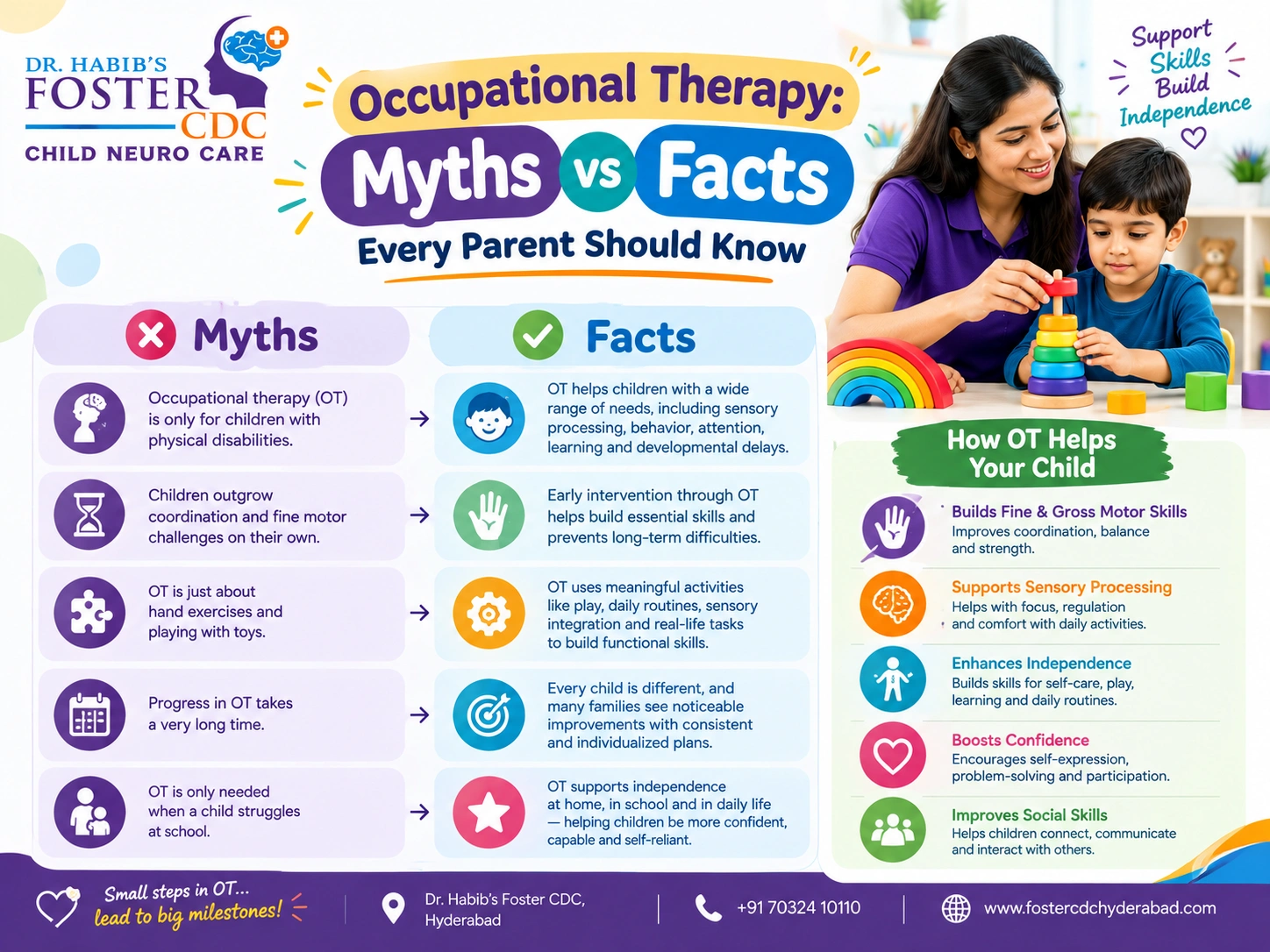
If some of the common assumptions about OT are still muddying the picture for you, it may help to first read our companion piece, Occupational Therapy: Myths vs Facts Every Parent Should Know, before diving into the practical steps below. And if your child's diagnosis was for autism specifically, our Parent's Guide to Autism After an Initial Diagnosis covers that path in more detail.
The First Few Weeks: What Actually Needs to Happen
Right after a diagnosis, most parents feel pressure to do everything at once — book every therapy, read every book, join every forum. Take a breath. The first few weeks should focus on three things:
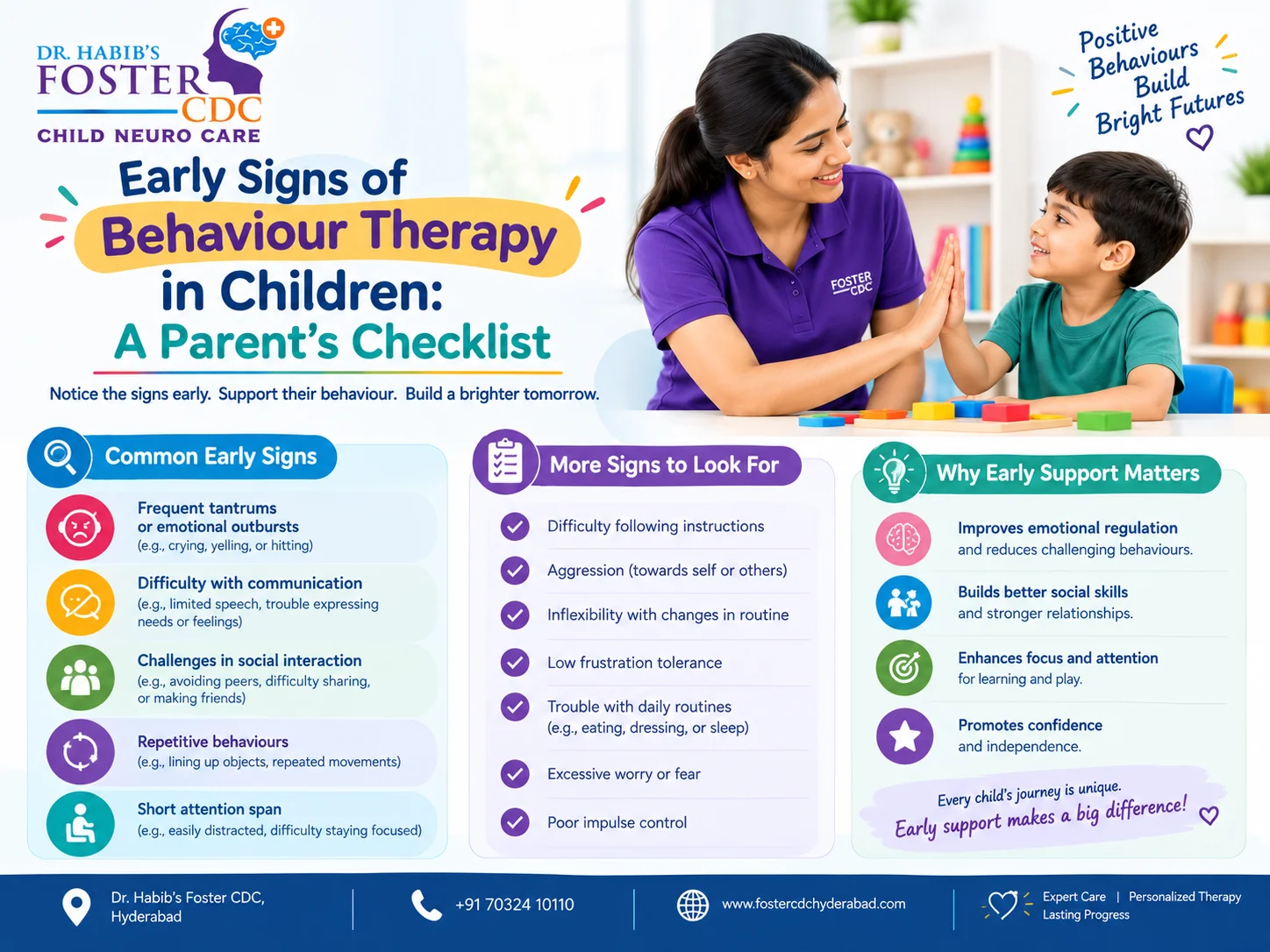
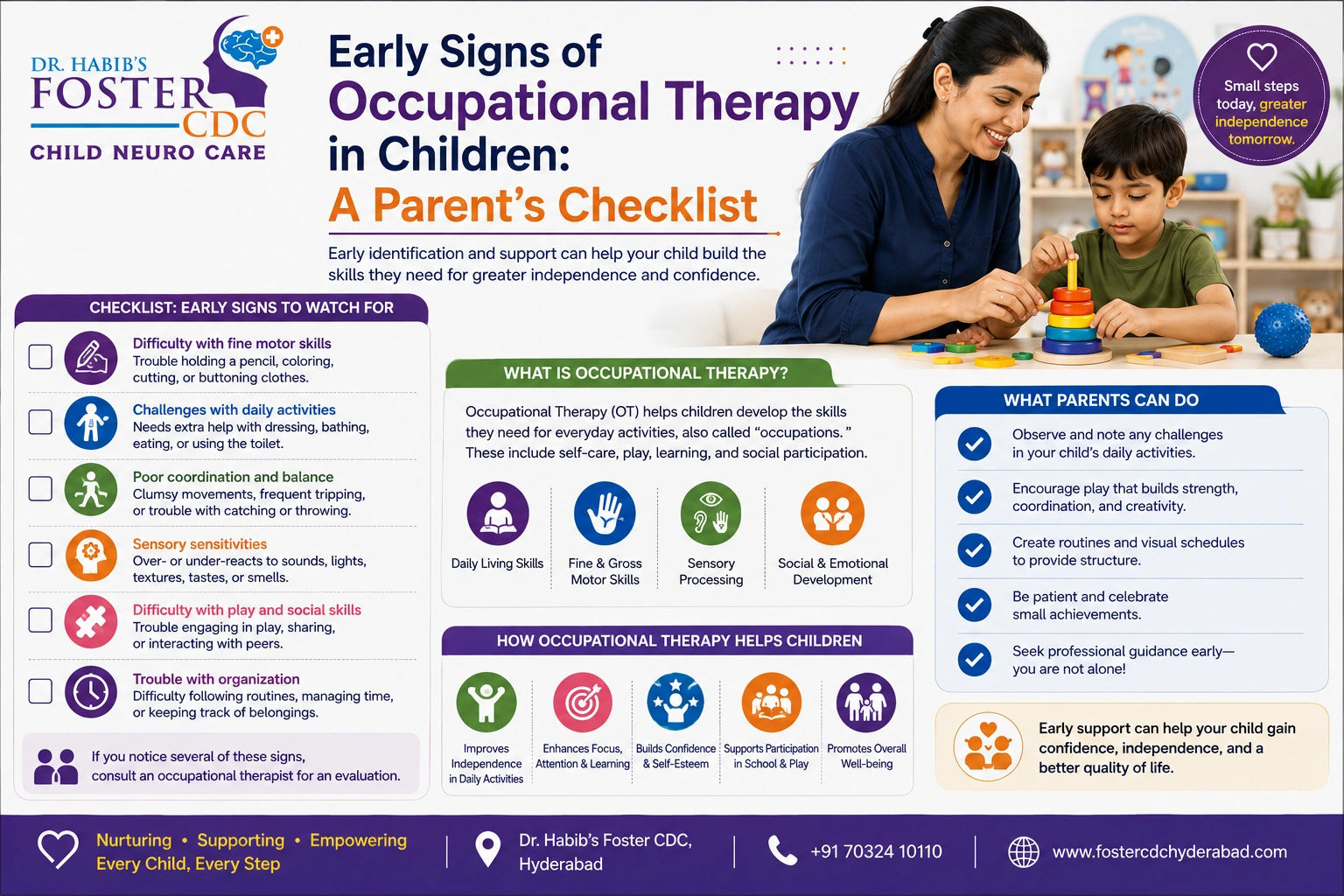
Get a proper occupational therapy assessment, separate from whatever assessment led to the diagnosis. A diagnosis (say, autism or global developmental delay) tells you what is going on in broad terms. An OT assessment tells you specifically how your child's sensory processing, motor planning, and daily functioning are affected — which is what actually shapes a therapy plan. (If you're still unsure whether an assessment is warranted, our early signs checklist can help you decide.)
Talk to more than one centre. This isn't about distrust; it's about fit. Therapy is a long-term relationship, and the right environment for your child matters as much as the credentials on the wall.
Resist the urge to compare your child's plan to someone else's. Every child's OT program is built around their specific profile — comparing your child's session frequency or goals to a cousin's or classmate's will only add stress that doesn't help either of you.
What an Occupational Therapy Assessment Actually Involves
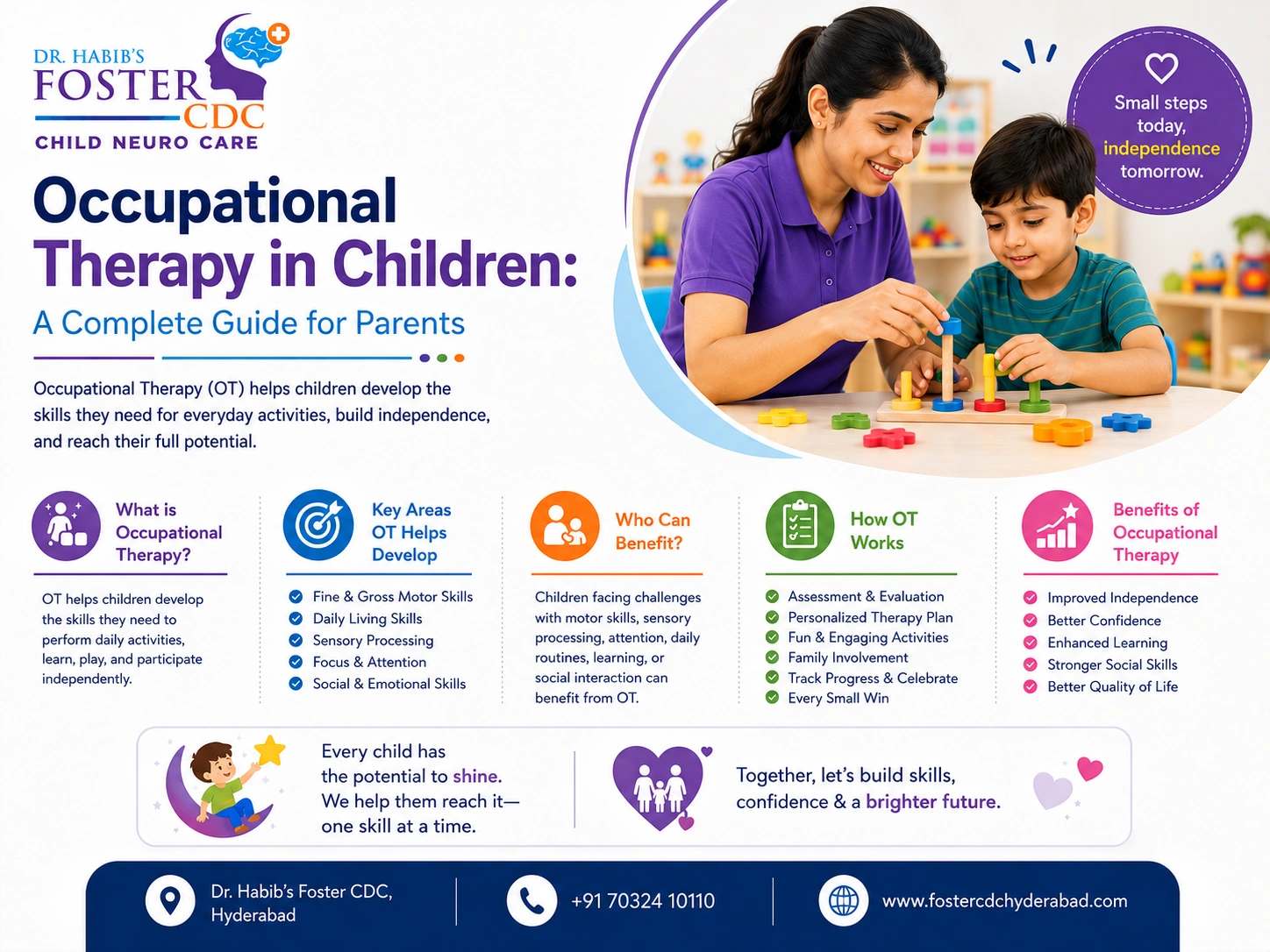
Many parents walk into their first OT assessment expecting a test with a pass/fail result. It isn't that. A pediatric OT assessment is closer to careful, structured observation. At Foster CDC, and in line with standard pediatric OT practice recognized by bodies like the American Occupational Therapy Association and referenced in AAP developmental surveillance guidance, an assessment typically covers:
Fine motor skills — grasp patterns, hand-eye coordination, in-hand manipulation
Gross motor skills and body awareness — balance, coordination, motor planning
Sensory processing — how the child responds to touch, sound, movement, and visual input
Self-care/daily living skills — dressing, feeding, toileting readiness
Play and social participation — how the child engages with toys, peers, and structured activities
Attention and self-regulation — how the child manages transitions, frustration, and focus
From this, the therapist builds a functional profile — not just a list of deficits, but a clear picture of strengths to build on and specific areas to target. This profile becomes the foundation of the therapy plan, and it's genuinely worth asking to see it in writing, not just hear it summarized verbally.
What Does an OT Program Actually Look Like Week to Week?
This is the question I get asked most often, usually somewhere around minute fifteen of a first consultation. Here's an honest answer.
Session structure. Most pediatric OT sessions run 45–60 minutes, typically 2–4 times a week depending on the child's needs and the severity of the delay. Sessions are individual, not group-based, especially in the early months, so the therapist can closely track responses and adjust in real time.
What sessions look like. To an outside observer, sessions often look like play — swinging, climbing, building, stacking, drawing, using putty or textured materials. That's intentional. Sensory integration therapy and fine motor development at this age happen most effectively through structured, engaging activity rather than desk-based drilling. Every activity is chosen to target a specific goal on your child's plan, even when it looks like simple fun. If your child hasn't had a first session yet, see our guide on how to prepare your child for their first therapy session.
Parent involvement. This is where centres differ significantly, and it's worth asking about directly. Some programs are therapist-only, with parents waiting outside. Others — including our approach at Foster CDC — actively train parents to continue targeted activities at home, because consistency between sessions is one of the biggest predictors of progress. Ask any centre you're considering: how do you involve parents, and what will I be expected to do outside of sessions?
Progress reviews. A good program reviews goals every 8–12 weeks, adjusting the plan based on what's working. If a centre can't clearly explain how or when they measure progress, that's worth noting.
Comparing Occupational Therapy Centres: What Actually Matters
When you're comparing options in Hyderabad — or anywhere — it's easy to get pulled toward whichever centre has the nicest waiting room or the most active social media page. Here's a more useful framework.
A note on that last row: be genuinely cautious of any centre — anywhere, not just in Hyderabad — that promises a fixed timeline for "curing" a developmental condition, or that pressures you into long-term package purchases before a proper assessment has even taken place. Reputable pediatric care, consistent with WHO and AAP guidance on developmental intervention, is built around individualized, reviewed goals — not guaranteed outcomes sold upfront.
Setting Realistic Expectations for the First Year
This is the part that often gets glossed over, and it shouldn't be, because unrealistic expectations are one of the biggest sources of parental burnout in the first year of therapy.
Progress is rarely linear. Some weeks will show visible gains; others will feel like standing still, or even briefly regressing during developmental leaps or life changes (a new school, an illness, a house move). This is normal and expected, not a sign that therapy has stopped working.
Small functional wins matter more than they seem. A child independently managing a zipper, tolerating a haircut, or sitting through a full meal without sensory distress might sound minor from the outside — but each represents genuine neurological and motor progress that compounds over time.
Home consistency compounds faster than session frequency alone. Two sessions a week with consistent home practice often outperforms four sessions a week with none. This is worth remembering on the days when reinforcing therapy activities at home feels like one more thing on an already full plate.
Reassessment is a feature, not a failure. If your child's therapist proposes changing the plan after a few months, that's the system working correctly — not a sign the original plan failed.
Questions Worth Asking at Your Next Appointment
If you're still in the comparing-centres stage, or already working with one and want to make sure you're getting the full picture, these are the questions I'd encourage every parent to ask directly:
Can I see a written summary of my child's assessment and current goals?
How often will goals be reviewed, and how will I be updated?
What can I realistically practice at home between sessions?
How do you coordinate with my child's other specialists (speech therapist, pediatrician, school)?
What does progress typically look like at the 3-month and 6-month mark for a profile like my child's?
What happens if progress is slower than expected — how is the plan adjusted?
Any team that welcomes these questions and answers them clearly is one worth trusting with your child's care.
How Foster CDC Supports Families After Diagnosis
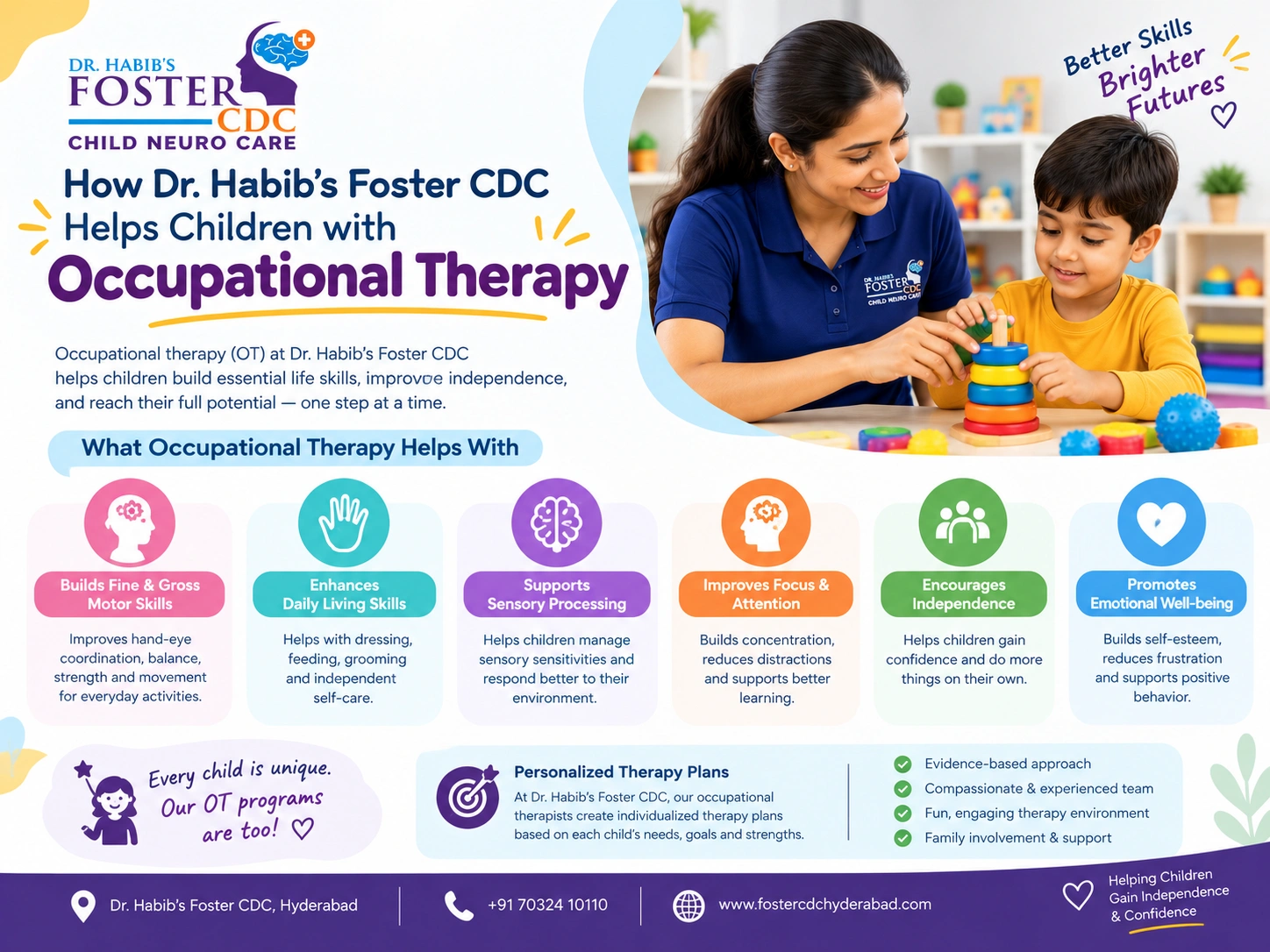
At Dr. Habib's Foster CDC, we built our post-diagnosis process specifically around the questions above, because we've sat across from hundreds of parents asking exactly these things. Every child begins with a comprehensive, individualized OT assessment — never a generic plan. From there, we design a personalized therapy plan combining sensory integration therapy, fine motor development, and functional daily-living skills, with goals reviewed every few months and shared transparently with parents. Our team works alongside speech therapists, providers of behavioral therapy, special educators, and your child's pediatrician so that care stays coordinated rather than fragmented. And because carryover matters as much as the sessions themselves, we actively train parents to continue targeted activities at home in ways that fit into real, busy family life.
Final Thoughts
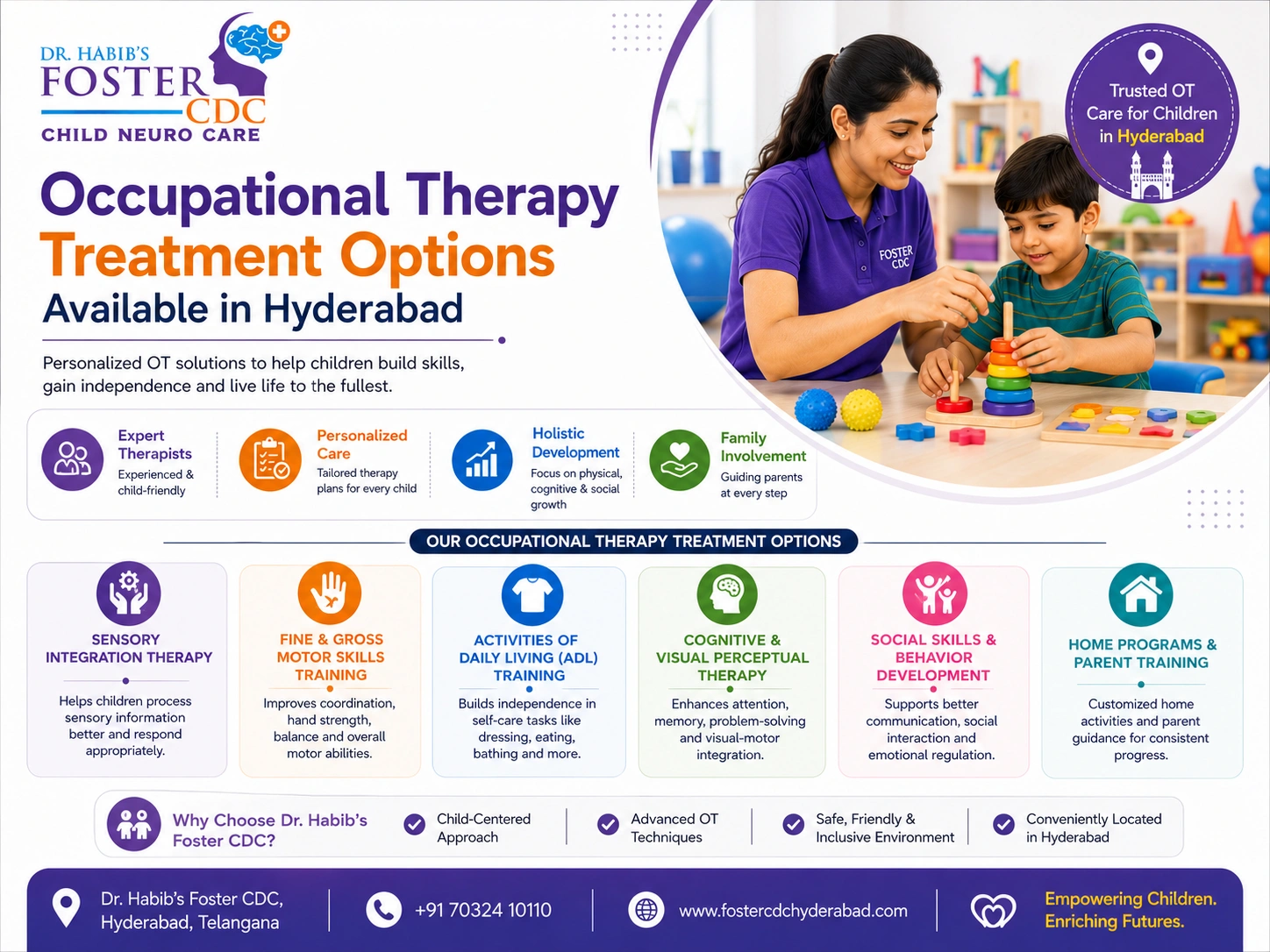
A diagnosis is a starting point, not a verdict — and the months that follow are less about finding a "perfect" centre and more about finding the right partner for your child's specific journey. Ask direct questions, expect clear answers, and trust your own observations of your child alongside the professional guidance you receive. For a closer look at what a plan can include, see the occupational therapy treatment options available in Hyderabad.
If you're evaluating occupational therapy options after a recent diagnosis, book an assessment with Dr. Habib's Foster CDC and get a clear, individualized picture of what comes next for your child.
Frequently Asked Questions
1. How soon after a diagnosis should occupational therapy start? As soon as possible. Early intervention during the first few years of development tends to produce the strongest outcomes, but starting later still offers meaningful benefit — there's no cutoff after which therapy stops being useful.
2. Is one occupational therapy centre generally better than another, or does it depend on the child? It depends heavily on fit — the assessment process, parent involvement, and team coordination matter more than any single "best" ranking, since every child's needs are different.
3. How do I know if my child's current therapy plan is actually working? Ask for regular, written progress reviews against specific goals. If a centre can't clearly show what's being tracked and how it's changing, that's worth raising directly with them.
4. Should occupational therapy be combined with other therapies like speech therapy? Often, yes. Many children benefit from coordinated care across occupational therapy, speech therapy, and special education, especially when multiple areas of development are affected.
5. What can I do at home to support my child's occupational therapy progress? This depends on your child's specific goals, which is why a good centre will train you directly on targeted home activities rather than giving generic advice.
6. How long does occupational therapy typically continue after diagnosis? Duration varies widely by condition and progress — some children need focused support for months, while others with more complex or lifelong conditions may need longer-term, periodically reviewed care.
Other Blogs

Services
- Behavioural Therapy
- Speech Therapy
- Special Education
- Parent Training
- Psychotherapy & Counselling
- Yoga Therapy
- Postural & Mobility Therapy
- Early Intervention Services
- Cognitive Behavioural Therapy
- Occupational Therapy
- Group Teaching
- Teachers' Training
- Certified Courses
- Developmental Therapy
- Autism Therapy